The Jakarta Post
Please Update your browser
Your browser is out of date, and may not be compatible with our website. A list of the most popular web browsers can be found below.
Just click on the icons to get to the download page.


Popular Reads
Top Results
No results found. Please check your search term and try again
Can't find what you're looking for?
View all search results
Popular Reads
Top Results
No results found. Please check your search term and try again
Can't find what you're looking for?
View all search resultsThe technocratic sunset: Institutional decay and the Rp 17,000 ‘vibe check’
As the rupiah stumbles past the 17,000-mark, Indonesia is facing a "vibe check" that no amount of political muscle can ignore. When nepotism shifts from a political exception to a bureaucratic rule, the resulting "Technocratic Sunset" threatens to transform a G20 economy into a fragile family office.
Change text size
Gift Premium Articles
to Anyone
Share the best of The Jakarta Post with friends, family, or colleagues. As a subscriber, you can gift 3 to 5 articles each month that anyone can read—no subscription needed!
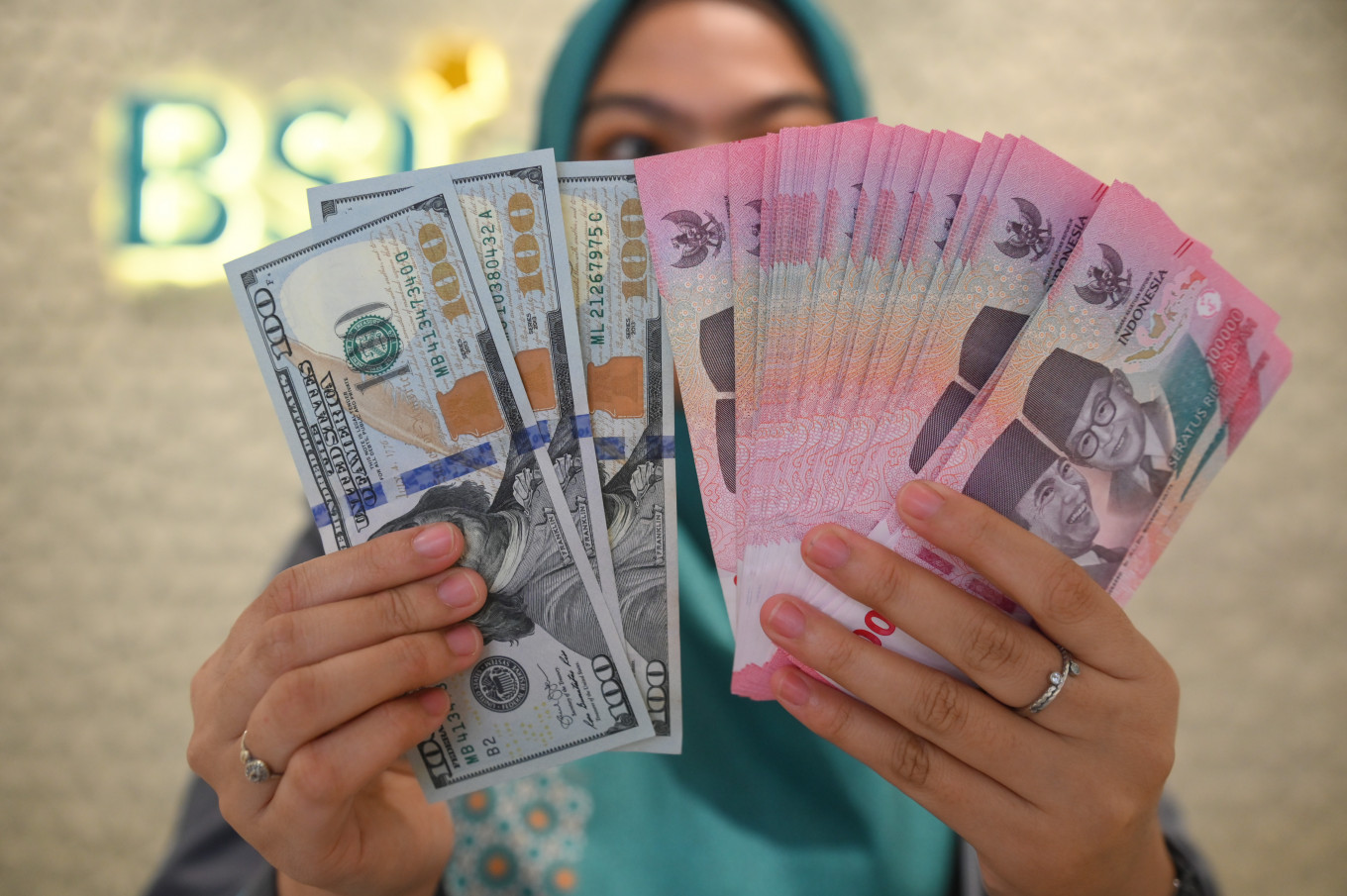 An employee displays Indonesian rupiah and United States dollar banknotes at Bank Syariah Indonesia in South Tangerang, Banten, on Jan. 21, 2026. (Antara/Hafidz Mubarak A)
A
s Indonesia enters February 2026, the political landscape is defined by a jarring dissonance. On one hand, the administration wields a formidable 58.6 percent electoral mandate, projecting an image of absolute stability. On the other, financial markets are signaling a profound crisis of trust.
With the rupiah flirting with the Rp 17,000 psychological barrier and the Indonesia Stock Exchange (IDX) Composite index reeling from massive capital flight, we are witnessing the consequences of what institutional economists describe as the systematic hollowing out of the state’s guardrails.
The "twin shocks" of early 2026, the appointment of Thomas Djiwandono to the Bank Indonesia (BI) Board of Governors and the unprecedented mass resignation of the Financial Services Authority (OJK) leadership, are not merely isolated political maneuvers. They represent a fundamental deconstruction of the technocratic independence that has anchored the Indonesian economy since the 1998 Reform movement.
The administration has framed the appointment of a close presidential relative and former Gerindra Party treasurer to BI as a strategic move toward "fiscal-monetary synergy". However, in the lexicon of institutional economics, this represents a dangerous erasure of the agency-principal boundary.
The sanctity of a central bank rests on its instrument independence. When the line between the executive’s fiscal ambitions, such as the expansive free nutritious meal program, and BI’s monetary caution becomes porous, the market experiences asymmetric information. Investors no longer see a central bank responding purely to inflationary data; they see an institution potentially accommodating a political budget.
This "nepotism premium" is now being priced directly into our exchange rate, reflecting a market that no longer believes in the firewall between political spending and currency stability.

The current appointments are not anomalies but the culmination of a broader trend: the normalization of nepotism especially within the Indonesian bureaucracy. Career technocrats, seeing the path to leadership blocked by political appointees and relatives of the elite, lose the incentive to innovate or uphold professional standards, creating a ripple effect of mediocrity.