TheJakartaPost
Please Update your browser
Your browser is out of date, and may not be compatible with our website. A list of the most popular web browsers can be found below.
Just click on the icons to get to the download page.


Popular Reads
Top Results
No results found. Please check your search term and try again
Can't find what you're looking for?
View all search results
Popular Reads
Top Results
No results found. Please check your search term and try again
Can't find what you're looking for?
View all search resultsRehabilitation for Soebandrio: A reconciliation with history
Soebandrio was a stalwart advocate for Indonesian sovereignty during the revolutionary period.
Change text size
Gift Premium Articles
to Anyone
Share the best of The Jakarta Post with friends, family, or colleagues. As a subscriber, you can gift 3 to 5 articles each month that anyone can read—no subscription needed!
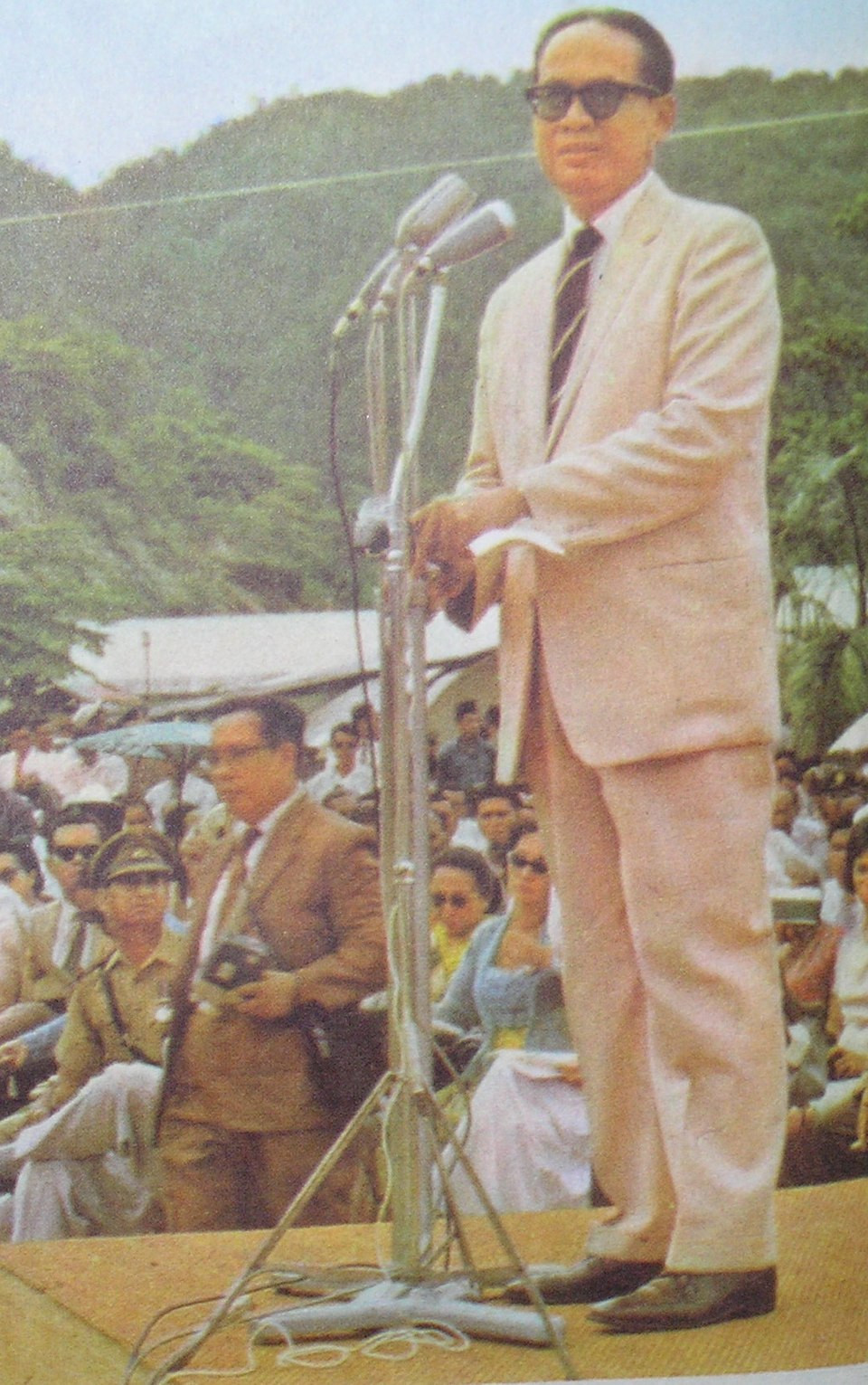 Foreign minister Soebandrio speaks at a ceremony on May 1, 1963, marking the transfer of West Papua to Indonesian control. (Courtesy of/Department of Foreign Affairs)
T
omorrow’s launch of eight volumes commemorating the 70th anniversary of Yusril Ihza Mahendra, the Coordinating Law, Human Rights, Immigration and Correctional Affairs Minister, serves as more than a personal milestone.
These works, comprising biographies and testimonials, offer a window into the intersection of personal lives and national history. Having shared a residence with Yusril at the University of Indonesia’s Daksinapati Student Dormitory in Rawamangun, East Jakarta, about 50 years ago, I contributed a piece reflecting on our time there and his interactions with seminal figures such as M. Natsir, Syafruddin Prawiranegara and Soebandrio.
The connection between Yusril and Soebandrio is particularly poignant regarding the unresolved issue of legal rehabilitation. On Dec. 21, 2000, Soebandrio, the former deputy prime minister and foreign minister under president Sukarno, met with president Abdurrahman “Gus Dur” Wahid at the Presidential Palace to formally request the restoration of his rights.
While Gus Dur instructed Yusril, then the justice and human rights minister, to process the request, the administration's premature end following Gus Dur’s impeachment in July 2001 left the matter hanging in the balance. Now, 25 years later, the question remains: Will Yusril, in his current capacity as coordinating minister, propose this rehabilitation to President Prabowo Subianto?
Soebandrio’s life was defined by a profound tragedy: he spent nearly one-third of his ninety years behind bars. Imprisoned for 29 years following the aborted coup of Sept. 30, 1965, he became a primary target of the New Order’s effort to dismantle the Sukarno era.
Despite his long incarceration and subsequent death on July 3, 2004, the evidence supporting his involvement in the coup remains nonexistent. He was neither a member of the Indonesian Communist Party (PKI), which Soeharto blamed for the coup, nor associated with its affiliated organizations. Nevertheless, he was tried before the Extraordinary Military Tribunal (Mahmillub) and sentenced to death on Oct. 25, 1966.

The atmosphere of the trial, held in the building that now houses the National Development Planning Agency (Bappenas), was one of palpable oppression. As Soebandrio faced execution, international intervention arrived in the form of a protest from Queen Elizabeth II. Her Majesty’s plea was rooted in Soebandrio’s diplomatic history; he had helped establish the Indonesian diplomatic mission in London in 1946 and served as ambassador to the United Kingdom from 1950 to 1954. Consequently, his capital sentence was commuted to life imprisonment.