TheJakartaPost
Please Update your browser
Your browser is out of date, and may not be compatible with our website. A list of the most popular web browsers can be found below.
Just click on the icons to get to the download page.


Popular Reads
Top Results
No results found. Please check your search term and try again
Can't find what you're looking for?
View all search results
Popular Reads
Top Results
No results found. Please check your search term and try again
Can't find what you're looking for?
View all search resultsFrom savers to stakeholders: A new social contract for Indonesia
By turning savers into stakeholders, Indonesia is building a market owned by its people, resilient to external shocks, and worthy of the economic sovereignty that Danantara is mandated to protect.
Change text size
Gift Premium Articles
to Anyone
Share the best of The Jakarta Post with friends, family, or colleagues. As a subscriber, you can gift 3 to 5 articles each month that anyone can read—no subscription needed!
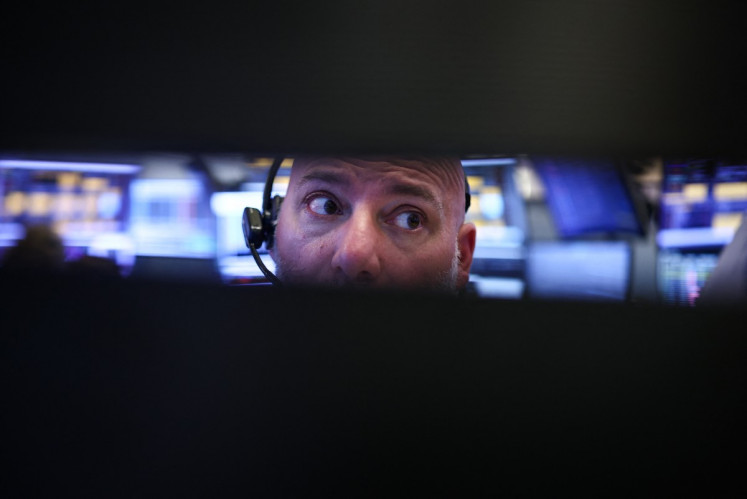
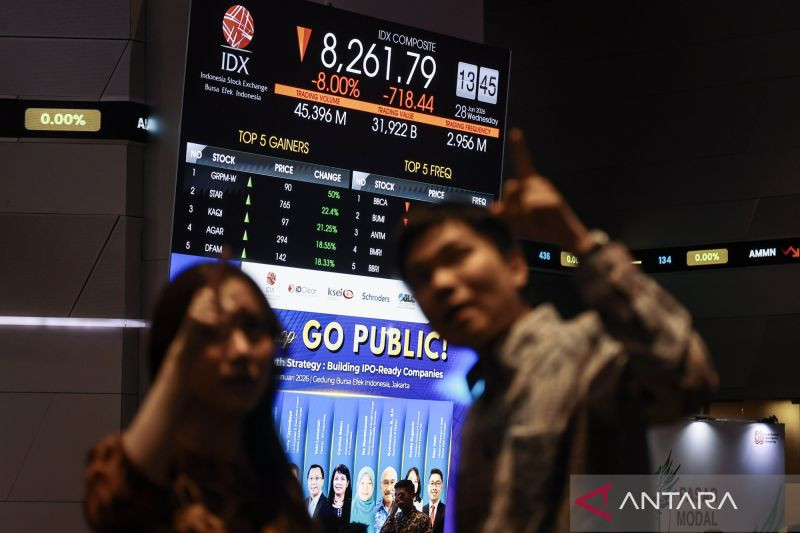 Employees stand near a screen showing the Jakarta Composite Index (JCI) down 8 percent on Jan. 28 at the Indonesia Stock Exchange (IDX) in Jakarta. The IDX temporarily halted trading that afternoon as the benchmark index dropped to 8,261.79 points following an announcement from Morgan Stanley Capital International (MSCI) that it would temporarily suspend the index rebalancing process for Indonesian stocks. (Antara/Dhemas Reviyanto)
M
SCI has warned on market accessibility. Moody's has downgraded on policy predictability. In a single week, Indonesia's capital markets have faced a twin stress test that has shaken investor confidence and forced hard questions about market governance.
In the previous article (Feb. 6, 2026), I argued that Indonesia is caught in a broader structural shift—the geofencing of United States capital through the COINS Act and FY 2026 NDAA. But external forces only explain part of the story. Indonesia has choice in how it responds.
This is a difficult moment for Indonesia's capital markets. It is also a clarifying one. The IDX has outgrown its old broker-owned "club" structure, and recent events have made the case for reform undeniable.
Indonesia's retail investor base has more than doubled since 2022, demonstrating that the appetite for citizen ownership exists. The task now is institutionalizing that momentum within a new governance structure.
The government's decision to fast-track IDX demutualization, with state asset fund Danantara as anchor, is the right first step. With a mandate to manage over US$1 trillion in state assets, Danantara can serve as the anchor for economic sovereignty, separating the "players" from the "referee" and providing the institutional credibility that global indices require.
Demutualization alone fixes the plumbing. The deeper opportunity is finding the water to fill the pipes.

The blueprint for this transition is the "India model", which between 2014 and 2026 achieved what was once thought impossible: decoupling market returns from foreign sentiment. India engineered a mass migration of citizens into the market through three phases.