The Jakarta Post
Please Update your browser
Your browser is out of date, and may not be compatible with our website. A list of the most popular web browsers can be found below.
Just click on the icons to get to the download page.


Popular Reads
Top Results
No results found. Please check your search term and try again
Can't find what you're looking for?
View all search results
Popular Reads
Top Results
No results found. Please check your search term and try again
Can't find what you're looking for?
View all search resultsWhoosh and weave: Connecting the spaces between
As Indonesia invests in high-speed rail, a quieter revolution in micro-mobility and former rail corridors could shape how growth, jobs and everyday life unfold along Java’s emerging mega-urban corridor.
Change text size
Gift Premium Articles
to Anyone
Share the best of The Jakarta Post with friends, family, or colleagues. As a subscriber, you can gift 3 to 5 articles each month that anyone can read—no subscription needed!
 Set as preferred source
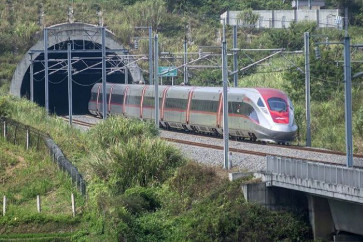
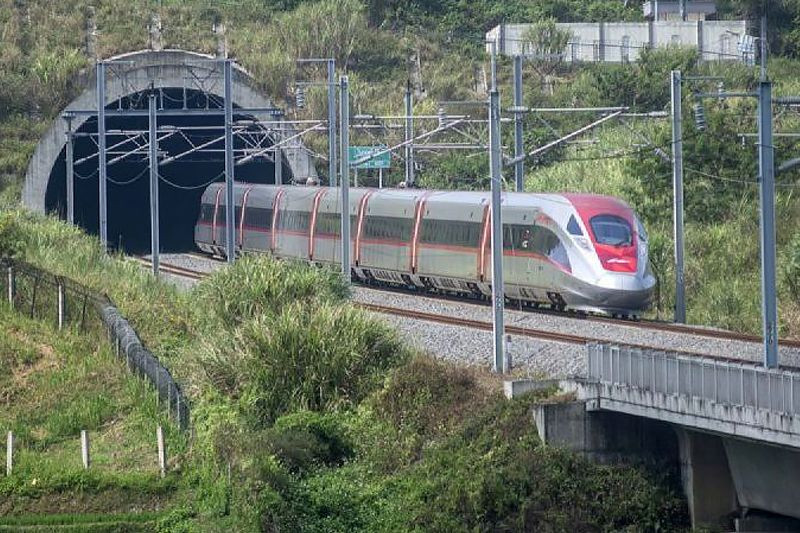 A Whoosh high-speed train passes through the Ngamprah tunnel in West Bandung regency, West Java, on July 31, 2025. (Antara/Abdan Syakura)
T
he high-speed Whoosh train now hurtles between Jakarta and Bandung,West Java, at 350 kilometers per hour, a technological showcase with longer-term ambitions to extend eastward toward Surabaya in East Java. But speed alone will not stitch together Java’s emerging 60-million-person mega-corridor.
A future urban population of this scale, comparable to Tokyo–Osaka or the Boston–Washington axis (The Jakarta Post, Jan. 30, 2026), places Java among the world’s largest metropolitan systems. At this scale, high-speed rail is not a luxury but a necessity: an arterial backbone capable of moving people and value efficiently across long distances.
High-speed rail works by bypassing most secondary cities and smaller towns; its promise is uninterrupted, long-distance travel. It can supercharge growth around its handful of stations, but what about everywhere in between?
No mega-urban corridor can run on speed alone. It also depends on capillary networks: how gentle, affordable, inclusive movement supports everyday life along the way. Beside Indonesia’s visible, celebrated rail network lies a quieter geography of disused lines and rail remnants, most dating back to the colonial era, revealing a second, equally important technological story.
Official data records approximately 2,200 km of disused railway lines nationwide, plus another estimated 1,500 km where the engineered alignment remains intact but the rails are gone. These “alignment-only corridors”, where tracks have been lifted but the graded pathway, curves and earthworks remain, include routes such as Rangkasbitung–Labuan, Saketi–Bayah, parts of the Bandung–Ciwidey alignment and large sections of the former Madura rail network.
Today many of these corridors are half-forgotten spaces: narrow kampung paths reclaimed by use and nature, informal shortcuts for motorbikes, ad-hoc vegetable plots, scattered warung (roadside stalls). They also cut through districts with large, youthful populations, where many teenagers and young adults lack reliable access to schools, training centers and formal jobs.

Young people often rely on expensive, unreliable motorcycle trips to reach schools, factories or markets several kilometers away. As land values rise around new infrastructure, these spaces risk becoming speculative sites for gated housing rather than community-scale mobility. Treating them instead as public movement corridors changes the equation: they become shared assets for local access, not just leftover strips of land.