The Jakarta Post
Please Update your browser
Your browser is out of date, and may not be compatible with our website. A list of the most popular web browsers can be found below.
Just click on the icons to get to the download page.


Popular Reads
Top Results
No results found. Please check your search term and try again
Can't find what you're looking for?
View all search results
Popular Reads
Top Results
No results found. Please check your search term and try again
Can't find what you're looking for?
View all search resultsWhy we must guard our hard-won progress against stunting
The government, regional administrations, communities and all other stakeholders must maintain momentum in its fight against stunting as an integral factor in achieving national goals, including Golden Indonesia 2045.
Change text size
Gift Premium Articles
to Anyone
Share the best of The Jakarta Post with friends, family, or colleagues. As a subscriber, you can gift 3 to 5 articles each month that anyone can read—no subscription needed!
 Set as preferred source
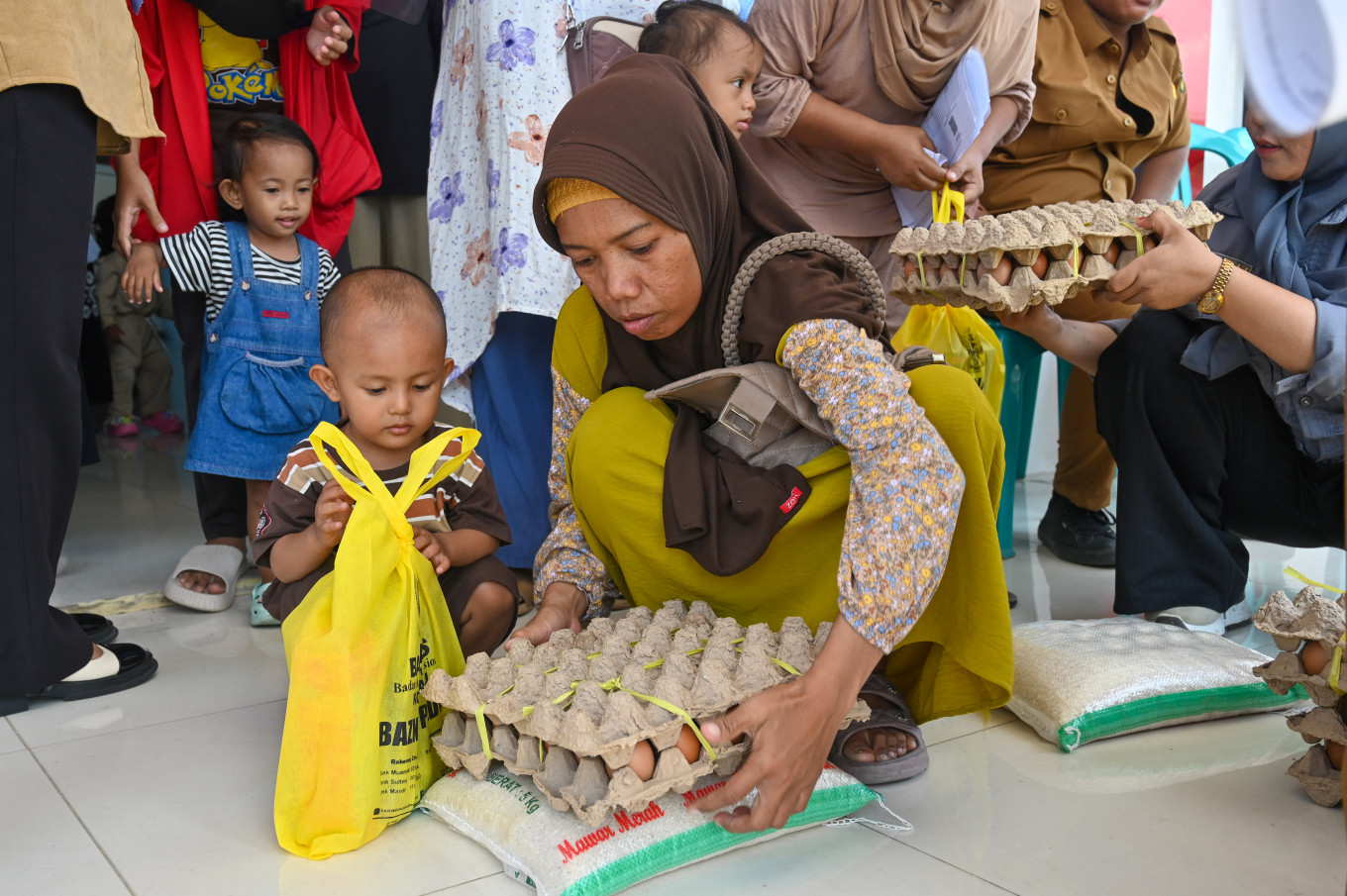 A woman collects a tray of eggs on Oct. 15, 2025, during an anti-stunting food distribution event organized by the municipal administration of Palu, Central Sulawesi. (Antara/Basri Marzuki)
I
ndonesia has made remarkable progress in reducing stunting: from 30.8 percent in 2018 to 19.8 percent in 2024, according to the National Health Survey. This 11-point decline in just six years has brought Indonesia US$10 billion in economic gains through 9,300 fewer child deaths, 5.3 million fewer IQ points lost and 854,000 fewer school years lost per year, positioning it among the fastest improving countries globally in the battle against stunting.
The accomplishment echoes the success story of Peru, which halved stunting from 29 percent in 2007 to 14 percent in 2014.
This progress is far more than a health achievement. It means that fewer children are starting life at a disadvantage, and that more are gaining the physical and cognitive foundations they need to thrive and contribute meaningfully to society. It reflects meaningful gains in human capital and economic growth.
As Indonesia continues to advance its National Strategy (Stranas) for Stunting Reduction, with its broader commitments to the Sustainable Development Goals and Nutrition for Growth targets in sight, the country must maintain momentum while also safeguarding this hard-won progress.
Stunting is not just a health issue. Studies show that children affected by stunting are more likely to face limitations in learning outcomes, workforce readiness and productivity throughout their lives. At a national level, this constrains the country’s long-term competitiveness and development ambitions.
Today, more than 4.5 million Indonesian children under 5 are stunted, representing nearly one-fifth of all young children. According to Nutrition International’s Cost of Inaction Tool, stunting contributes to 26,000 preventable deaths each year.

The economic impact of stunting is profound, too: Causing annual productivity losses of an estimated US$29 billion, this figure far outstrips the annual budget for the free nutritious meal program. These losses include more than 2.4 million years of schooling forgone and an estimated 15 million IQ points lost every year. Prioritizing stunting is therefore not optional but mandatory.