TheJakartaPost
Please Update your browser
Your browser is out of date, and may not be compatible with our website. A list of the most popular web browsers can be found below.
Just click on the icons to get to the download page.


Popular Reads
Top Results
No results found. Please check your search term and try again
Can't find what you're looking for?
View all search results
Popular Reads
Top Results
No results found. Please check your search term and try again
Can't find what you're looking for?
View all search resultsAddressing the 4Is of good corporate governance (Part 2)
As trillions in state funds remain unrecovered, Indonesia’s path to sustainable growth hinges on moving beyond 'business as usual' toward a rigorous, mandatory framework of institutional control and proactive intervention
Change text size
Gift Premium Articles
to Anyone
Share the best of The Jakarta Post with friends, family, or colleagues. As a subscriber, you can gift 3 to 5 articles each month that anyone can read—no subscription needed!
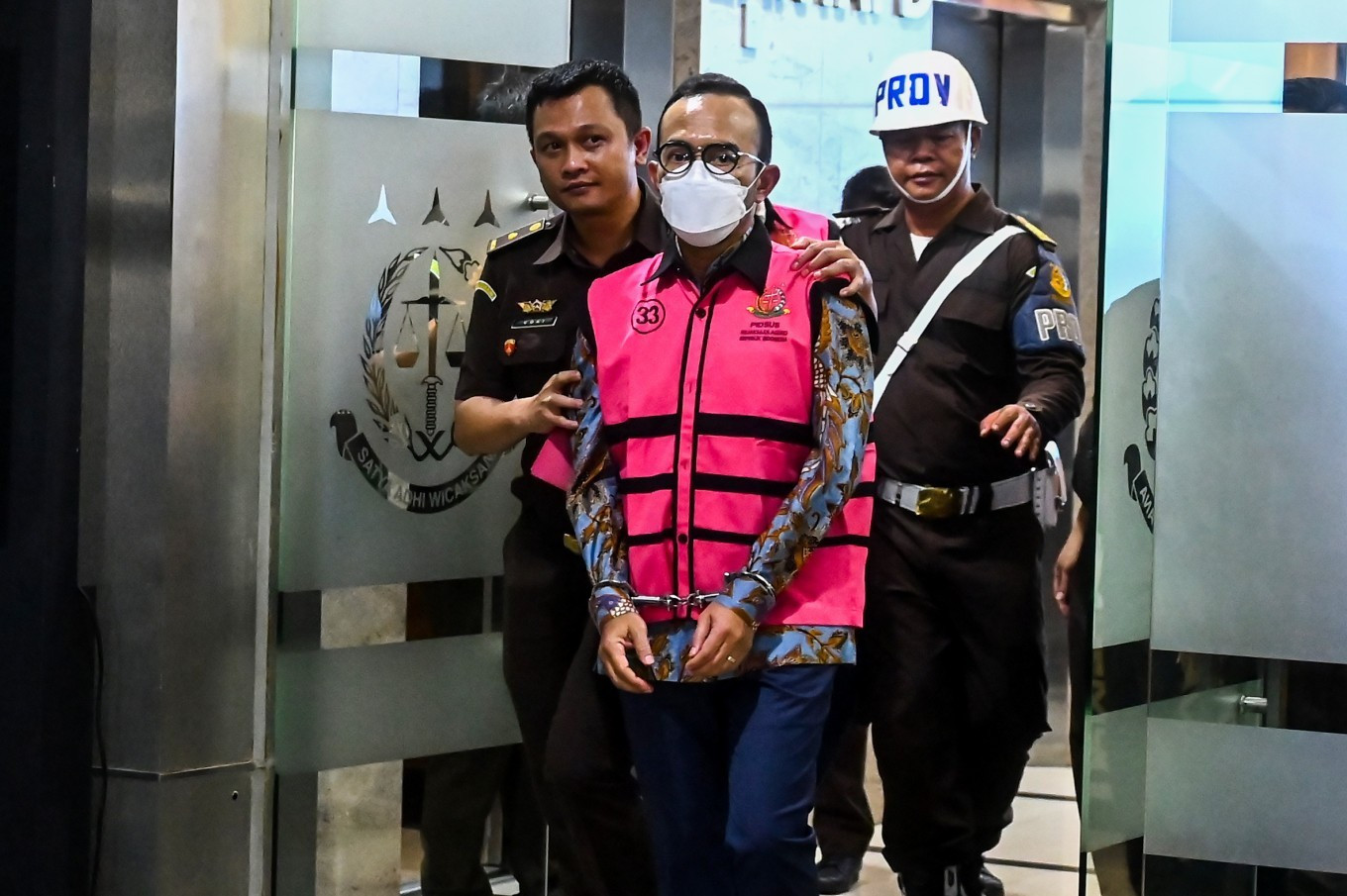 Riva Siahaan, the president director of PT Pertamina Patra Niaga, the commercial arm of state-owned oil and gas giant Pertamina, is detained on Feb. 25, 2025, after being named a suspect in a corruption case by the Attorney General's Office (AGO) in Jakarta. (Antara Foto/Rivan Awal Lingga)
I
n Part 1 of this article (Feb. 9, 2026), we examined the first two key pillars of the 4Is of good corporate governance (GCG), namely integrity and independence. In the concluding part we will focus on the remaining pillars of institutional control and intervention.
On Jan. 30, Indonesia’s Ombudsman flagged poor progress in the recovery of outstanding Bank Indonesia liquidity assistance (BLBI) dues. These are estimated to be near Rp 211 trillion (US$12.8 billion), a figure nearly equal to the cost of a new Jakarta-Surabaya bullet train or 30 percent of the total budget for the new capital, Nusantara. Of the total amount due to the country’s taxpayers, a paltry 0.2 percent has been recovered. BLBI funding was provided as an emergency cash injection by the central bank during the widespread banking sector collapse of 1997–1998.
While the BLBI Task Force must be held accountable by the Ombudsman and redouble its recovery efforts, this dire situation highlights the critical importance of institutional control. In developing countries, the impact of financial crises is often amplified because the institutions designed to protect the interests of common citizens and taxpayers are found "asleep at the wheel".
While this was certainly the case in 1997–1998, the decades since have seen the strengthening of regulatory bodies. Today, two major institutions supervise the banking, financial and capital markets alongside Bank Indonesia, the central bank tasked with macroeconomic management.
Institutional control is spearheaded by the Financial Services Authority (OJK), which monitors the stability of banks and capital markets, and the Deposit Insurance Corporation (LPS), which serves as a specialized corporation dedicated to insuring depositor funds against potential bank failures.
These entities are well-funded and employ some of the highest-paid professionals in Indonesia. Unlike in 1997–1998, they now possess the enormous advantages of technology, big data and customized analytical tools to stay ahead of the curve. And yet, as recent stock market meltdowns demonstrate, institutional control remains inconsistent and, at times, inadequate.

There are four specific areas where control must be strengthened to achieve GCG.