TheJakartaPost
Please Update your browser
Your browser is out of date, and may not be compatible with our website. A list of the most popular web browsers can be found below.
Just click on the icons to get to the download page.


Popular Reads
Top Results
No results found. Please check your search term and try again
Can't find what you're looking for?
View all search results
Popular Reads
Top Results
No results found. Please check your search term and try again
Can't find what you're looking for?
View all search resultsResilient, realistic growth
An aggressive growth target may lift headline GDP, but it could also inflate asset prices, strain the state budget and erode investor confidence in fiscal policy.
Change text size
Gift Premium Articles
to Anyone
Share the best of The Jakarta Post with friends, family, or colleagues. As a subscriber, you can gift 3 to 5 articles each month that anyone can read—no subscription needed!
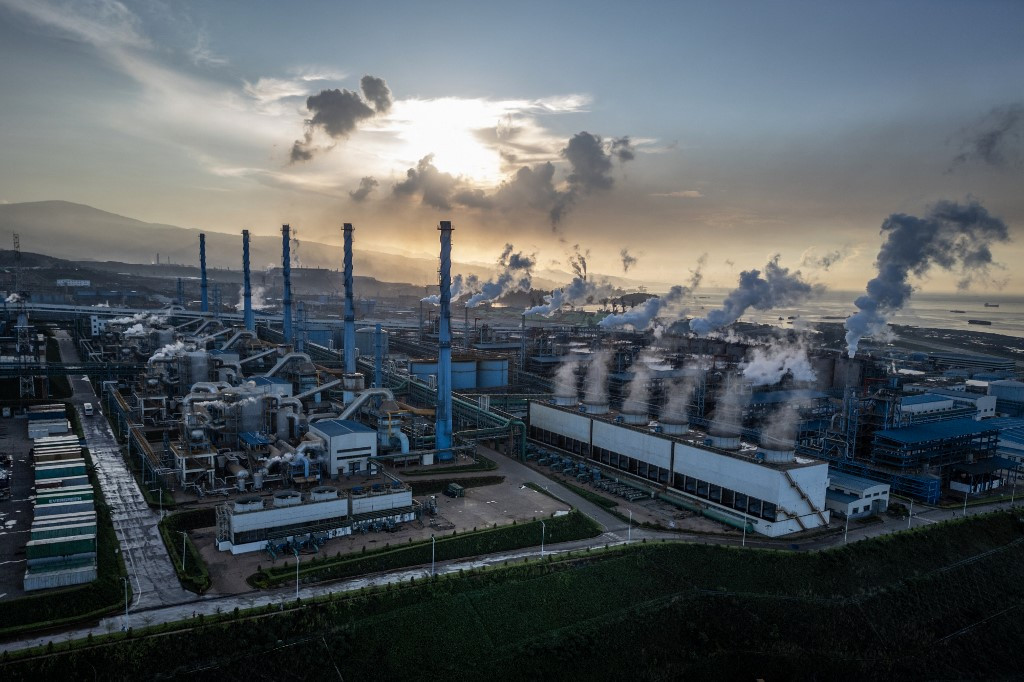 Smoke rises at Weda Bay Industrial Park (WBIP), a major nickel processing and smelting hub, in Lelilef Sawai, Central Halmahera, North Maluku. (AFP/-)
I
ndonesia’s economy grew by 5.11 percent last year, a steady uptick from the 5.03 percent recorded previously. In an era of rising protectionism and global volatility, the performance is less a disappointment and more a testament to the nation's resilience. Central to this stability is household consumption, which continues to serve as the primary engine of growth.
Trade tensions due to the tariff policies of United States President Donald Trump have weighed on global manufacturing demand, slowing activity in major economies such as China and, in turn, affecting Indonesia. Against that backdrop, maintaining growth above 5 percent is no small feat.
Yet the narrative surrounding the figure has been shaped by expectations rather than context.
The government had set an ambitious 5.3 percent growth target for 2025, a stepping stone toward the 8 percent growth by 2029 that defines President Prabowo Subianto’s economic vision. The question does not concern the desirability of these goals, but the risk that such aggressive targets might prioritize short-term gains at the expense of long-term fiscal and structural stability.
Indonesia’s much-vaunted aspirations are rooted in the Golden Indonesia 2045 vision introduced during former president Joko “Jokowi” Widodo’s administration in 2019, which aims to elevate the country to high-income status by its centennial independence anniversary.
That said, even during Jokowi’s tenure, a period marked by strong infrastructure expansion, growth never reached the mid-5 percent range, partly due to the shock of the COVID-19 pandemic. It makes it even harder for Prabowo, who needs to double his efforts to reach the same target within the remaining timeframe. If the President continues to pursue the 8 percent target after the 2025 data, the push would have to become even more aggressive.

One thing to remember is that pursuing growth too aggressively carries risks.