TheJakartaPost
Please Update your browser
Your browser is out of date, and may not be compatible with our website. A list of the most popular web browsers can be found below.
Just click on the icons to get to the download page.


Popular Reads
Top Results
No results found. Please check your search term and try again
Can't find what you're looking for?
View all search results
Popular Reads
Top Results
No results found. Please check your search term and try again
Can't find what you're looking for?
View all search resultsWhen the state meets the stethoscope: Toward an equilibrium
The state has the power to regulate, but science holds the power to heal; the Constitutional Court has finally ensured one cannot dictate the other.
Change text size
Gift Premium Articles
to Anyone
Share the best of The Jakarta Post with friends, family, or colleagues. As a subscriber, you can gift 3 to 5 articles each month that anyone can read—no subscription needed!
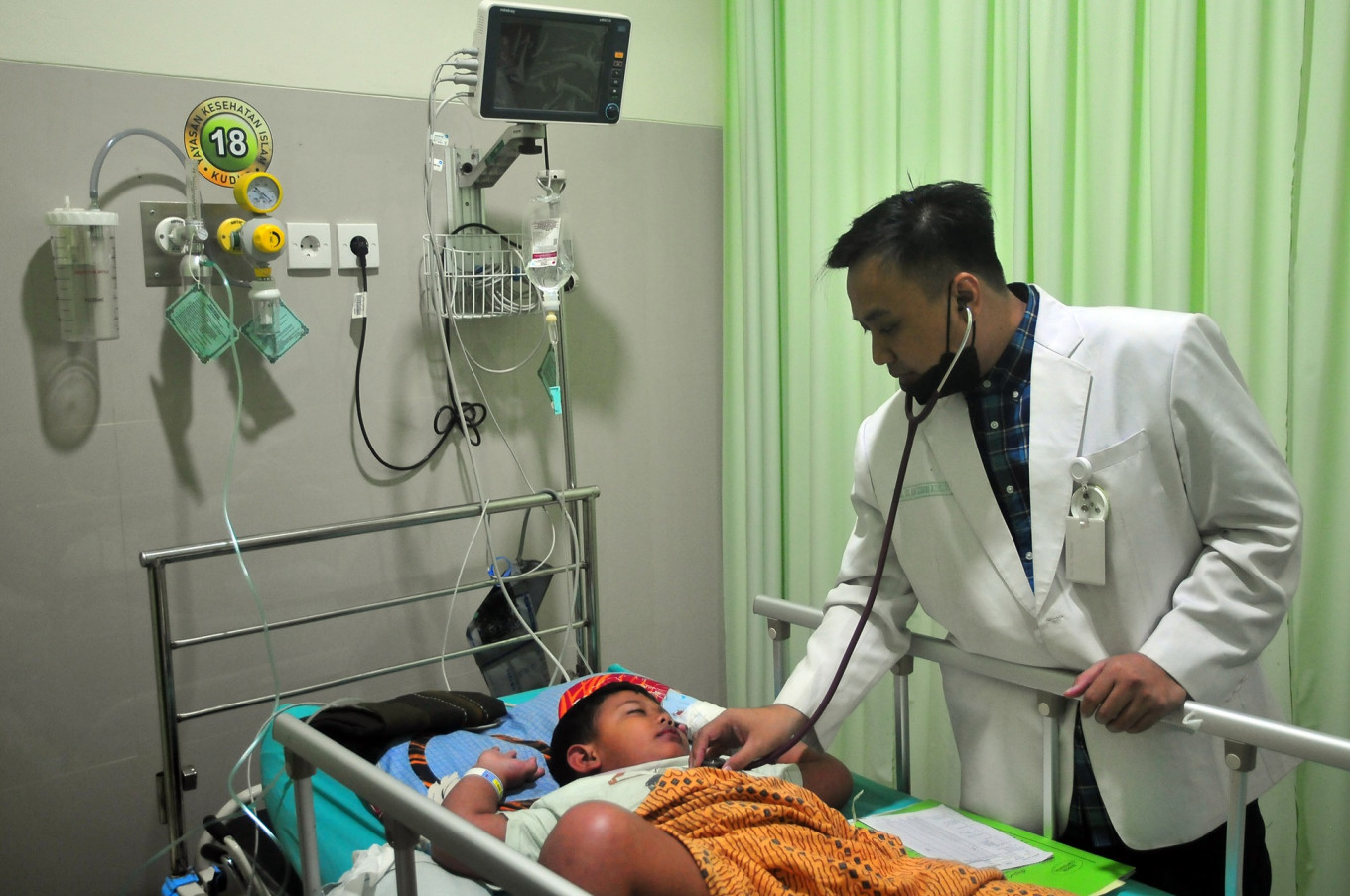 A doctor checks on the condition of a dengue fever patient at the Sunan Kudus Islamic Hospital in Kudus, Central Java, on March 8, 2024. (Antara/Yusuf Nugroho)
F
or over a year, the 2023 Health Law has been the epicenter of intense debate among doctors, academics and policymakers. Supporters hailed it as a long-awaited vehicle for health reform; critics feared a darker shift: the gradual conversion of professional medicine into a mere administrative arm of the state.
However, the Constitutional Court’s recent rulings have reframed this entire struggle. Moving beyond technical adjustments, the court has drawn a definitive constitutional line separating state authority from professional autonomy. The message is as simple as it is profound: While the government may regulate health care, it may not command science, ethics or professional judgment.
This distinction is vital because medicine is not a conventional sector of public administration. Hospitals may be state-funded and health services may fall under public policy, but clinical decision-making and ethical standards operate by a different logic. They depend on peer-reviewed knowledge and long-term scientific rigor, not on short electoral cycles or bureaucratic performance indicators.
In its reasoning, the court emphasized that scientific professional bodies, the kolegium (colleges) that define training standards, cannot be treated as subordinate ministerial units. They are not administrative extensions; they are academic institutions rooted in expertise. Their authority arises from scholarship, not from government delegation.
The court further redesigned the institutional relationship between these bodies and the medical council. The council is no longer a ministerial satellite but an independent institution accountable directly to the president as head of state. This structure ensures that the guardians of professional standards stand outside the reach of daily politics. Without this distance, certification and education risk being shaped by shifting policy targets rather than patient safety.
Crucially, the court clarified that the state sets the framework, but science must fill it. While the government formally ratifies standards, their substance must originate from professional colleges and associations. A ministry may organize the delivery of health care, but it cannot dictate the content of medical competence.

This logic extends to ethics and discipline. Oversight of professional conduct requires specialized knowledge of clinical norms. Placing disciplinary power in administrative hands risks transforming professional accountability into bureaucratic enforcement. A doctor must answer for malpractice, but that judgment must come from those who understand the complexities of the practice, not merely those who supervise an office.