The Jakarta Post
Please Update your browser
Your browser is out of date, and may not be compatible with our website. A list of the most popular web browsers can be found below.
Just click on the icons to get to the download page.


Popular Reads
Top Results
No results found. Please check your search term and try again
Can't find what you're looking for?
View all search results
Popular Reads
Top Results
No results found. Please check your search term and try again
Can't find what you're looking for?
View all search resultsWhy we cannot afford to neglect the urban middle class
As national policies pivot toward rural and lower-income support, the urban middle class is being left out in the cold, squeezed by stagnant wages and rising costs, creating a "quiet frustration" that could pose a systemic risk to economic and political stability.
Change text size
Gift Premium Articles
to Anyone
Share the best of The Jakarta Post with friends, family, or colleagues. As a subscriber, you can gift 3 to 5 articles each month that anyone can read—no subscription needed!
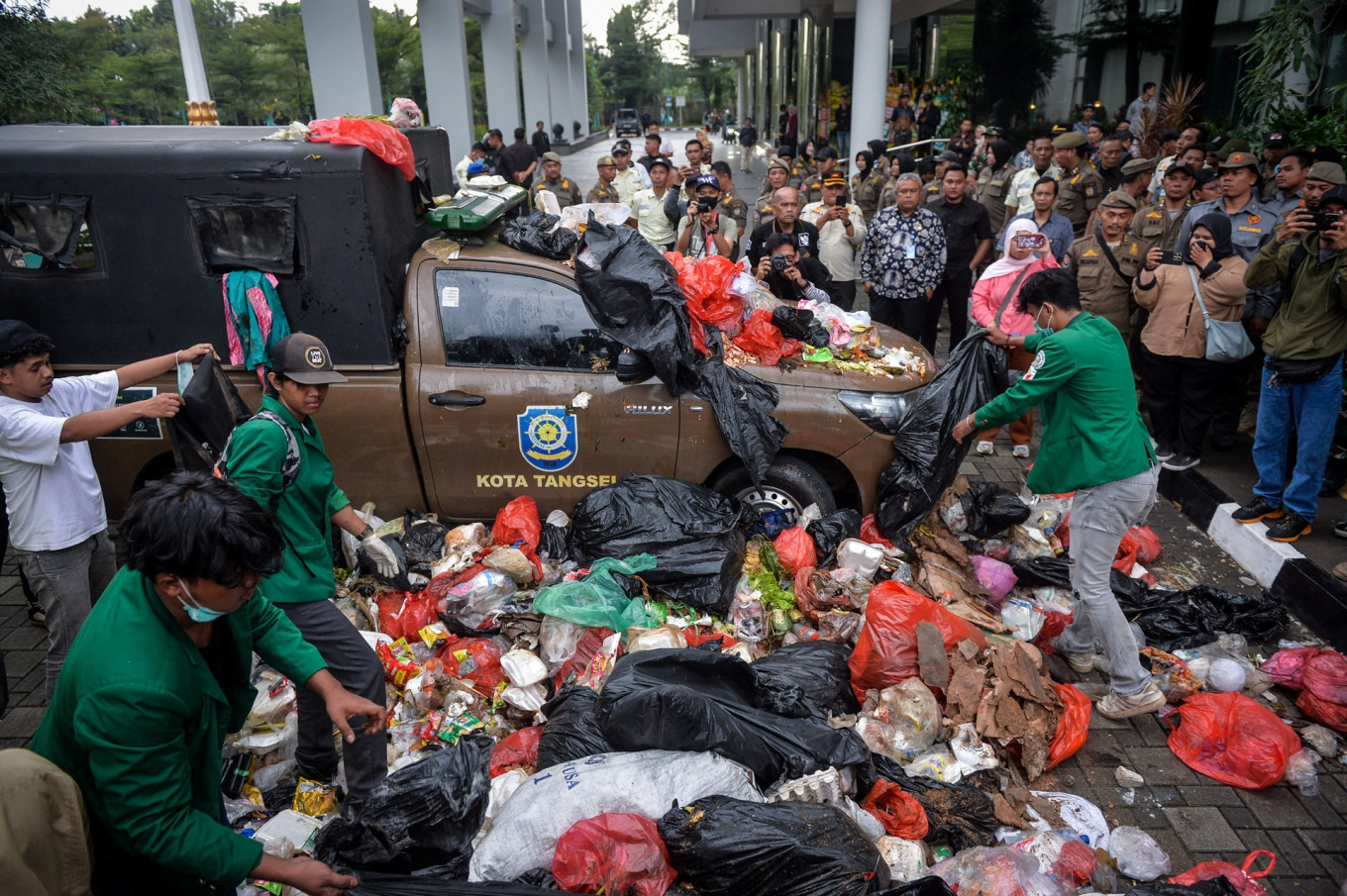 University students dump bags of garbage at the South Tangerang mayor’s office in Banten during a demonstration on Jan. 8, 2026, urging the local administration to take concrete actions in solving the city’s waste problem. (Antara/Putra M. Akbar)
I
ndonesia’s policy discourse has rightly prioritized poverty reduction, rural development and basic welfare. These efforts have yielded tangible gains, particularly outside major cities, where fiscal transfers and social programs have stimulated demand and restored confidence.
Yet this necessary focus has come with a subtle but significant cost: The urban middle class, particularly its younger, aspirational segment, has increasingly found itself excluded from the heart of economic policymaking. This exclusion is no mere matter of sentiment; it carries profound economic and institutional implications for the nation's future.
For more than two decades, Indonesia’s middle class expanded on the back of macroeconomic stability, demographic momentum and rapid urbanization. By the late 2010s, middle-class households accounted for over half of national consumption, serving as the anchor for domestic demand and fiscal revenue. Rising educational attainment and formal employment once underpinned a shared expectation of continued upward mobility.
That trajectory has weakened. In recent years, real wage growth for formal workers has lagged behind headline gross domestic product growth, specifically in urban services. The creation of high-quality, productivity-enhancing jobs has not kept pace with the influx of educated graduates, leading to persistent underemployment. Consequently, urban youth unemployment remains stubbornly higher than the national average.
Simultaneously, the urban cost of living has turned hostile. Over the past decade, housing prices in Greater Jakarta have climbed faster than median incomes, while rent absorbs an ever larger share of disposable earnings. Furthermore, inflation in education and health care, sectors where middle-income families rely on private providers with limited subsidies, has consistently outpaced general inflation.
External vulnerabilities compound these internal pressures. The rupiah’s structural sensitivity to global financial shifts often triggers episodes of depreciation, which quickly funnel imported inflation into domestic markets.

This is most visible in consumer packaged goods, where a heavy reliance on imported raw materials means currency fluctuations are passed directly to the consumer. For the urban middle class, whose consumption baskets are heavily exposed to these goods, the erosion of purchasing power is a daily reality.