The Jakarta Post
Please Update your browser
Your browser is out of date, and may not be compatible with our website. A list of the most popular web browsers can be found below.
Just click on the icons to get to the download page.


Popular Reads
Top Results
No results found. Please check your search term and try again
Can't find what you're looking for?
View all search results
Popular Reads
Top Results
No results found. Please check your search term and try again
Can't find what you're looking for?
View all search resultsSuccession, oligarchy and power struggles inside the palace
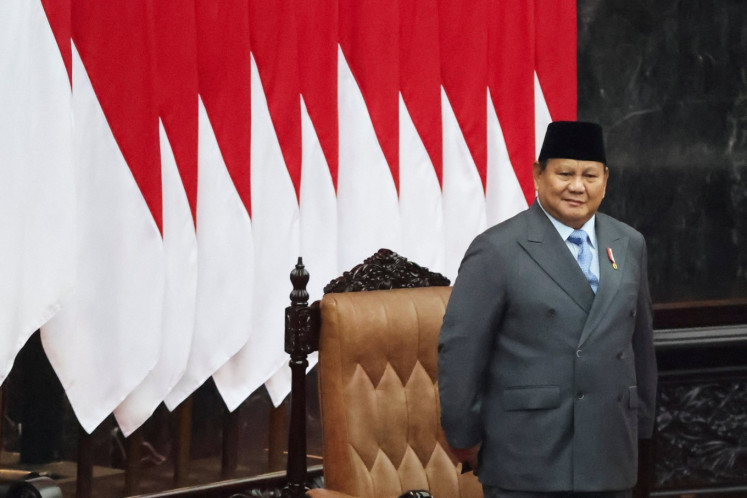
Nearly four months into Prabowo’s second year, the palace is already busy securing the administration's future through oligarchic reorganization while the public still waits for policies to yield tangible results.
Change text size
Gift Premium Articles
to Anyone
Share the best of The Jakarta Post with friends, family, or colleagues. As a subscriber, you can gift 3 to 5 articles each month that anyone can read—no subscription needed!
 Set as preferred source
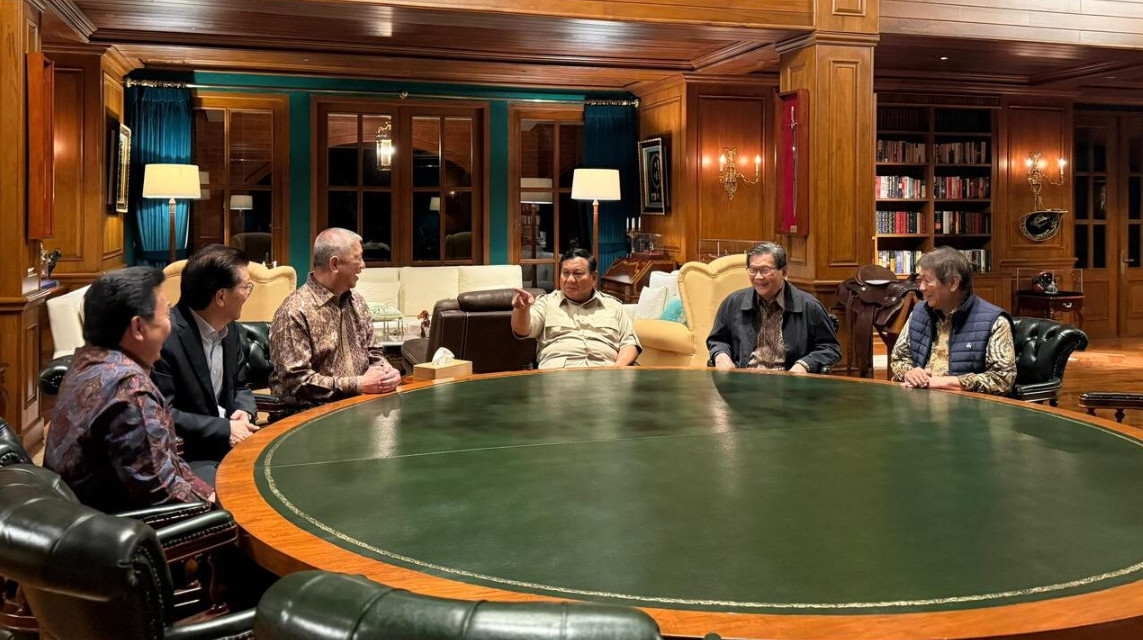 President Prabowo Subianto (third right) hosts a meeting with business leaders on Feb. 10, 2026 at his private estate in Hambalang village, Bogor, West Java. (BPMI Setpres/-)
T
he second year of a government should be its most honest phase. The initial euphoria has faded, yet excuses have not entirely worn thin. This is the moment when a state is expected to speak through impact rather than intention, through a tangible easing of living costs, policies felt on the ground and a sense of security that does not need to be repeatedly proclaimed.
However, just months after entering the second year of Prabowo Subianto’s presidency, public discourse is dominated not by outcomes but by continuity. The conversation has shifted prematurely to a second term in 2029 and a future arriving too soon while the present remains unfinished.
In daily governance, the public faces a series of policies that remain insufficiently explained. Adjustments to subsidies and living costs are felt unevenly, bureaucratic reforms lack measurable indicators and the slow handling of major legal cases has left citizens being asked for patience more frequently than they are invited to evaluate. At this present stage, government communication appears more defensive than accountable, and the gap between promises and lived experience is becoming increasingly visible.
Under these conditions, the political elite has moved swiftly. Faith-based parties such as the National Mandate Party (PAN) and the National Awakening Party (PKB) have openly declared their support for Prabowo in a 2029 reelection.
Notably, these endorsements were not accompanied by transparent assessments of government performance, nor were they framed as rewards for policy success. They emerged instead as early political maneuvers.
In the logic of power, early support is rarely cost-free and almost always tied to bargaining. The motives are transparent. In the short term, such support secures cabinet positions and forestalls exclusion from future reshuffles. In the longer term, the calculation is strategic: positioning within the next configuration of power, including the vice presidency.

Early endorsement functions as a signal to the palace that these parties seek a primary role in shaping the future order. Such a maneuver gains sharper meaning when viewed alongside the earlier remarks made by former president Joko “Jokowi” Widodo regarding a possible Prabowo-Gibran Rakabuming Raka ticket in 2029.