TheJakartaPost
Please Update your browser
Your browser is out of date, and may not be compatible with our website. A list of the most popular web browsers can be found below.
Just click on the icons to get to the download page.


Popular Reads
Top Results
No results found. Please check your search term and try again
Can't find what you're looking for?
View all search results
Popular Reads
Top Results
No results found. Please check your search term and try again
Can't find what you're looking for?
View all search resultsWhy the High Seas Treaty matters for everyone
Ocean stewardship is not defined by proximity to the sea, but by a willingness to act in the common interest by safeguarding humanity’s shared life-support system.
Change text size
Gift Premium Articles
to Anyone
Share the best of The Jakarta Post with friends, family, or colleagues. As a subscriber, you can gift 3 to 5 articles each month that anyone can read—no subscription needed!
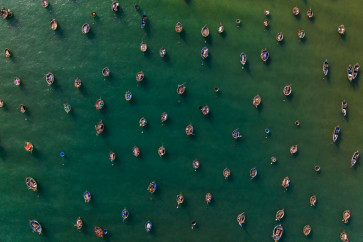
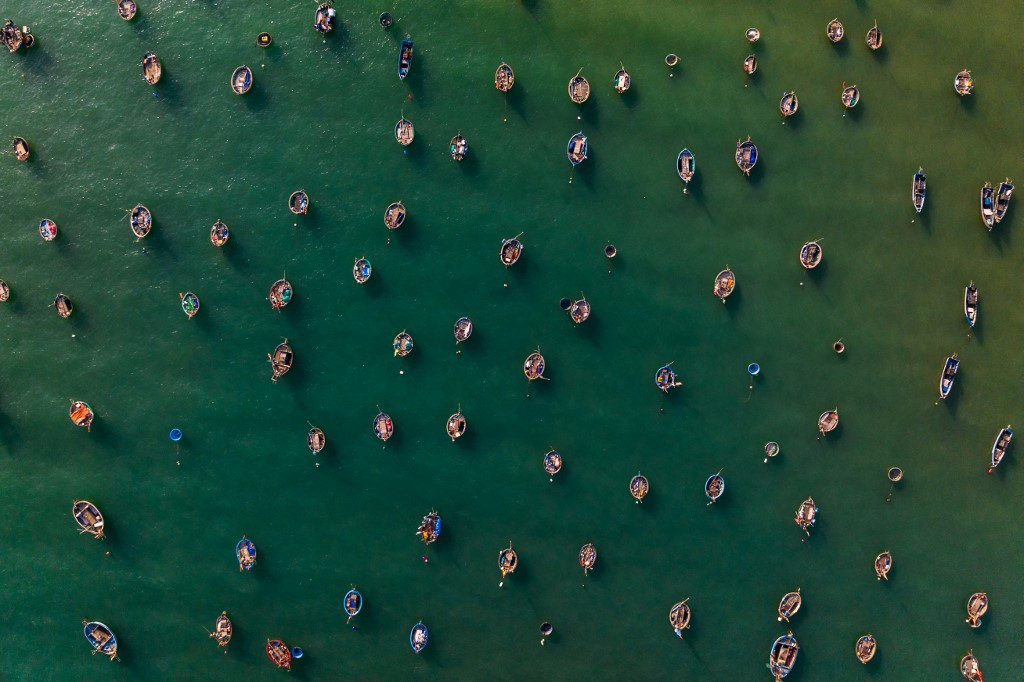 Fishing boats are moored at a beach in Danang, central Vietnam. (AFP/Dale De La Rey )
T
he world recently passed an important milestone: the agreement on the Conservation and Sustainable Use of Marine Biological Diversity of Areas beyond National Jurisdiction, commonly known as the High Seas Treaty, has now come into force. The treaty enshrines a fundamental truth that: without a healthy ocean, life on this planet cannot endure.
More than a thoroughfare for travel and trade, the ocean is indispensable to human lives and livelihoods, not just in coastal regions but also in landlocked communities. Globally, the blue economy employs more than 500 million people and provides food security for around 3 billion. The ocean influences climate and rainfall patterns around the world, even in inland countries like Malawi, where around 80 percent of us rely on rain-fed agriculture. And crucially, the ocean absorbs 30 percent of human-produced carbon dioxide, making it an indispensable carbon sink.
Moreover, coastal and inland regions alike are vulnerable to catastrophic climate events fueled by rising ocean temperatures, and to marine exploitation from overfishing and bottom trawling. In 2023, Cyclone Freddy, the longest-lasting tropical storm on record, hit Malawi with an unprecedented amount of “accumulated cyclone energy,” owing to higher ocean temperatures. Freddy’s destructive force displaced more than 659,000 Malawians, demonstrating that an unhealthy ocean threatens us all, regardless of geography.
All countries have a responsibility to protect and restore ocean systems. That is why in February 2025 Malawi became the first landlocked country to ratify the High Seas Treaty. In doing so, we affirmed that the high seas are our global commons, belonging equally to all countries.
Alongside other African countries, we have advocated for robust conservation and more just and equitable governance of humanity’s common heritage. That means expanding access to, and sharing the benefits from, ocean resources, as well as building greater capacity for all countries to implement the High Seas Treaty effectively. In this spirit, Malawi’s position aligns with the adage that came to define the negotiations: “nothing about us without us.” Decisions affecting the ocean’s future must reflect the meaningful participation of all countries, so that no one is left behind.
Ocean stewardship is not defined by proximity to the sea, but by a willingness to act in the common interest by safeguarding humanity’s shared life-support system. The new treaty is a monumental step forward in this respect, as it provides the first-ever framework to create marine protected areas outside national jurisdiction on the high seas, an area covering nearly two-thirds of the ocean.

We now have a pathway to preserve ecosystems whose protection promises to deliver outsize global benefits. Safeguarding critical areas like the Saya de Malha Bank seagrass system in the Indian Ocean, the biologically rich Walvis Ridge off southern Africa, and ecologically significant areas in the Gulf of Guinea will allow marine life to recover and thrive, ultimately strengthening the ecosystems on which we all depend.