TheJakartaPost
Please Update your browser
Your browser is out of date, and may not be compatible with our website. A list of the most popular web browsers can be found below.
Just click on the icons to get to the download page.


Popular Reads
Top Results
No results found. Please check your search term and try again
Can't find what you're looking for?
View all search results
Popular Reads
Top Results
No results found. Please check your search term and try again
Can't find what you're looking for?
View all search resultsNgada tragedy: When paper prosperity meets children’s realities
When the metrics of success on a dashboard fail to reach the dinner table, "paper prosperity" becomes a performance that masks the quiet breaking of a nation's children.
Change text size
Gift Premium Articles
to Anyone
Share the best of The Jakarta Post with friends, family, or colleagues. As a subscriber, you can gift 3 to 5 articles each month that anyone can read—no subscription needed!
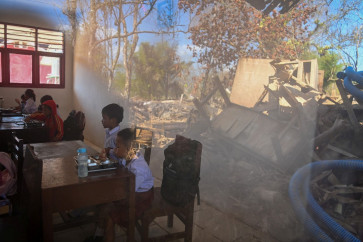
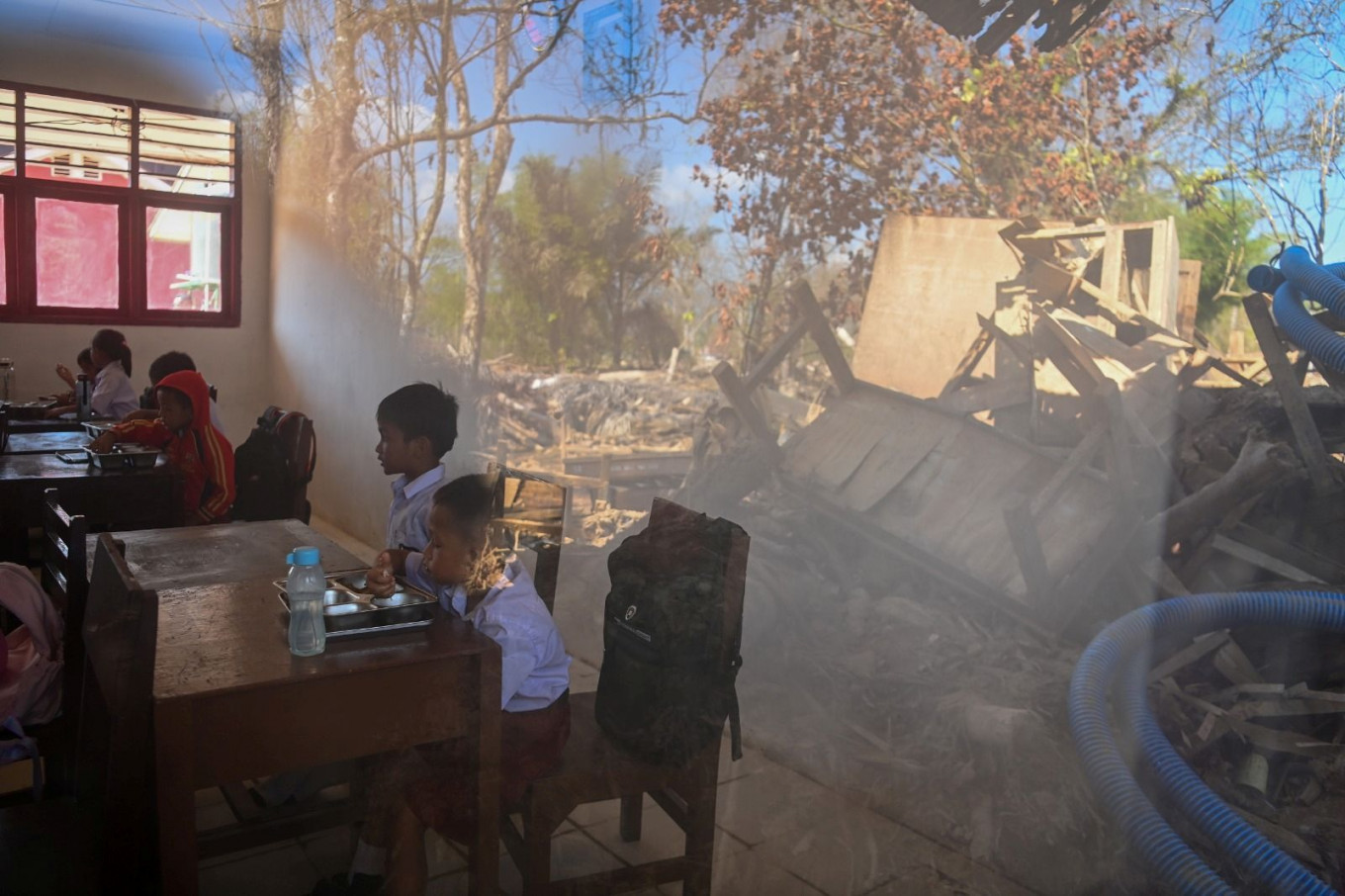 Food-safety balance: Students eat food provided by the government’s free nutritious meal program on Jan. 27, 2026 in a classroom at SDN 152982 Tukka 1B elementary school in Tukka subdistrict, Central Tapanuli regency, North Sumatra. (Antara/Indrianto Eko Suwarso)
O
n Jan. 29, a child in Ngada, East Nusa Tenggara (NTT), ended his life. Media reports use initials, and they should; he was a minor, and his family deserves protection. But the event itself refuses to stay small.
The saddening event did not occur in a country collapsing under hunger or economic paralysis. It happened in a country that increasingly looks successful on paper. Gross domestic product expanded by 5.11 percent in 2025, up from 5.03 percent the year before. Programs multiply, budgets rise and institutions are present. The national narrative is one of progress.
That contrast is the problem. Prosperity cannot be read from reports alone. If one wants to know whether a society is truly advancing, one should look first at its children - their bodies, their learning capacity and their emotional resilience.
Children experience reality long before statistics do. Recent claims that Indonesia is “at its richest” are not careless; in macroeconomic terms, they are defensible. Economic activity has expanded, transactions are more visible and public spending is larger and more sophisticated.
By the logic of dashboards, the country looks wealthier. But while dashboards capture activity, they say little about whether the underlying system is actually changing.
GDP records circulation rather than formation. When spending passes through more layers of bureaucracy, the graph rises. When assistance is distributed digitally, multiple sectors log activity. The system looks busy, yet it remains unclear whether the foundation underneath is moving in a sustained way.

This is how "paper prosperity" is produced. Institutions exist, programs operate and symbols of progress are visible, yet the long-term trajectory barely shifts.