The Jakarta Post
Please Update your browser
Your browser is out of date, and may not be compatible with our website. A list of the most popular web browsers can be found below.
Just click on the icons to get to the download page.


Popular Reads
Top Results
No results found. Please check your search term and try again
Can't find what you're looking for?
View all search results
Popular Reads
Top Results
No results found. Please check your search term and try again
Can't find what you're looking for?
View all search resultsThe hidden curriculum of domesticity and our STEM future
To unlock Indonesia’s STEM potential, we must dismantle the "hidden curriculum" that quietly trades a girl’s public authority for domestic virtue, turning classrooms into rehearsal spaces for expertise rather than compliance.
Change text size
Gift Premium Articles
to Anyone
Share the best of The Jakarta Post with friends, family, or colleagues. As a subscriber, you can gift 3 to 5 articles each month that anyone can read—no subscription needed!
 Set as preferred source
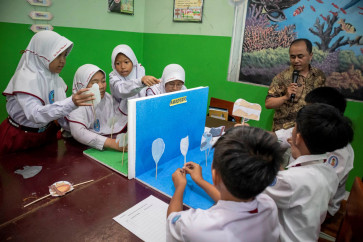
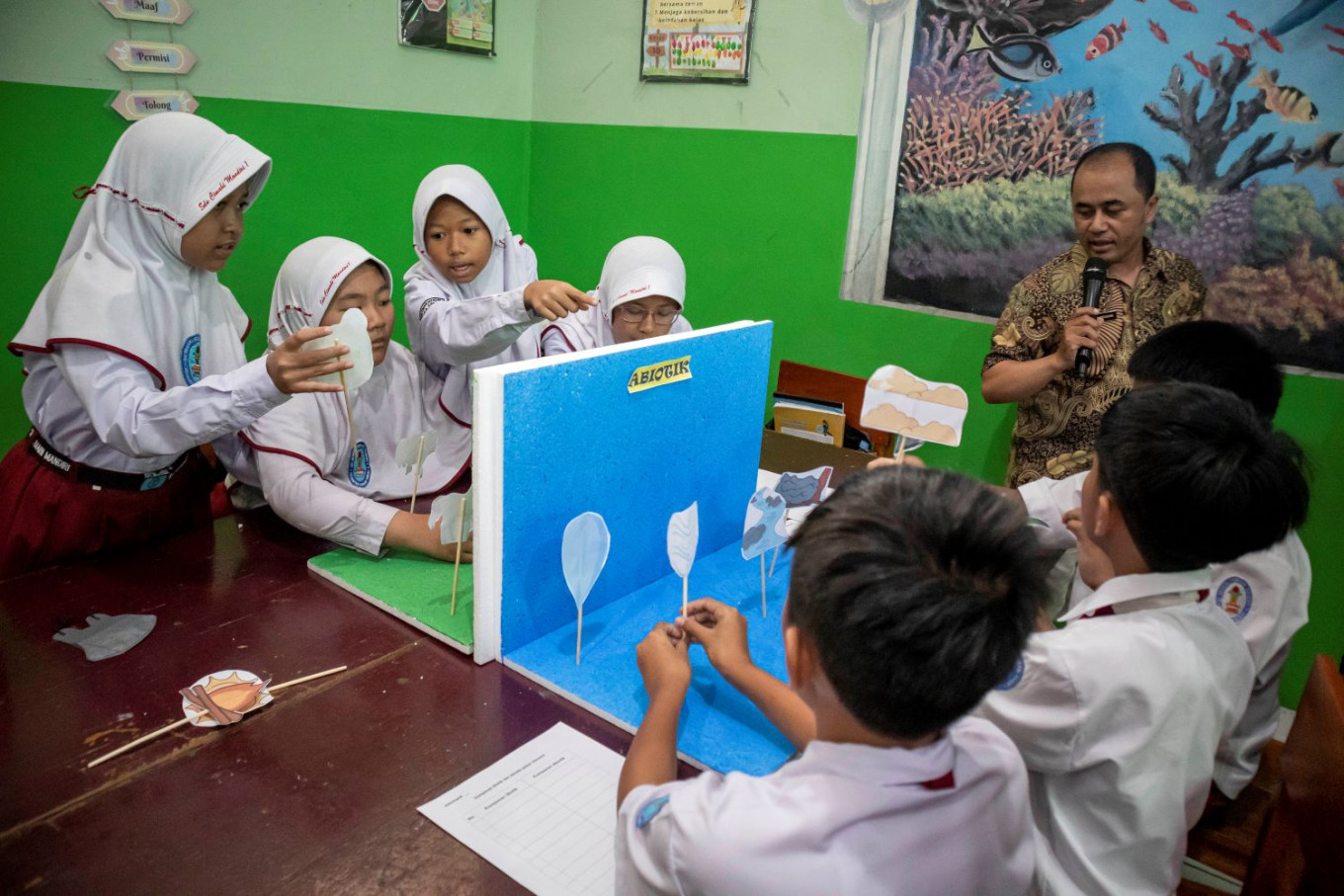 Nature lesson: Cimahi Mandiri 1 state elementary school students attend a natural science class on Sept. 22, 2025, in the city of Cimahi, West Java. (Antara/Abdan Syakura)
T
he most gifted mathematics preschool teacher we have met in Indonesia once hesitated to apply for an overseas scholarship. She and her family worried about propriety and safety if she traveled without a mahram. No form asked for a guardian; no law required one.
Yet the social message landed all the same: mobility is not for you. In science, technology, engineering and mathematics (STEM), where learning accumulates through labs, fieldwork, competitions and conferences, delayed mobility becomes delayed mastery.
This is why we worry less about individual decisions and more about the structures that shape what young people come to see as possible, respectable and worthwhile. When narrow civic expectations attached to motherhood become the default measure of women’s worth, they operate like an unofficial curriculum, quietly limiting girls’ STEM ambitions, restricting women’s mobility and time, and weakening women’s authority as credible experts in public life. The result is not a lack of talent, but a narrowing of permission: permission to be ambitious, visible and authoritative.
In STEM education, we often focus on syllabi, standards and assessments. Yet some of the most powerful lessons are never written down. They are absorbed through everyday expectations about who should speak, who should lead and who should stay close to home.
These expectations vary across regions, schools and families, but the pattern is familiar: girls are praised for neatness rather than reasoning; advised to be “realistic”; discouraged from traveling alone; and reminded to remain modest and not “too visible.”
We see this in Indonesian classrooms. A year 11 student solves a nonroutine mathematics problem at the board. When discussion begins, she withdraws and whispers her reasoning to a friend. A well-meaning mentor later tells her to “save her energy; university maths is heavy.” Nothing was explicit, nothing was punishable, yet the message landed: your brilliance is welcome; your voice is risky. The barrier is not ability; it is social permission to be ambitious in public.

An instructive contrast comes from my coauthor, an Australian National University graduate who moved from Indonesian to Australian schooling. In her Australian classrooms, STEM learning was treated as a set of civic practices, not merely a body of content. Students were expected to find problems worth investigating, justify claims with credible evidence, think critically and work collaboratively to test and refine ideas.