TheJakartaPost
Please Update your browser
Your browser is out of date, and may not be compatible with our website. A list of the most popular web browsers can be found below.
Just click on the icons to get to the download page.


Popular Reads
Top Results
No results found. Please check your search term and try again
Can't find what you're looking for?
View all search results
Popular Reads
Top Results
No results found. Please check your search term and try again
Can't find what you're looking for?
View all search resultsAnalysis: Himbara remarks signal expanding security role in economic governance
Change text size
Gift Premium Articles
to Anyone
Share the best of The Jakarta Post with friends, family, or colleagues. As a subscriber, you can gift 3 to 5 articles each month that anyone can read—no subscription needed!
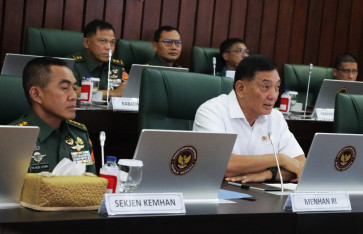
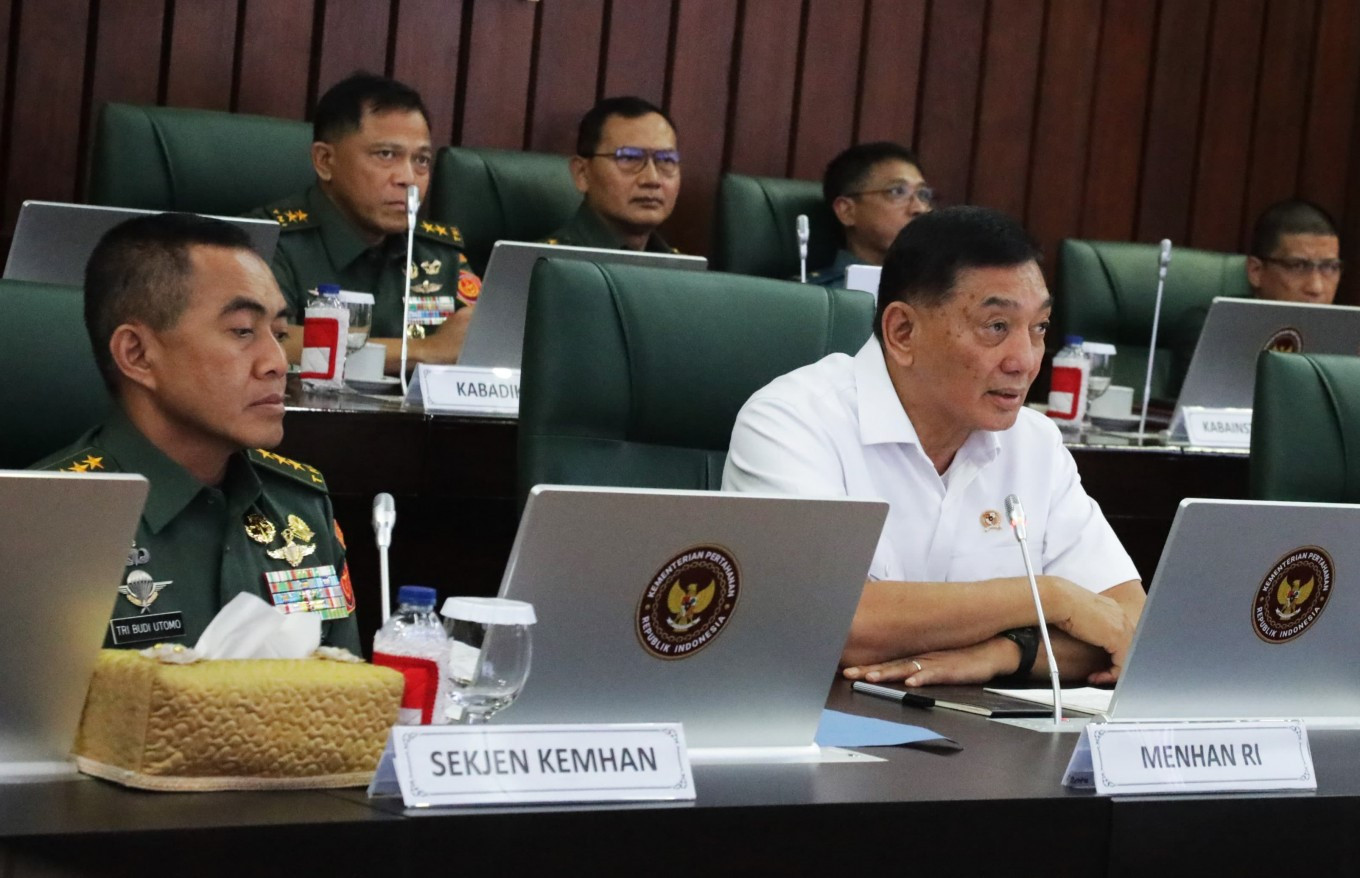 Defense Minister Sjafrie Sjamsoeddin (right) leads a leadership meeting of the ministry's top officials and those of the Indonesian Military through a video conference at the ministry in Jakarta on Jan. 16, 2025. (Courtesy of Defense Ministry/-)
D
efense Minister Sjafrie Sjamsoeddin stirred controversy after revealing that the Prabowo Subianto administration is considering a leadership reshuffle at state-owned banks, collectively known as the Association of State-Owned Banks (Himbara). The announcement was unusual, coming from a cabinet official whose portfolio centers on national defense. However, it reflects the increasingly visible role of the national security establishment in civilian, financial and economic affairs under the current administration.
Speaking to reporters on Jan. 31, Sjafrie said President Prabowo planned to replace members of Himbara banks’ boards of directors whose performance is deemed not to have benefited the country. The retired Army general went further, alleging that some directors prioritized personal enrichment over national interest. He also criticized loan disbursement by Himbara banks Bank Mandiri, Bank Rakyat Indonesia (BRI), Bank Negara Indonesia (BNI) and Bank Tabungan Negara (BTN), arguing that their lending favored large corporations rather than micro, small and medium enterprises (MSMEs).
In response, Danantara CEO Rosan Roeslani said there had been no discussion within the sovereign wealth fund about altering the composition of Himbara banks’ boards of directors or boards of commissioners. As controlling shareholder, Danantara would follow established mechanisms if leadership adjustments were deemed necessary, Rosan said, adding that such decisions would typically be addressed at the banks’ 2026 annual general meetings.
From a legal standpoint, the defense minister’s involvement in economic matters has some institutional basis through the National Security Council (DPN). Under Article 6 of Presidential Regulation (Perpres) No. 202/2024, the defense minister and deputy defense minister serve as acting head and secretary of the non-structural body. Beyond formulating integrated defense policy, including geoeconomic strategies, Article 3 of the regulation grants the DPN broad discretion to carry out “other tasks as instructed by the president,” potentially providing a formal channel for cross-sector intervention.
Economists point to two possible drivers behind the push to alter the Himbara leadership. First is the perceived failure of the Finance Ministry’s September 2025 policy that redirected Rp 200 trillion (US$11.9 billion) of the government’s excess budget balance (SAL) to Himbara banks for productive lending. The funds were intended to support MSMEs, but analysts note that much of the liquidity instead went toward refinancing loans of large corporations. Second, a leadership reshuffle could implicitly steer Himbara banks to align more closely with Prabowo’s flagship programs.
Bank Indonesia (BI) viewed the policy’s underwhelming result as reflecting weakened demand. In contrast, Finance Minister Purbaya Yudhi Sadewa attributed slow loan growth and high lending rates to poor coordination between fiscal and monetary authorities, as well as the banks’ slow transmission of liquidity.

Purbaya’s criticism of coordination with BI, and his later confirmation that his ministry and the central bank have a position exchange agreement, preceded the exchange of positions between former deputy finance minister Thomas Djiwandodo, who is also Prabowo’s nephew, and former BI deputy governor Juda Agung.