TheJakartaPost
Please Update your browser
Your browser is out of date, and may not be compatible with our website. A list of the most popular web browsers can be found below.
Just click on the icons to get to the download page.


Popular Reads
Top Results
No results found. Please check your search term and try again
Can't find what you're looking for?
View all search results
Popular Reads
Top Results
No results found. Please check your search term and try again
Can't find what you're looking for?
View all search resultsFrom the US-led rules-based order to multipolar international law
The Canadian premier's recent declaration of an end to the "rules-based order" is an an outstanding but delayed admission, as the West only complied with soaring US unilateralism since the 1980s so long as the material perks remained: Today, they are gone.
Change text size
Gift Premium Articles
to Anyone
Share the best of The Jakarta Post with friends, family, or colleagues. As a subscriber, you can gift 3 to 5 articles each month that anyone can read—no subscription needed!
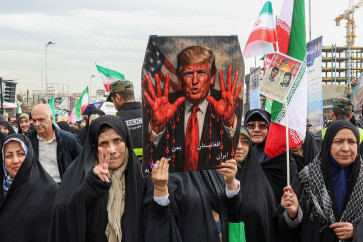
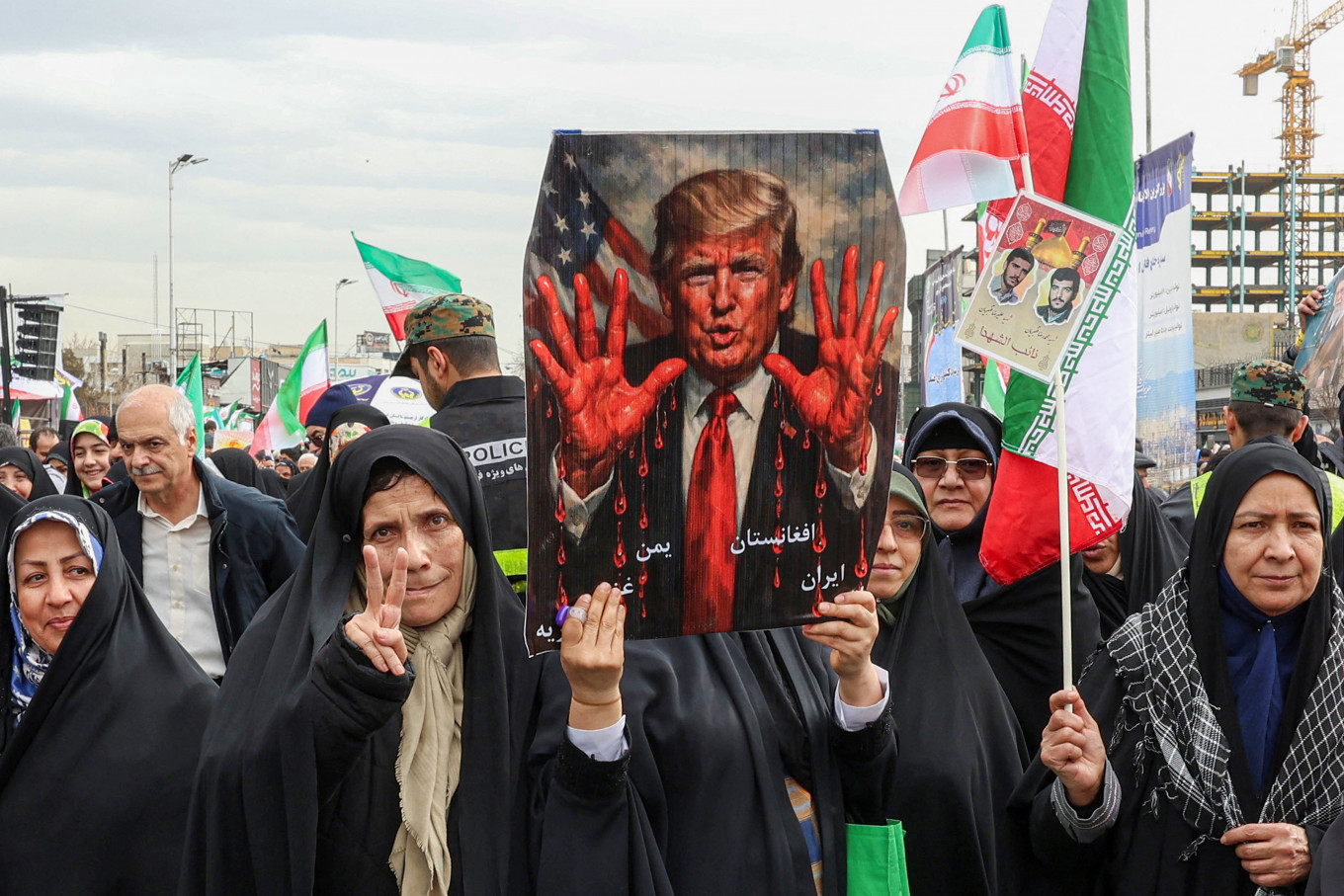 Demonstrators march with a sign depicting United States President Donald Trump with bloodied hands during a rally in Tehran on Feb. 11, 2026, to mark the 47th anniversary of the 1979 Islamic revolution. (AFP/Stringer)
R
ecently, Canadian Prime Minister Mark Carney, perhaps the ultimate liberal insider, delivered a seminal speech at the World Economic Forum meeting in Davos, Switzerland, declaring the demise of the “rules-based international order” and ushering in a new era of might-based diplomacy. At the Munich Security Conference, German Chancellor Friedrich Merz seconded this sentiment, stating that the “rules-based order, however imperfect it was even at its best, no longer exists”.
Yet there are cracks in this new mainstream narrative. The United States-led rules-based order did not die in Davos. It has been a convenient fiction since the 1980s.
The rules-based order was constructed by the US and its allies after 1945, comprising a web of treaties, norms and power-backed institutions ranging from the Bretton Woods system to NATO. In theory, these rules applied universally. In practice, the US retained “exceptionalist” privileges, including the use of unilateral sanctions, extraterritorial law and military intervention. What was ostensibly universal was, in reality, an order of, by and for America.
From its inception, this order was challenged by the pursuit of true international law. As opposed to unilateral power politics, the Global South and various small states saw international law as a consensual legal system among sovereign equals, rooted not just in shifting rules but in customary law and the principles of the United Nations Charter. Their vision was a world defined by sovereign equality, nonintervention and the prohibition of the use of force, except in cases of self-defense or UN Security Council (UNSC) authorization.
Through much of the Cold War, the rules-based order and international law appeared aligned, largely because US interests favored system stability to constrain Soviet influence. However, the reverse proved true once the Soviet Union imploded. With the "red threat" gone, UN-style multilateralism no longer served Washington’s unipolar ambitions.
If we use UN voting alignment as a proxy for normative unity, measuring how often a state votes with the international majority, the data reveals a startling divergence. A high alignment suggests integration into a multilateral consensus, whereas a low alignment suggests unilateralism.

Since the UN’s inception, the Global South has demonstrated the highest alignment, peaking at 85 percent in 1970 and hovering around 75 percent today.