TheJakartaPost
Please Update your browser
Your browser is out of date, and may not be compatible with our website. A list of the most popular web browsers can be found below.
Just click on the icons to get to the download page.


Popular Reads
Top Results
No results found. Please check your search term and try again
Can't find what you're looking for?
View all search results
Popular Reads
Top Results
No results found. Please check your search term and try again
Can't find what you're looking for?
View all search resultsThose who most need to understand AI don't get it
Just as war is too important to be left to the generals, AI is too important to be controlled solely by those inventing it.
Change text size
Gift Premium Articles
to Anyone
Share the best of The Jakarta Post with friends, family, or colleagues. As a subscriber, you can gift 3 to 5 articles each month that anyone can read—no subscription needed!
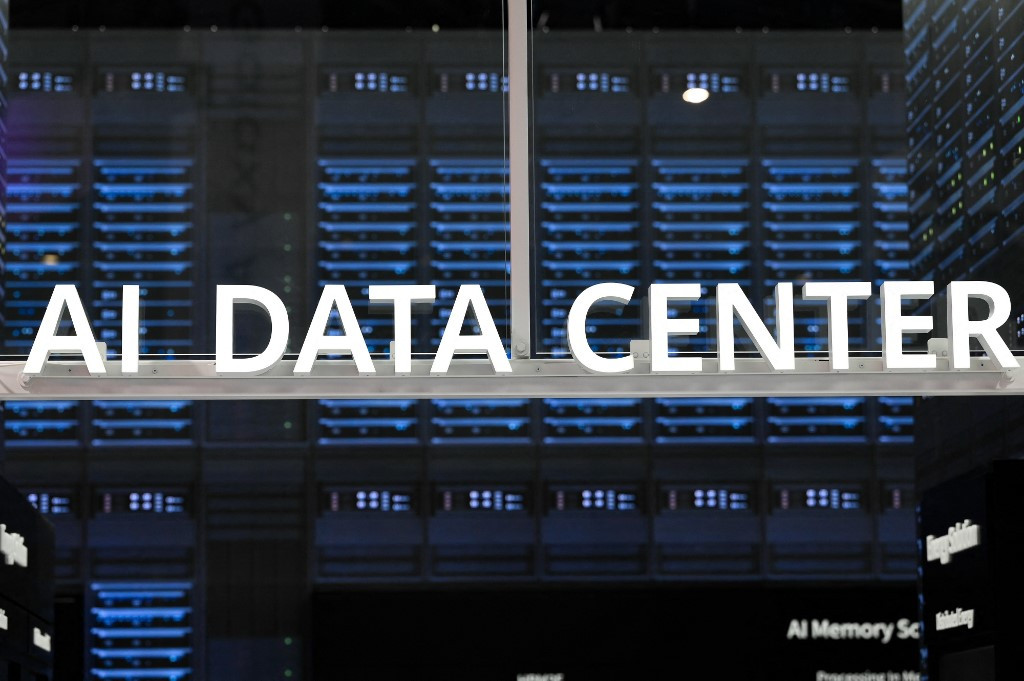 Signage of an AI data center is displayed at the Mobile World Congress (MWC), the world's biggest mobile fair, on March 3, 2025, in Barcelona, Spain. Amid euphoria over new applications, artificial intelligence has also caused friction with regard to privacy and data rights. (AFP/Josep Lago)
T
here are times when a major global development demands a special response from many academic disciplines, industries and departments of government. This was the case with World War II, nuclear weapons and the Cold War, and it is the case again with generative AI.
Yet too often, discussions about AI are overly specialized or siloed between technologists, economists and other disciplines, from political science, psychology and sociology to law and military studies. This is a problem because the technologists are certainly right that AI will change everything, fast, and that the conventional policy world is not keeping up. But just as war is too important to be left to the generals, AI is too important to be controlled solely by those inventing it, no matter how brilliant they are.
Most AI technologists and entrepreneurs are wildly optimistic. They anticipate revolutionary advances in medicine, the elimination of hard physical labor, radically accelerated productivity growth and universal abundance. They expect such outcomes partly because there is money to be made, but also because their belief in the technology’s potential is sincere.
But sincerity often accompanies naivete, as I know all too well. 30 years ago, I founded the startup that developed the first software tool enabling anyone to build a website, and I totally drank the Kool-Aid. We told ourselves that our product would allow truth-tellers and innovators to bypass gatekeepers, liberating and enlightening everyone. Social networks would, of course, do the same, and together we would create a decentralized, egalitarian paradise of unfiltered truth. How wrong we were.
When I look at the AI landscape, heavily populated by extremely young founders, I see the same naivete. I recently spoke with a brilliant young CEO whose AI startup is already valued at several billion dollars. When asked whether the problem of AI deepfakes and disinformation worried him, he replied (to paraphrase): Of course not. All you need to do is verify that something comes from a trustworthy source. Easy.
Really? How will these trustworthy sources know what is real when someone sends them a photograph, document, audio recording or video? What will they do when thousands of images or videos come in, each contradicting the others? How will we know whether something posted on social media is real? How can news sources remain current and profitable if they must laboriously verify the reality of absolutely everything?

Still, if the technologists are overly optimistic, the economists suffer from a different sort of tunnel vision. They tend to see everything as a smooth equilibrium of self-adjusting markets. They predict substantial but gradual productivity improvements, dismissing extreme scenarios and neglecting both radical opportunities and potentially grave problems alike.