TheJakartaPost
Please Update your browser
Your browser is out of date, and may not be compatible with our website. A list of the most popular web browsers can be found below.
Just click on the icons to get to the download page.


Popular Reads
Top Results
No results found. Please check your search term and try again
Can't find what you're looking for?
View all search results
Popular Reads
Top Results
No results found. Please check your search term and try again
Can't find what you're looking for?
View all search resultsAnalysis: How Prabowo controls criticism in Indonesia’s democracy
Change text size
Gift Premium Articles
to Anyone
Share the best of The Jakarta Post with friends, family, or colleagues. As a subscriber, you can gift 3 to 5 articles each month that anyone can read—no subscription needed!
 Set as preferred source
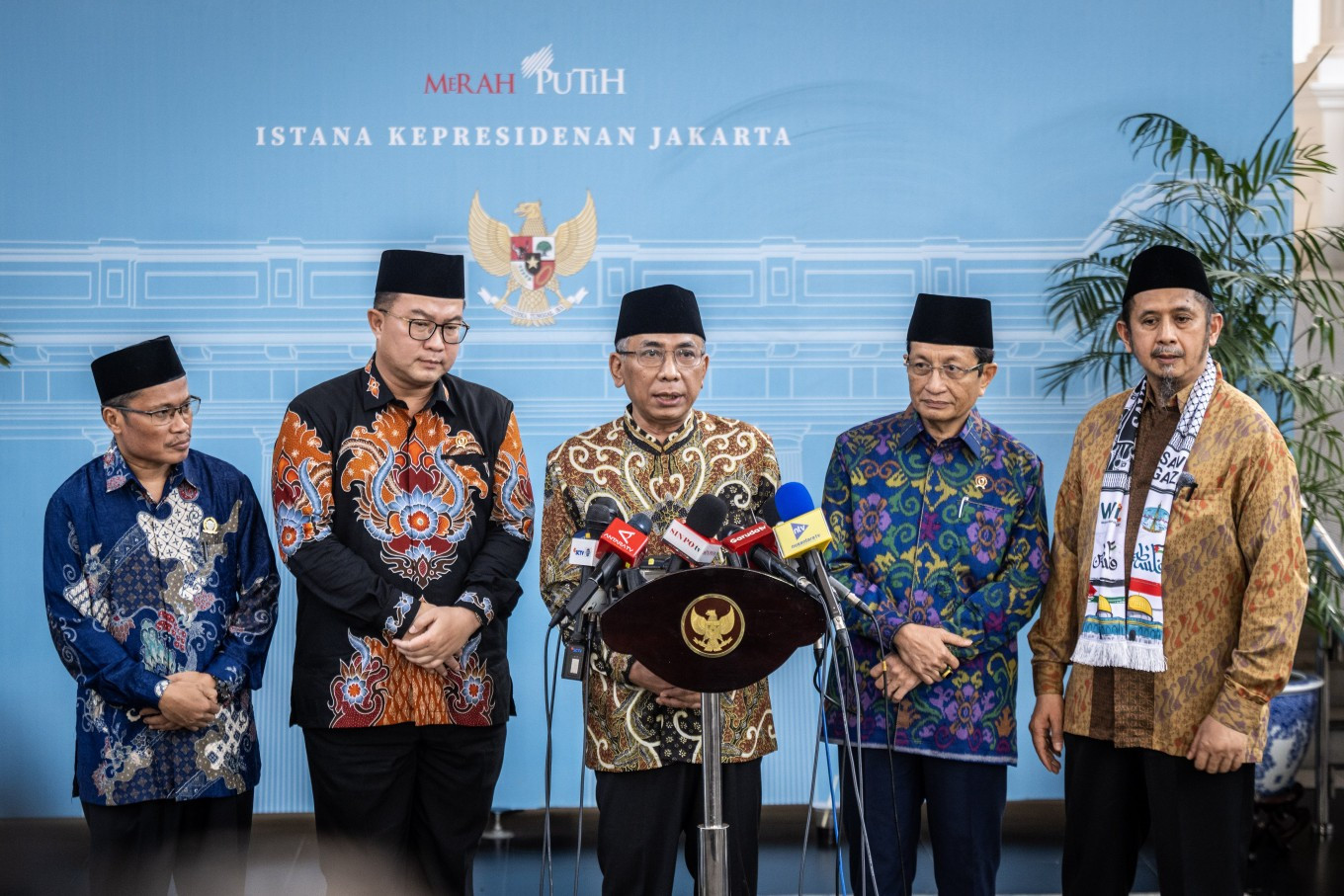 Religious Affairs Minister Nasaruddin Umar (second right) alongside religious leaders attend a press conference on Feb. 3, 2026, after a meeting with President Prabowo Subianto at the State Palace in Central Jakarta. The meeting discussed Indonesian participation in the Board of Peace. (Antara/Bayu Pratama S)
O
n many occasions, President Prabowo Subianto has publicly stated that he welcomes criticism of his administration, emphasizing that governments require critical feedback, even when it is uncomfortable. Yet the situation on the ground suggests a paradoxical reality: criticism may be welcomed in rhetoric, but its public expression appears increasingly constrained.
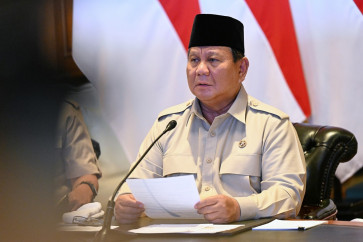
In recent weeks, the President has intensified a series of closed-door engagements with prominent figures, a move widely framed as an effort to obtain diverse perspectives on national priorities.
On Jan. 30 at his private residence on Jl. Kertanegara in South Jakarta, Prabowo received several public figures including Siti Zuhro, Abraham Samad, Said Didu and Susno Duadji. Their discussions reportedly covered eradicating graft, regional elections, the Corruption Eradication Commission (KPK), police reform and Indonesia’s involvement in the Gaza Board of Peace (BoP). The meeting generated mixed responses ranging from praise for the President’s openness to speculation that vocal critics were being symbolically repositioned within the administration’s orbit.
The pattern was repeated on several other occasions. On Feb. 3, the President convened a closed meeting with leaders from at least 19 Muslim organizations at Merdeka Palace in Central Jakarta. A day later, he welcomed former foreign ministers, deputy foreign ministers, lawmakers and academics. Both meetings focused primarily on Indonesia’s prospective participation in the BoP spearheaded by United States President Donald Trump.
Despite initial differences, the attendees publicly converged on the view that joining the BoP aligned with Indonesia’s constitutional commitment to Palestinian independence.
This type of engagement also extended to the business community. On Feb. 9, Prabowo hosted 22 business leaders from the Indonesian Employers Association (Apindo) at his Hambalang residence in Bogor, West Java. During that meeting, he encouraged the private sector to expand job creation, particularly in the real economy, while supporting poverty alleviation through improved nutrition and education alongside industrialization.

Taken together, these forums project an image of consultative governance. However, critics argue that those consultations have occurred largely within controlled, closed settings: spaces where dissent can be managed rather than addressed openly.