TheJakartaPost
Please Update your browser
Your browser is out of date, and may not be compatible with our website. A list of the most popular web browsers can be found below.
Just click on the icons to get to the download page.


Popular Reads
Top Results
No results found. Please check your search term and try again
Can't find what you're looking for?
View all search results
Popular Reads
Top Results
No results found. Please check your search term and try again
Can't find what you're looking for?
View all search resultsFasting the free meal program
From a logistical standpoint, the program may well proceed without disruption. The more fundamental question, however, remains: is maintaining the initiative during the fasting month, and extending it into Idul Fitri, the most effective and responsible use of our limited education budget?
Change text size
Gift Premium Articles
to Anyone
Share the best of The Jakarta Post with friends, family, or colleagues. As a subscriber, you can gift 3 to 5 articles each month that anyone can read—no subscription needed!
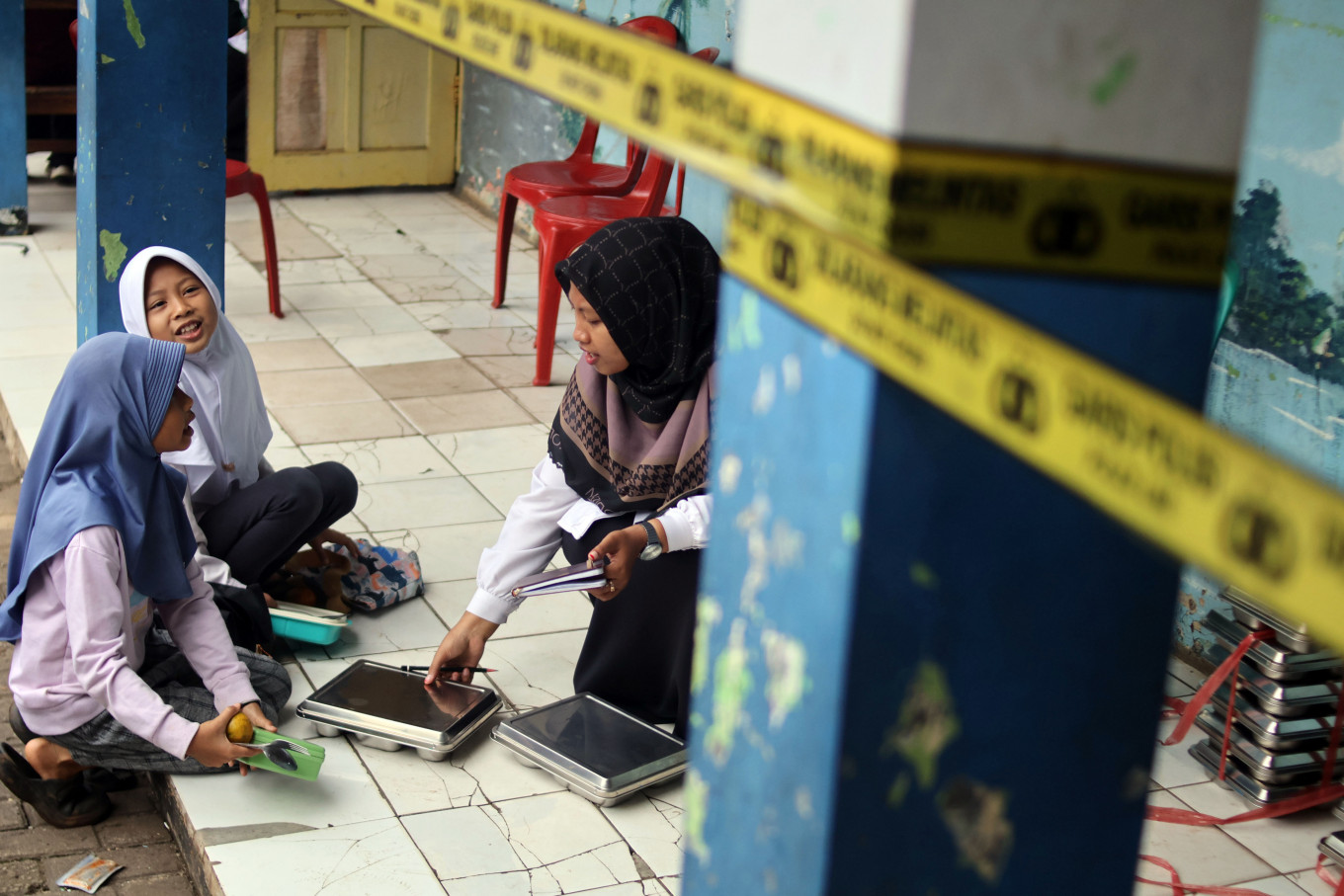 A teacher distributes free meals to students on Feb. 2 while schools remain closed following a building collapse at Madrasah Ibtidaiyah Miftahul Falah in Gunungputri, Bogor regency, West Java. The government has confirmed that the program will continue during Ramadan, with menus and distribution times adjusted for students observing the fast. (Antara/Yulius Satria Wijaya)
L
ike last year, the National Nutrition Agency (BGN) plans to continue its flagship free meal program during Ramadan, which officially begins today, despite the fact that most students in Muslim-majority Indonesia will be fasting throughout school hours.
To accommodate the shift in timing, the agency has introduced several adjustments, such as distributing non-perishable items like bread and biscuits for students to consume after sunset. A similar scheme is devised for the first three days of the Idul Fitri holiday, providing food packages for students to take home during the break.
From a logistical standpoint, the program may well proceed without disruption. However, a more fundamental question remains: is maintaining the initiative during the fasting month, and extending it into Idul Fitri, the most effective and responsible use of a limited education budget?
The free meal program is earmarked for Rp 335 trillion (US$20 billion) this year, a massive allocation equivalent to 42 percent of the total national education budget. This spending has drawn significant criticism from experts who warn it could undermine efforts to address the country’s persistent educational crisis.
According to the BGN, the initiative costs approximately Rp 1.2 trillion per day. If it continues throughout Ramadan and into the holiday break, spending for that single month alone would reach roughly Rp 33 trillion. This is a staggering sum to justify at a time when most students are fasting and the government is operating under tight fiscal constraints.
Redirecting even a fraction of these funds could have a transformative impact on the nation's education sector: repairing dilapidated classrooms, improving teacher welfare and expanding opportunities for millions of students at risk of dropping out due to economic hardship.

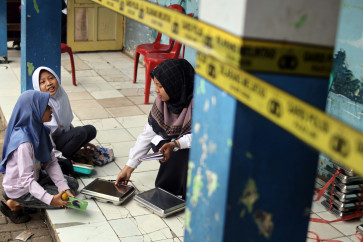
The need for infrastructure investment is no longer a matter of aesthetics; it is a matter of safety. Reports of school collapses have become alarmingly frequent. Late last year, dozens of students in West Java were injured in three separate structural failures. Recently, a widely circulated video showed junior high students in Sikka Regency, East Nusa Tenggara, studying in a severely damaged bamboo hut after strong winds tore through their original building.