TheJakartaPost
Please Update your browser
Your browser is out of date, and may not be compatible with our website. A list of the most popular web browsers can be found below.
Just click on the icons to get to the download page.


Popular Reads
Top Results
No results found. Please check your search term and try again
Can't find what you're looking for?
View all search results
Popular Reads
Top Results
No results found. Please check your search term and try again
Can't find what you're looking for?
View all search resultsJava’s freshwater surprise comes with risk
Conservation of freshwater biodiversity must be integrated with ongoing watershed rehabilitation and restoration efforts to ensure river health in key basins across Java.
Change text size
Gift Premium Articles
to Anyone
Share the best of The Jakarta Post with friends, family, or colleagues. As a subscriber, you can gift 3 to 5 articles each month that anyone can read—no subscription needed!
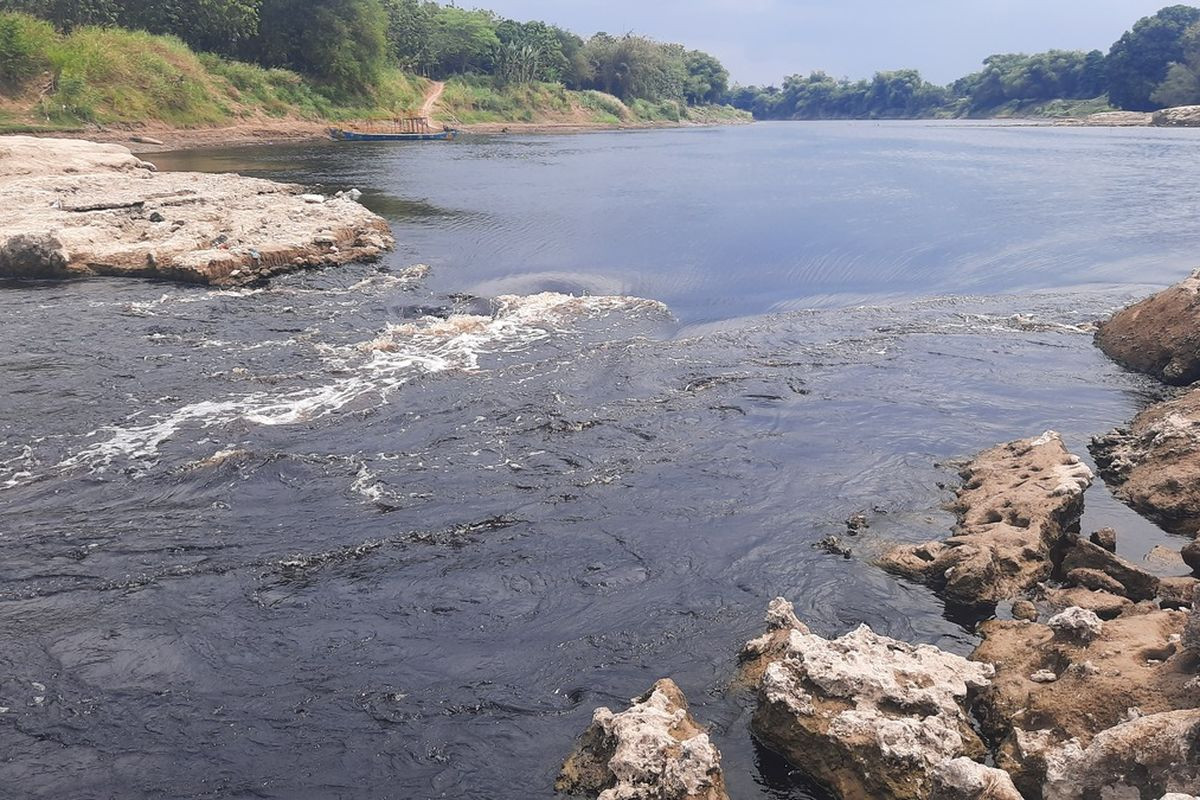 An eddy whirls amid calm waters on Sept. 11, 2021, in the Solo River of Central Java. (Kompas/Aria Rusta Yuli Pradana)
B
iological surprises are supposed to be rare on one of the most densely populated islands on Earth. Yet our team has documented one on Java: a freshwater mussel species that is new to science. The discovery is exciting but also unsettling. If Java, an island shaped by land conversion, river engineering and rapid urban growth, can still hide undescribed freshwater biodiversity, we also might be losing species before we even know they exist.
Freshwater mussels, which belong to the order Unionida, rarely make headlines. They live quietly on riverbeds, filtering water and recycling nutrients, but they function like living infrastructure: Their filtering activity influences water clarity and nutrient flows, and their larvae typically depend on fish hosts to develop and disperse. When mussels decline, it is often a symptom of broader river dysfunction: pollution, habitat damage and collapsing fish communities.
Until now, Java had never been assessed comprehensively with modern taxonomy and DNA tools. As a result, there is no robust island-wide inventory and knowledge is limited on current distributions or how decades of human pressure have reshaped them.
We set out to fill that gap. In 2022-2023, we surveyed 66 sites across 18 river basins on Java and delineated species using an integrated approach, combining shell traits with DNA. We documented and sequenced 76 populations at 42 sites in 16 river basins, comprising eight native species and one non-native species.
The headline discovery describes a new species: Pseudodon cokelatus sp. nov. We also recorded several species on Java for the first time, detected a non-native species (Sinanodonta pacifica) and clarified that Rectidens sumatrensis is absent from Java.
But discovery is only half the story. When we compared our observations with historical records spanning roughly the last 70 years, we saw considerable population losses among most native species. During fieldwork, many residents echoed the same message: Mussels that used to be common in local rivers have disappeared.

The threats converge on two fronts. The first is water quality: domestic wastewater, industrial effluents, including from illegal gold mining, and agricultural runoff together deliver pathogens, nutrients and chemical pollutants into rivers. The second is habitat disruption: sand mining, riverbank conversion and channel modification destabilize substrates and remove the microhabitats mussels need to survive and reproduce.