The Jakarta Post
Please Update your browser
Your browser is out of date, and may not be compatible with our website. A list of the most popular web browsers can be found below.
Just click on the icons to get to the download page.


Popular Reads
Top Results
No results found. Please check your search term and try again
Can't find what you're looking for?
View all search results
Popular Reads
Top Results
No results found. Please check your search term and try again
Can't find what you're looking for?
View all search resultsRamadan and the liberation theology of state and society
While presented as a stabilizing force, experts argue the “hegemonic coalition” of the current administration narrows the system of checks and balances.
Change text size
Gift Premium Articles
to Anyone
Share the best of The Jakarta Post with friends, family, or colleagues. As a subscriber, you can gift 3 to 5 articles each month that anyone can read—no subscription needed!
 Set as preferred source
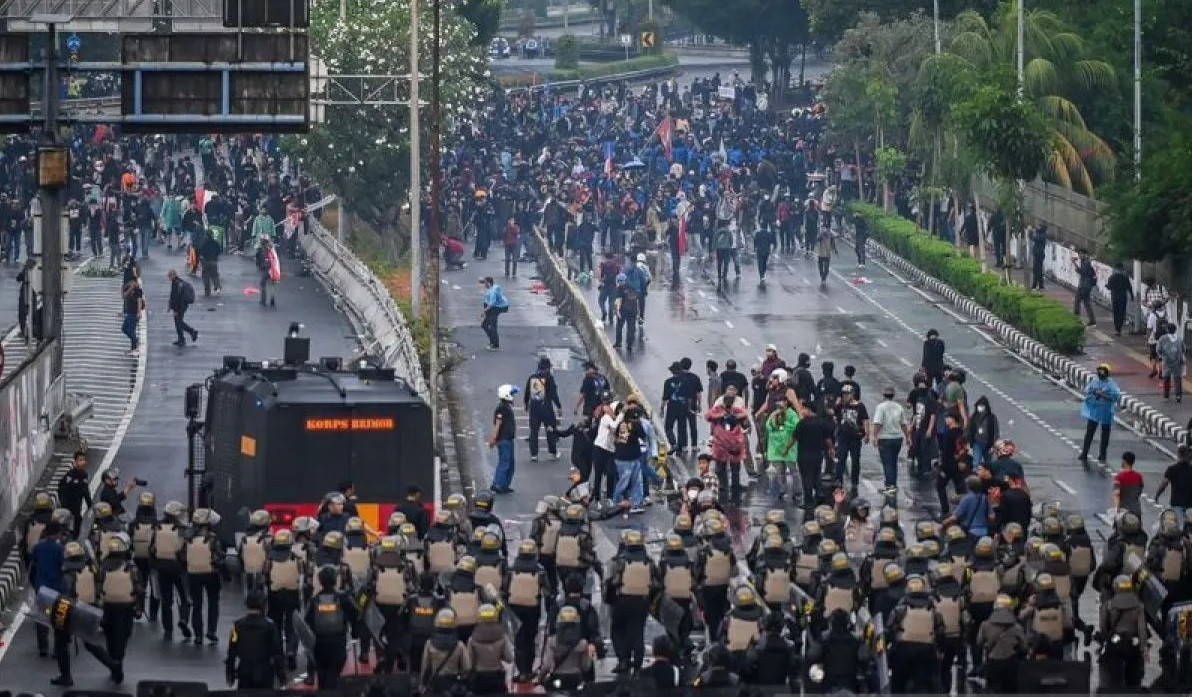 Head-to-head: Students brave security cordons during a rally on Aug. 28, 2025, near the House of Representatives building in Senayan, Central Jakarta.
(Antara/Rivan Awal Lingga)
Head-to-head: Students brave security cordons during a rally on Aug. 28, 2025, near the House of Representatives building in Senayan, Central Jakarta.
(Antara/Rivan Awal Lingga)
R
amadan is a holy month for Muslims, a profound time to enhance worship through fasting. Yet, many often neglect muhasabah (self-reflection). Without it, fasting becomes a meaningless exercise in hunger and thirst, failing to transform our character.
As noted in a hadith narrated by Ibn Majah: “[...] there are many people who fast, but they gain nothing from it except hunger and thirst.”
During Ramadan, we are challenged to confront our inner selves, mindsets and habits to attain taqwa (God-consciousness). This spiritual discipline aims to liberate us from negative traits such as indiscipline, dishonesty, greed and corruption.
Furthermore, Muslims must extend this spirit of liberation to the state and society. This involves "liberation theology", a transformative perspective that interprets Islamic texts as a means to challenge authoritarian and unjust structures that marginalize mustadafin (the poor and the weak). It transforms textual interpretation into praxis, or practical action, against unjust social and political policies.
At first glance, Islamic Liberation Theology mirrors the Latin American Liberation Theology promoted by Catholic theologians like Gustavo Gutiérrez in the 1960s. However, fundamental differences exist. The latter is rooted in Catholic social teachings, interpreting Jesus as a liberator of the poor, and often applies Marxian social analysis.
As Enrique Dussel noted, it draws from "humanist" Marxist thinkers like Antonio Gramsci and Ernst Bloch. Gutiérrez insisted the Church must unite with the poor in revolutionary action to overcome capitalist subjugation.

In contrast, Islamic Liberation Theology is rooted in the Quran and Islamic notions of social justice. It focuses on liberating human beings from all forms of subjugation to achieve God’s will. It is a product of progressive intellectuals committed to dismantling systemic oppression within Muslim-majority contexts.