The Jakarta Post
Please Update your browser
Your browser is out of date, and may not be compatible with our website. A list of the most popular web browsers can be found below.
Just click on the icons to get to the download page.


Popular Reads
Top Results
No results found. Please check your search term and try again
Can't find what you're looking for?
View all search results
Popular Reads
Top Results
No results found. Please check your search term and try again
Can't find what you're looking for?
View all search resultsIndonesia’s market jitters a confidence test for international investors
Markets are asking Indonesia for predictable and coherent rules that distinguish temporary transition measures from long-lived assets that may face growing financing and refinancing challenges.
Change text size
Gift Premium Articles
to Anyone
Share the best of The Jakarta Post with friends, family, or colleagues. As a subscriber, you can gift 3 to 5 articles each month that anyone can read—no subscription needed!
 Set as preferred source
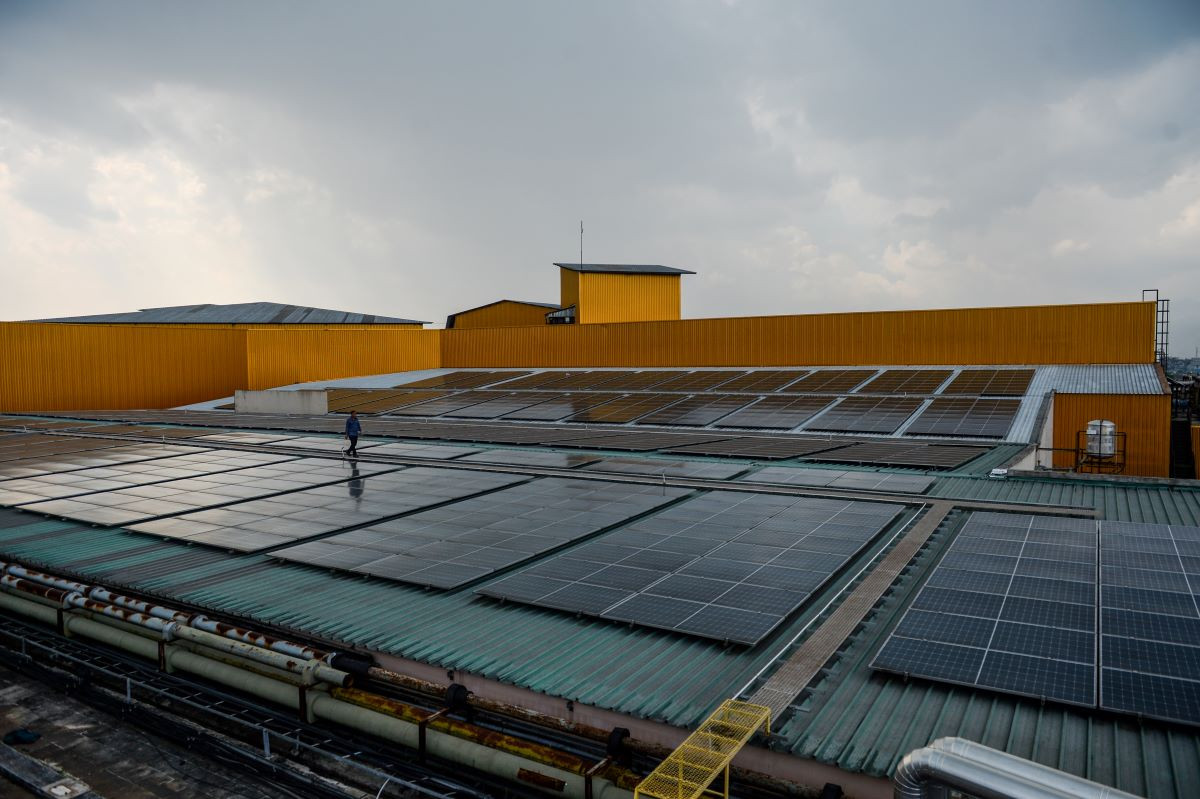 Powerful solution: A technician inspects a rooftop solar power plant (PLTS) on Sept. 8, 2025 at Trans Studio Mall in Bandung, West Java. Data from the Energy and Mineral Resources Ministry show that as of July 2025, rooftop PLTS have reached a combined installed capacity of 538 megawatt peak across 10,882 customers.
(Antara/Raisan Al Farisi)
Powerful solution: A technician inspects a rooftop solar power plant (PLTS) on Sept. 8, 2025 at Trans Studio Mall in Bandung, West Java. Data from the Energy and Mineral Resources Ministry show that as of July 2025, rooftop PLTS have reached a combined installed capacity of 538 megawatt peak across 10,882 customers.
(Antara/Raisan Al Farisi)
T
he recent bout of market volatility in Indonesia, marked by a sharp equity sell-off, sustained foreign outflows and a revision of the sovereign credit outlook to negative, has prompted questions about what, exactly, has unsettled investors.
The answer is unlikely to lie in a sudden weakening of Indonesia’s economic fundamentals. Growth remains relatively strong, public debt is manageable, and the country continues to attract long-term interest in strategic sectors. Rather, recent market moves point to a more familiar concern: confidence driven by policy signalling.
In periods of heightened global uncertainty, financial markets tend to focus less on headline ambition and more on governance clarity, policy predictability and the credibility of signals sent to capital. Where those signals appear mixed, markets do not wait for fundamentals to weaken, they are less forgiving of ambiguity and price risk early.
Rating agencies, index providers and global investors tend to converge on one question: How predictable is the policy environment shaping future cash flows?
Recent developments reflect that dynamic. The negative credit outlook focussed on governance and policy coherence rather than debt metrics. The equity sell-off was concentrated in stocks with opaque ownership structures and heavy policy dependence, not across the entire economy. These were selective reactions to judgment about process and credibility, not a rejection of Indonesia’s growth story.
Conflicting and poor communication around Danantara, the state asset fund reporting to the presidency, over a possible state move on a foreign-owned gold mine reinforced these concerns.

This perspective helps explain why transition finance, often discussed as a climate issue, has become increasingly relevant to financial markets.