The Jakarta Post
Please Update your browser
Your browser is out of date, and may not be compatible with our website. A list of the most popular web browsers can be found below.
Just click on the icons to get to the download page.


Popular Reads
Top Results
No results found. Please check your search term and try again
Can't find what you're looking for?
View all search results
Popular Reads
Top Results
No results found. Please check your search term and try again
Can't find what you're looking for?
View all search resultsPramono’s uneventful start
One year in, Jakarta’s "more colorful" makeover is facing a gray reality of systemic waste and stagnant flood mitigation. With the honeymoon over, the city’s 11 million residents are waiting to see if their governor will finally tackle the perennial problems lurking behind the populist wins.
Change text size
Gift Premium Articles
to Anyone
Share the best of The Jakarta Post with friends, family, or colleagues. As a subscriber, you can gift 3 to 5 articles each month that anyone can read—no subscription needed!
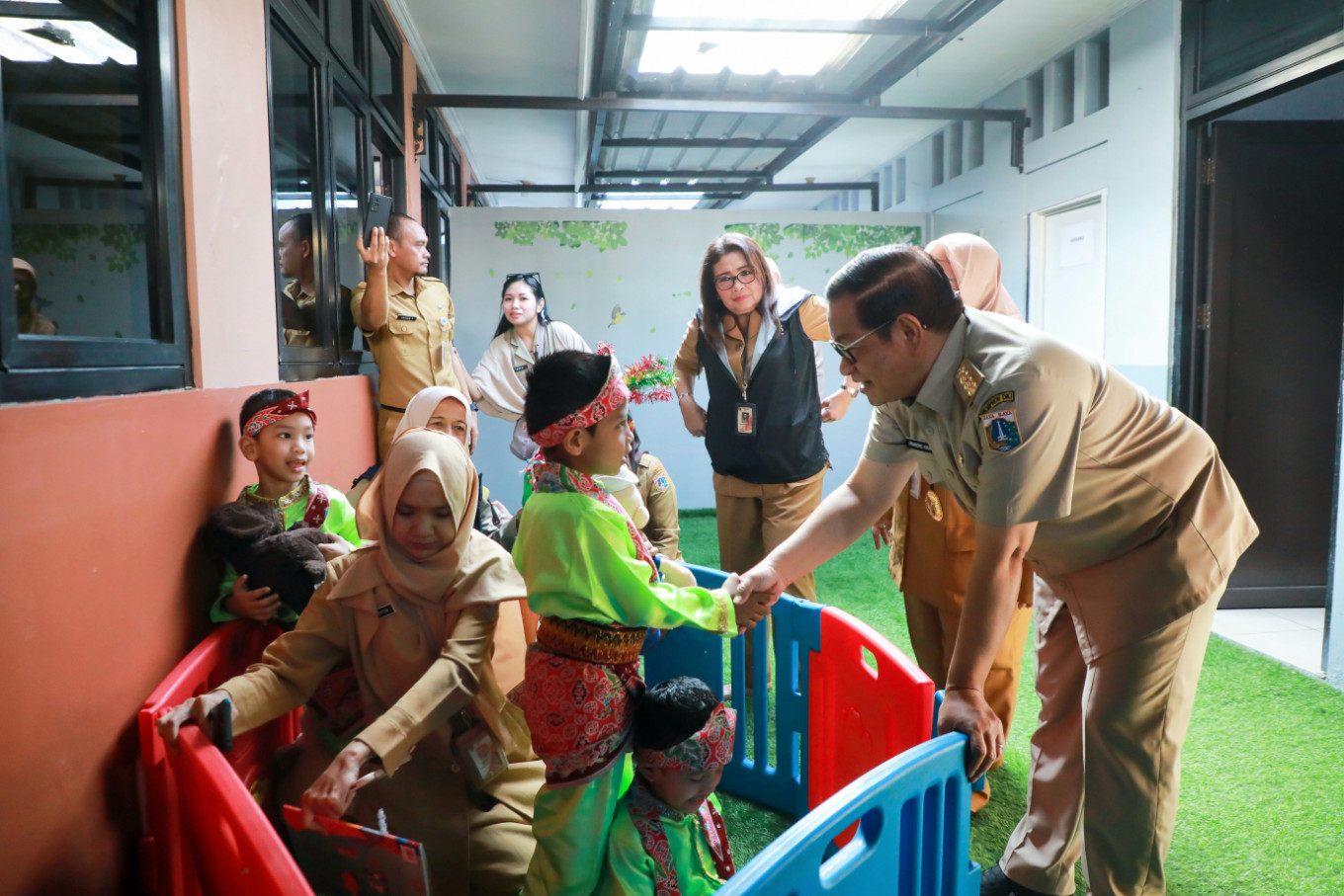 Jakarta Governor Pramono Anung (right) holds the hand of a student at Prosperous Children’s Park (TAS) Arutala in Kebon Bawang, North Jakarta, on May 5, 2025. The governor launched the free preschool program to fulfill his campaign promise of providing better access to early childhood education in the capital. (Berita Jakarta/Reza Pratama Putra)
I
t is difficult to summarize Pramono Anung’s first year as the governor of Jakarta in a single phrase, for reasons both encouraging and concerning.
Since being inaugurated by President Prabowo Subianto alongside over 900 regional leaders exactly one year ago, Pramono has moved aggressively to realize his campaign promise of making Jakarta “more colorful, comfortable and safer”, while pushing the metropolis toward "global city" status.
One of his most visible successes has been the expansion of Transjakarta bus services. By launching dozens of new routes connecting the busy Blok M district in South Jakarta with satellite cities like Tangerang in Banten and Bogor in West Java, his administration has made a tangible effort to reduce the gridlock choking the city’s streets.
Pramono also made headlines throughout 2025 by transitioning several city parks to 24-hour operations and extending the hours of public landmarks like the Jakarta Library and Ragunan Zoo. Observers see these moves as catering to a shifting lifestyle among Jakartans, many of whom are increasingly trading nightclubs and bars for gyms, sports centers and open public spaces.
Simultaneously, the governor has maintained popular legacy programs like the Jakarta Smart Card (KJP), ensuring continuity for students from low-income households.
However, these polished bus routes and vibrant night parks are often viewed as reactive, populist policies rather than the structural breakthroughs needed for a nearly five-century-old megacity. Jakarta remains burdened by its status as one of the world's most populous urban areas, and its "same old" problems, particularly waste, remain unresolved. The Bantar Gebang landfill in neighboring Bekasi is currently overwhelmed, unable to handle the 14,000 tonnes of waste the city generates daily.

Furthermore, the administration’s primary solution, the refuse-derived fuel (RDF) plant in Rorotan, has faced frequent setbacks. While the facility was planned before he took office, its current operation has drawn sharp criticism from local residents due to the pungent odors emanating from the site.