TheJakartaPost
Please Update your browser
Your browser is out of date, and may not be compatible with our website. A list of the most popular web browsers can be found below.
Just click on the icons to get to the download page.


Popular Reads
Top Results
No results found. Please check your search term and try again
Can't find what you're looking for?
View all search results
Popular Reads
Top Results
No results found. Please check your search term and try again
Can't find what you're looking for?
View all search resultsAnalysis: Free land? Public housing and reviving Meikarta
Change text size
Gift Premium Articles
to Anyone
Share the best of The Jakarta Post with friends, family, or colleagues. As a subscriber, you can gift 3 to 5 articles each month that anyone can read—no subscription needed!
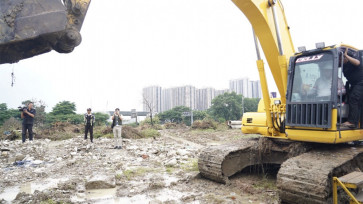
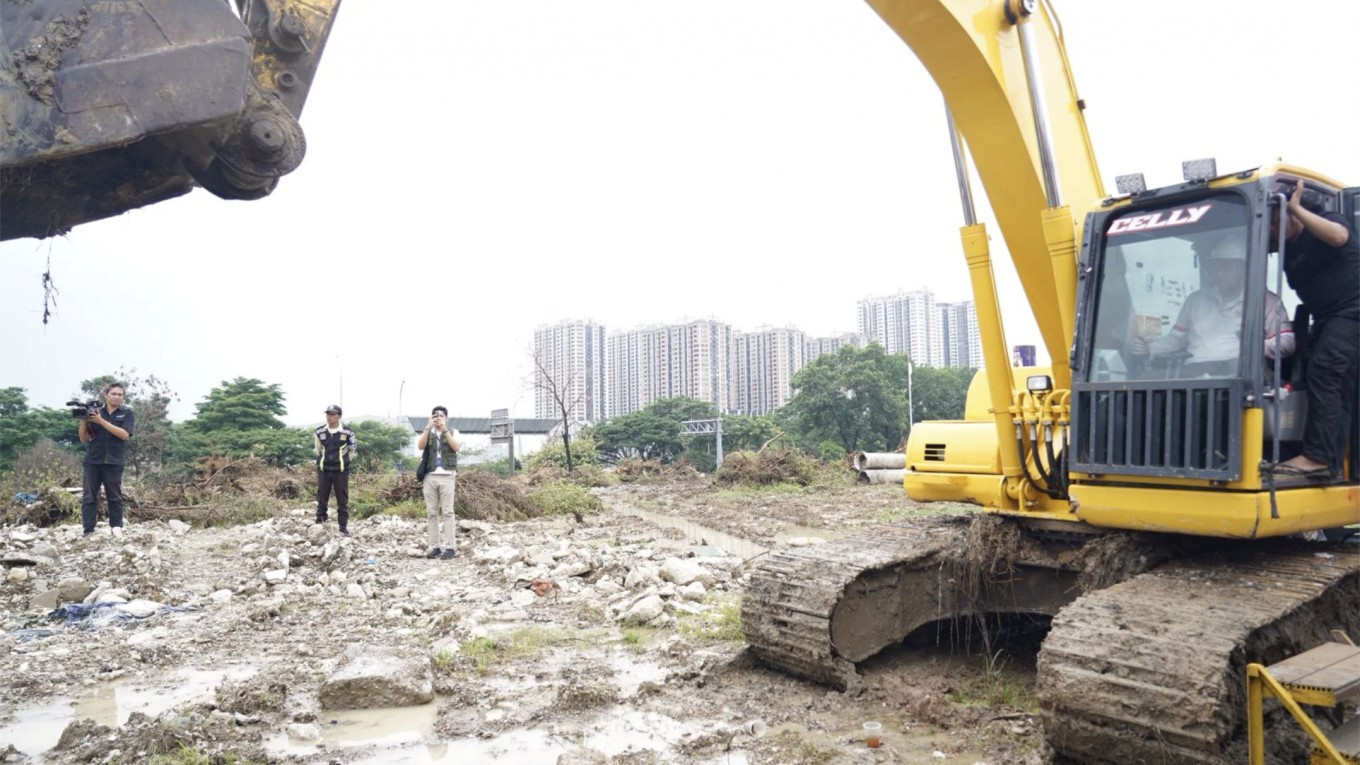 Breaking good: Public Housing and Settlement Areas Minister Maruarar “Ara“ Sirait on Jan. 29, 2026, symbolically kicks off the land-clearing phase for the construction of subsidized apartment housing at the Meikarta site in Bekasi regency, West Java. (Public Housing and Settlement Ministry/-)
O
nce synonymous with controversy and stagnation, Meikarta has resurfaced on Indonesia’s national housing agenda. The government plans to repurpose the site for subsidized vertical housing for low-income households, with around 30 hectares (ha) of Lippo Group-owned land reportedly provided “for free”. The arrangement raises broader questions about transparency and whose interests the policy ultimately serves.
Housing and Settlements Minister Maruarar “Ara” Sirait announced plans to redevelop the 30-ha site into subsidized apartment towers under the government’s 2026 strategy, part of President Prabowo Subianto’s pledge to deliver 3 million homes annually. The initiative responds to a sizable housing deficit, with an estimated 9.9 million additional units still required nationwide.
Minister Ara has indicated that the Meikarta subsidized apartment project represents an investment of approximately Rp 39 trillion (US$2.3 billion). The plan includes the construction of 18 towers, each rising 30 floors, with a total of around 141,000 units. According to Pahala Nainggolan, a ministry official, unit prices are expected to start at about Rp 350 million.
Under the government’s subsidized housing programs, eligible households can access home ownership through mortgage financing (KPR) with a 1 percent down payment and a fixed 5 percent interest rate. Within this framework, repurposing Meikarta is presented as one mechanism to expand supply while preserving affordability through state-backed financing schemes.
However, the historical uptake of subsidized vertical housing has been relatively modest. Financing through the Housing Finance Liquidity Facility (FLPP) scheme supported only three apartment units in 2025 and approximately 638 units cumulatively since 2011. This pattern reflects structural challenges, including hesitation among low-income households toward vertical living arrangements, limited developer participation due to pricing caps and recurring costs such as maintenance fees.
These dynamics suggest that expanding supply alone may not guarantee effective access. Addressing behavioral preferences, affordability structures and ongoing cost burdens will be as important as physical construction in determining whether the project meets its social objectives.

Despite these demand-side constraints, the project is scheduled to commence in early March. Institutional reassurance has been strengthened by legal clarification from the Corruption Eradication Commission (KPK), which confirmed that the land designated for development is clean and free from legal encumbrances. No assets on the site have been confiscated in connection with previous cases.