The Jakarta Post
Please Update your browser
Your browser is out of date, and may not be compatible with our website. A list of the most popular web browsers can be found below.
Just click on the icons to get to the download page.


Popular Reads
Top Results
No results found. Please check your search term and try again
Can't find what you're looking for?
View all search results
Popular Reads
Top Results
No results found. Please check your search term and try again
Can't find what you're looking for?
View all search resultsHow Indonesia is leading its own gaming story
Drawing on a rich tradition of wayang and cerita rakyat, Indonesia’s booming game industry is the new stage for local stories and values.
Change text size
Gift Premium Articles
to Anyone
Share the best of The Jakarta Post with friends, family, or colleagues. As a subscriber, you can gift 3 to 5 articles each month that anyone can read—no subscription needed!
 Set as preferred source
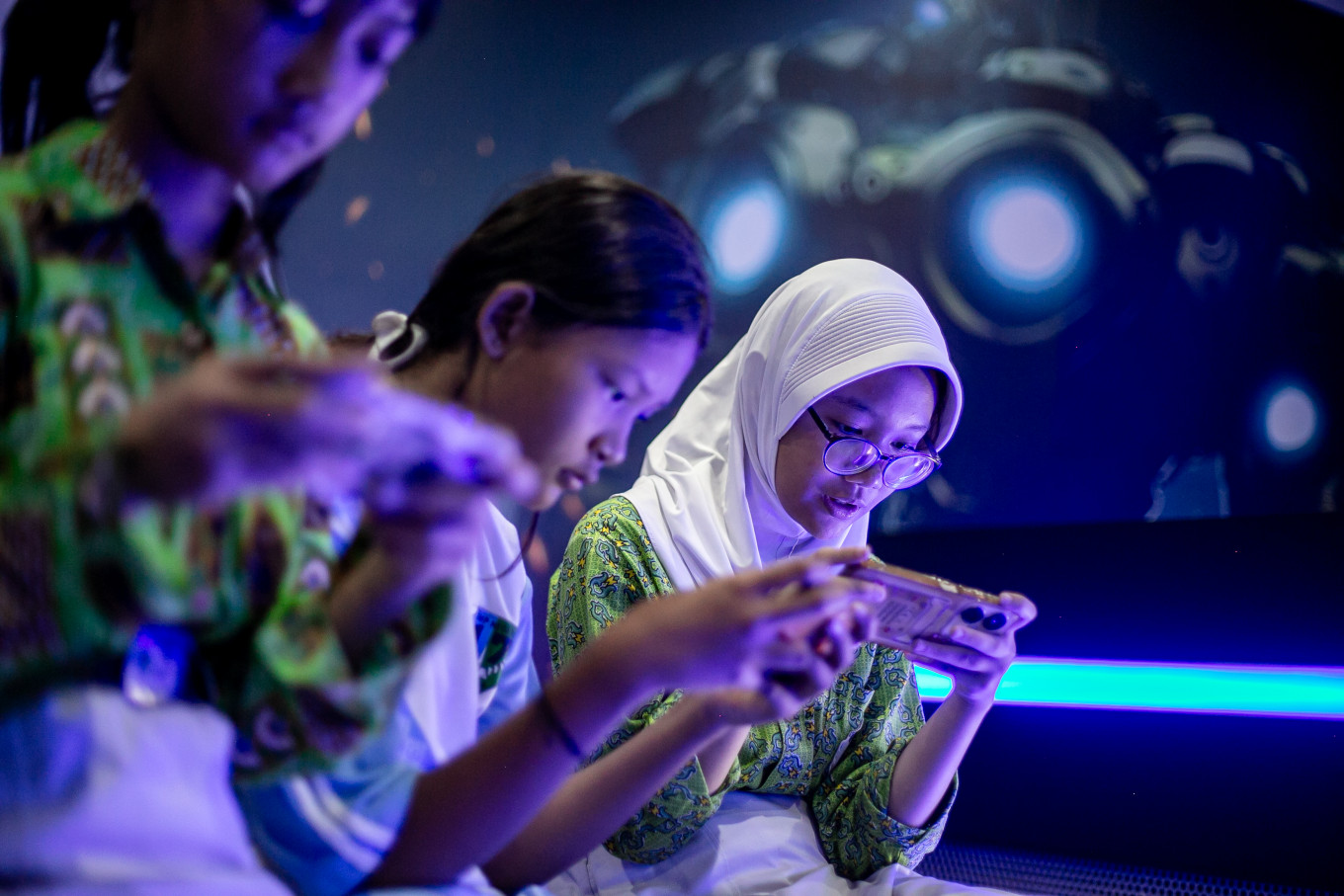 Students play the online game Roblox on Sept. 17, 2025, during the Edublox extracurricular activity at Solo Technopark in Surakarta, Central Java. (Antara/Mohammad Ayudha)
I
ndonesia has long told stories in shadow and song, from the epic battles of wayang to the gentle lessons of cerita rakyat (folk tales). These tales of romance, everyday heroism and moral struggle have shaped generations, offering entertainment with a clear ethical compass.
Today’s video games can be seen as a modern form of wayang: an interactive art form built on storytelling, design and technology, projected not on a screen of cloth but on the screens of phones, consoles and computers. It is no surprise that gaming has become so popular in Indonesia, and that the government is at hand to encourage local content creation that reflects the nation’s values and principals.
The global gaming industry, defined as the creation, distribution and playing of electronic or digital games on computers, consoles and mobile devices, is now one of the world’s largest creative sectors. Its value was estimated in the hundreds of billions of dollars last year with projections running well above US$500 billion by 2030 as mobile adoption and online connectivity continue to grow worldwide.
Indonesia has rapidly become one of the world’s most exciting gaming markets. The Communications and Digital Ministry estimates that 174.1 million Indonesians were gamers in 2021, rising to 192.1 million by 2025, almost two‑thirds of the population. Industry revenue has grown from $1.74 billion in 2020 to an expected $2.5 billion last year. To harness that potential while addressing mounting concerns about harmful content and excessive screen time, the government has chosen to steer, not stifle, the sector.
In 2024, then-president Joko “Jokowi” Widodo issued Presidential Regulation (Perpres) No. 19/2024 on accelerating development of the national gaming industry, alongside then-communications and information ministry Regulation (Permen) No. 2/2024 on game classification. Together, they form the cornerstone of a national strategy to build a sustainable, competitive and culturally responsible gaming industry.
Indonesia’s policy stance is strikingly open. Game development and publishing are fully accessible to foreign investors, even up to 100 percent ownership. Local small and medium‑sized studios need only a Business Identification Number and a simple self‑assessment certificate, while larger firms must obtain a verified standard certificate from the ministry. The message is clear: Indonesia welcomes innovation, not isolation.

Game publishers also fall under the Private Electronic System Provider framework, already used by social media and e‑commerce platforms. This encourages transparency and accountability over content, user data and transactions, key pillars for a trusted digital ecosystem.