The Jakarta Post
Please Update your browser
Your browser is out of date, and may not be compatible with our website. A list of the most popular web browsers can be found below.
Just click on the icons to get to the download page.


Popular Reads
Top Results
No results found. Please check your search term and try again
Can't find what you're looking for?
View all search results
Popular Reads
Top Results
No results found. Please check your search term and try again
Can't find what you're looking for?
View all search resultsIn search of the first female ASEAN secretary-general
After 50 years and 15 male secretaries-general, the time has come for ASEAN to break its longest-standing glass ceiling. As Indonesia prepares to nominate the next chief, a historic opportunity emerges to prove that the region’s future is both inclusive and ready for female leadership at the very top.
Change text size
Gift Premium Articles
to Anyone
Share the best of The Jakarta Post with friends, family, or colleagues. As a subscriber, you can gift 3 to 5 articles each month that anyone can read—no subscription needed!
 Set as preferred source
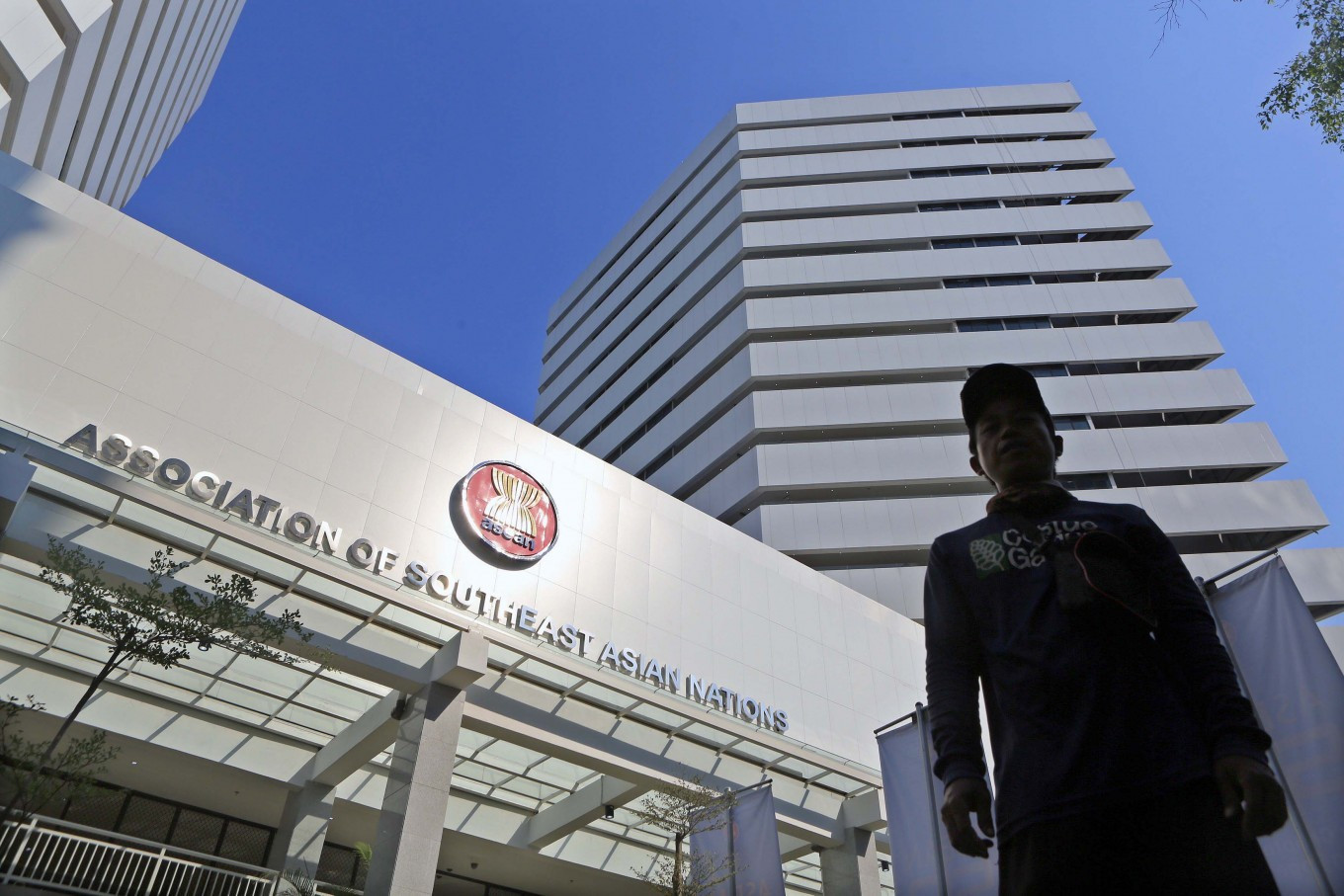 The ASEAN Secretariat building in Jakarta was inaugurated in August 2019 in conjunction with the 52nd anniversary of ASEAN. (JP/Seto Wardhana)
I
n the 50 years since the establishment of the ASEAN Secretariat (ASEC) on Feb. 24, 1976, all 15 of its secretaries-general have been men. This is not a critique of their service but an observation of an unbroken pattern.
In slightly less than two years, ASEAN Secretary-General Kao Kim Hourn from Cambodia, will conclude his term. According to the principle of country alphabetical rotation, Indonesia will nominate the next ASEAN chief.
This presents a historic opportunity. It will be over three decades since an Indonesian held the post, at a time when ASEAN was an organization of six member states. Today, ASEAN is a dynamic and diverse community of 11 nations, with Timor-Leste as its newest member.
However, ASEAN now faces a vastly different world characterized by increasing competition and heightened tensions due to realignments in the international order, including rapid digital transformation, unprecedented global warming, potential public health crises and rising transnational criminal activities, all with existential consequences.
The central question, therefore, is what kind of leadership in this new challenging era will be required of ASEC, “envisioned to be the nerve center of a strong and confident ASEAN Community that is globally respected for acting in full compliance with its Charter and in the best interest of its people”?
One prospective answer can be gleaned from ASEAN’s own foundational document, the ASEAN Charter. Under Article 11 paragraph 1, it explicitly states that the selection of the secretary-general should give “due consideration to integrity, capability and professional experience, and gender equality." The implementation of the last item remains elusive so far.

Merit and competence must still be the overriding selection criteria, but gender balance also deserves consideration when all other factors are equal. This is not meant to interfere with a sovereign state's decision-making process to nominate its candidate, but merely a call to ensure the process is more inclusive, fit for purpose and future-ready. Besides the gender dimension, other factors can also be considered.