The Jakarta Post
Please Update your browser
Your browser is out of date, and may not be compatible with our website. A list of the most popular web browsers can be found below.
Just click on the icons to get to the download page.


Popular Reads
Top Results
No results found. Please check your search term and try again
Can't find what you're looking for?
View all search results
Popular Reads
Top Results
No results found. Please check your search term and try again
Can't find what you're looking for?
View all search resultsAnalysis: Prabowo’s corporate courtship and the politics of proximity
Change text size
Gift Premium Articles
to Anyone
Share the best of The Jakarta Post with friends, family, or colleagues. As a subscriber, you can gift 3 to 5 articles each month that anyone can read—no subscription needed!
 Set as preferred source
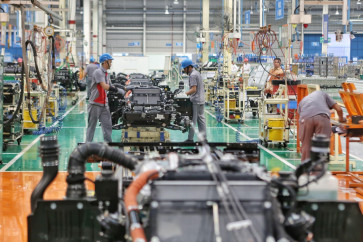
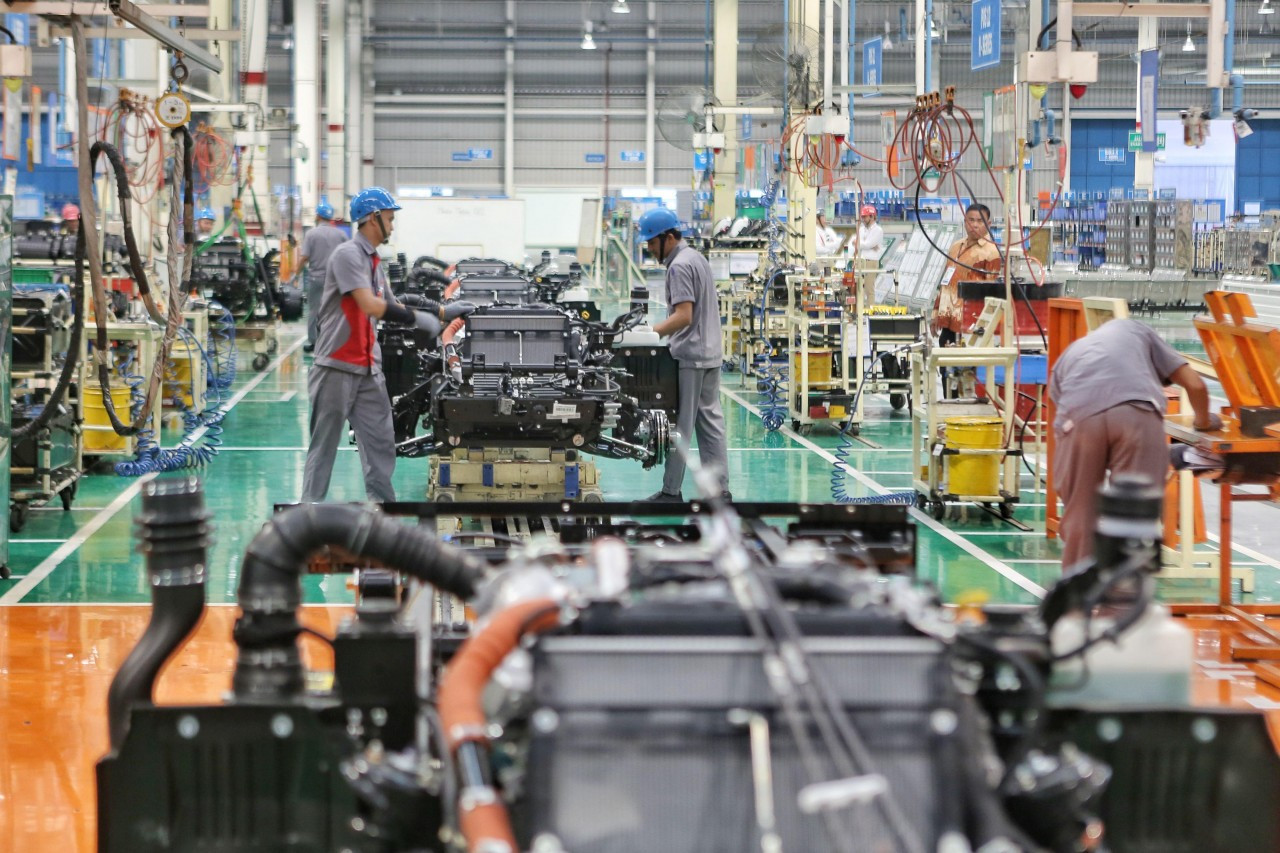 Workers assemble truck parts at a factory in East Karawang, West Java, in this undated file photo. (JP/Seto Wardhana)
P
resident Prabowo Subianto convened back-to-back meetings with key business leaders at his Hambalang residence in West Java on Feb. 9 and 10. He began with representatives of the Indonesian Employers Association (Apindo) before hosting heads of five of the country’s largest conglomerates the following day. The meetings were framed as efforts to strengthen government-business synergy and accelerate economic development. Yet they have also sparked questions about the political and economic calculus behind the outreach.
Prabowo’s meeting with 22 Apindo representatives focused on labor-intensive industries such as textiles, garments, footwear, furniture and food and beverages. These sectors, which employ millions of workers, are under mounting pressure from weakening global demand, rising production costs and intensifying import competition.
By prioritizing dialogue with employers from these industries, the government underscored job preservation and industrial resilience as immediate policy concerns. Prabowo reportedly invited each of the 22 Apindo executives to speak during the four-hour meeting, asking them to outline their current activities, the challenges they face and what the government could do to address those challenges.
During the meeting, the President sought concrete recommendations to address raw material constraints in manufacturing, a sector critical for job creation and economic resilience. Apindo and the government also shared the view that expanding the tax base would help increase state revenue without overburdening compliant businesses. Apindo chair Shinta W. Kamdani emphasized the need for regulatory certainty in labor policy and productivity-focused reforms to maintain a conducive investment climate.
The discussion also touched on the Indonesia-European Union Comprehensive Economic Partnership Agreement (IEU-CEPA) as a strategic opportunity to boost exports, alongside calls to streamline regulations, licensing and logistics to enhance competitiveness against regional peers such as Vietnam. Apindo reiterated its support for Prabowo’s broader agenda on poverty reduction, child nutrition and quality education.
The tone shifted the following day when Prabowo met five of Indonesia’s most powerful tycoons: Prajogo Pangestu of Barito Pacific; Anthony Salim of Salim Group; Franky Widjaja of Sinar Mas; Garibaldi Thohir of Adaro; and Sugianto Kusuma of Agung Sedayu Group. This gathering carried distinct political and economic weight. Unlike the Apindo meeting, it brought together business leaders who control vast capital, natural resources and strategic assets across energy, property, manufacturing and finance.

During the meeting, Prabowo emphasized public–private collaboration under the banner of “Indonesia Incorporated” to drive competitiveness and growth. The business leaders voiced support for government priorities ranging from food and energy security to education and health care. He also urged them to partner with the state in job creation, strengthening the real sector and empowering micro, small and medium enterprises (MSMEs).