TheJakartaPost
Please Update your browser
Your browser is out of date, and may not be compatible with our website. A list of the most popular web browsers can be found below.
Just click on the icons to get to the download page.


Popular Reads
Top Results
No results found. Please check your search term and try again
Can't find what you're looking for?
View all search results
Popular Reads
Top Results
No results found. Please check your search term and try again
Can't find what you're looking for?
View all search resultsASEAN’s power grid: The next investable infrastructure opportunity
Forget policy aspirations, the ASEAN Power Grid is transforming into an "electricity supercycle" that represents Southeast Asia’s most consequential and investable infrastructure play of the decade.
Change text size
Gift Premium Articles
to Anyone
Share the best of The Jakarta Post with friends, family, or colleagues. As a subscriber, you can gift 3 to 5 articles each month that anyone can read—no subscription needed!
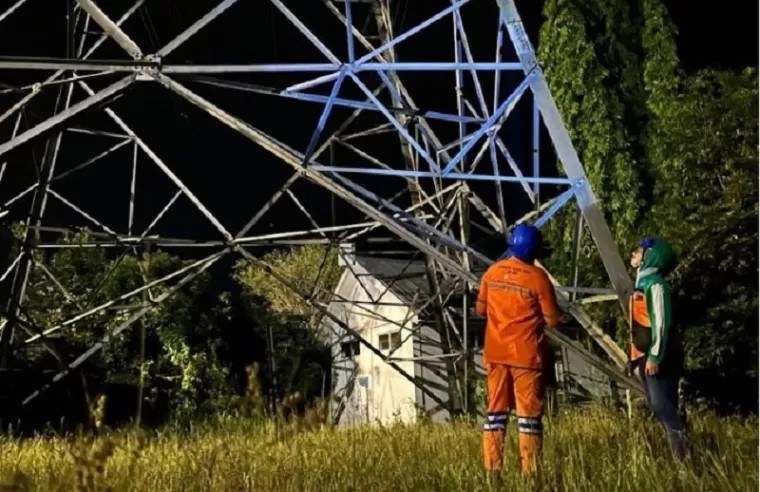 State-owned electricity firm PLN workers work on a transmission tower to resume power supply after an outage which affected several provinces on Sumatra Island in this undated picture. (Courtesy of PT PLN/-)
S
outheast Asia is entering an electricity supercycle. Industrial expansion, rapid urbanization, the electrification of transportation and a surge in data centers are driving power demand across ASEAN at a pace few regions can match.
For investors, this growth is not speculative; it is already locked in by demographics, industrial policy and digitalization. The question is no longer whether demand will materialize, but whether the region’s power systems can deliver electricity reliably, affordably and at scale, all while meeting critical decarbonization goals.
This is where the ASEAN Power Grid (APG) moves from a policy aspiration to a tangible investment opportunity, fully consistent with ASEAN 2045: Our Shared Future and the ASEAN Economic Community (AEC) Strategic Plan, which underscore the importance of deeper regional integration, resilience and sustainable infrastructure development.
For decades, Southeast Asia has built power systems largely within national borders, but that model is reaching its limits. While renewable energy is expanding rapidly, solar and wind are inherently variable, and the region's gas and hydropower resources remain unevenly distributed.
Regional interconnection fundamentally changes this investment equation by allowing power to flow to where it is valued most, smoothing volatility, improving the utilization of existing assets and reducing the need for costly redundancy. For investors, this means infrastructure that is more resilient, more productive and more future-proof.
This concept is far from theoretical; the Laos–Thailand–Malaysia–Singapore Power Integration Project (LTMS-PIP) already demonstrates that electricity can move across four countries under successful commercial arrangements. What has been missing is scale and a financing structure that recognizes the regional nature of the asset.

The real constraint has never been a shortage of capital, as global liquidity, regional banks and sovereign wealth funds are actively seeking long-duration assets aligned with the energy transition. Rather, the bottleneck has been risk perception. Because cross-border transmission assets sit between jurisdictions, their revenues depend on long-term policy alignment, making project preparation complex and costly.