TheJakartaPost
Please Update your browser
Your browser is out of date, and may not be compatible with our website. A list of the most popular web browsers can be found below.
Just click on the icons to get to the download page.


Popular Reads
Top Results
No results found. Please check your search term and try again
Can't find what you're looking for?
View all search results
Popular Reads
Top Results
No results found. Please check your search term and try again
Can't find what you're looking for?
View all search resultsWhy we keep building innovation that never innovates
It is time to restructure the current system, which is set up to keep building one technology facility after another that produces everything but actual innovation, by addressing the incentives that make repetition more attractive than real change.
Change text size
Gift Premium Articles
to Anyone
Share the best of The Jakarta Post with friends, family, or colleagues. As a subscriber, you can gift 3 to 5 articles each month that anyone can read—no subscription needed!
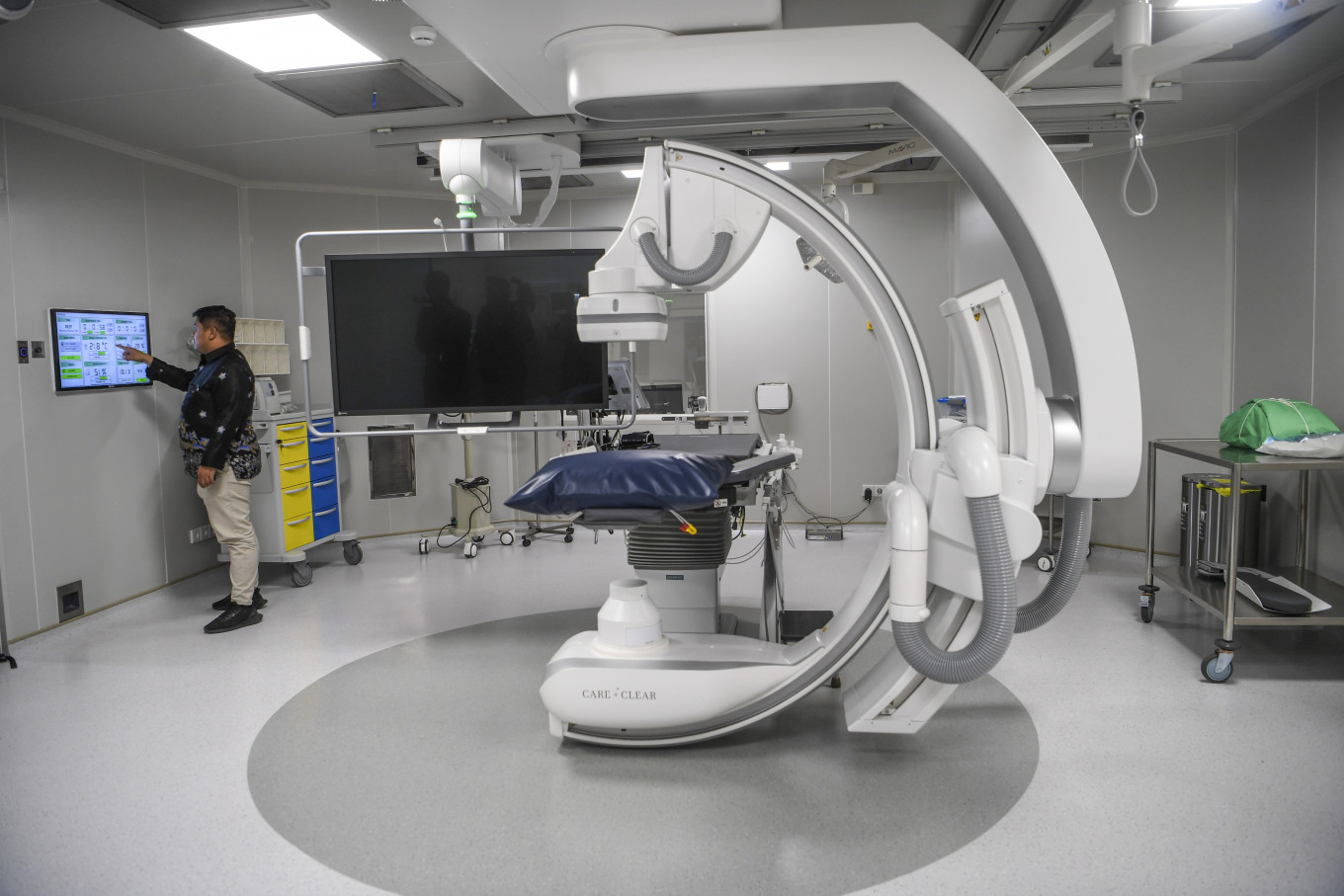 Cutting-edA technician checks a medical device on Nov. 19, 2025, during the inauguration of the Emirates-Indonesia Cardiology Hospital at the Solo Technopark in Surakarta, Central Java, A technician checks a medical device on Nov. 19, 2025, during the inauguration of the Emirates-Indonesia Cardiology Hospital at the Solo Technopark in Surakarta, Central Java. The new hospital features modern facilities and advanced medical technology for diagnosing and treating cardiovascular diseases. (Antara/Galih Pradipta)
F
or more than a decade, the same scene has replayed itself. A new technology park is announced, a new science center is inaugurated; a new name, a new logo, a new ribbon-cutting ceremony. The language changes slightly, sometimes in English, sometimes in Indonesian, but the promise stays the same: This time, innovation will happen. Then, quietly, nothing changes.
A few years later, another park appears. Sometimes it is in the same city; sometimes it falls under a different ministry. Sometimes it is attached to a university, other times it is branded as a regional hub. The expectation remains unchanged, despite the mounting evidence that previous versions failed to produce innovation-driven enterprises. Spending continues and reports thicken. But the results fail to appear.
This is often framed as a problem of execution or patience. It is neither. It is a problem of structural repetition. The system keeps doing the same thing because it is not rewarded for learning; it is rewarded for continuity.
Building a technopark is administratively "clean". Budgets are absorbed, outputs are visible and indicators can be checked off. The act itself signals progress, even when the underlying process remains inert.
When outcomes disappoint, the response is not to dismantle the structure or question its assumptions. Instead, the response is to rebuild the same structure under a different name. In systems terms, this is not stubbornness. It is equilibrium.
Government-led innovation projects function as amplifiers, not initiators. They raise visibility and mobilize attention temporarily, but they do not alter the deeper "attractors" that govern behavior.

Universities remain exam-oriented and risk-averse. Corporations continue to absorb capable talent into stable, safe roles. Students learn how to innovate without ever being permitted to practice innovation. Once the initial enthusiasm fades, the system reverts to its baseline and the cycle restarts. This explains why technoparks proliferate without producing founders.