TheJakartaPost
Please Update your browser
Your browser is out of date, and may not be compatible with our website. A list of the most popular web browsers can be found below.
Just click on the icons to get to the download page.


Popular Reads
Top Results
No results found. Please check your search term and try again
Can't find what you're looking for?
View all search results
Popular Reads
Top Results
No results found. Please check your search term and try again
Can't find what you're looking for?
View all search resultsMaking human rights due diligence work for social justice in Indonesia
To turn a paper tiger into a genuine catalyst for social justice, Indonesia must move beyond voluntary pledges and adopt a supported mandate that balances global trade demands with the practical needs of local businesses and workers.
Change text size
Gift Premium Articles
to Anyone
Share the best of The Jakarta Post with friends, family, or colleagues. As a subscriber, you can gift 3 to 5 articles each month that anyone can read—no subscription needed!
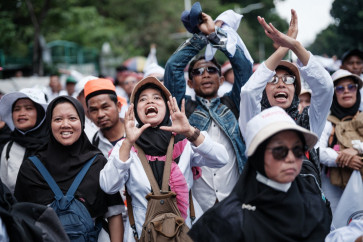
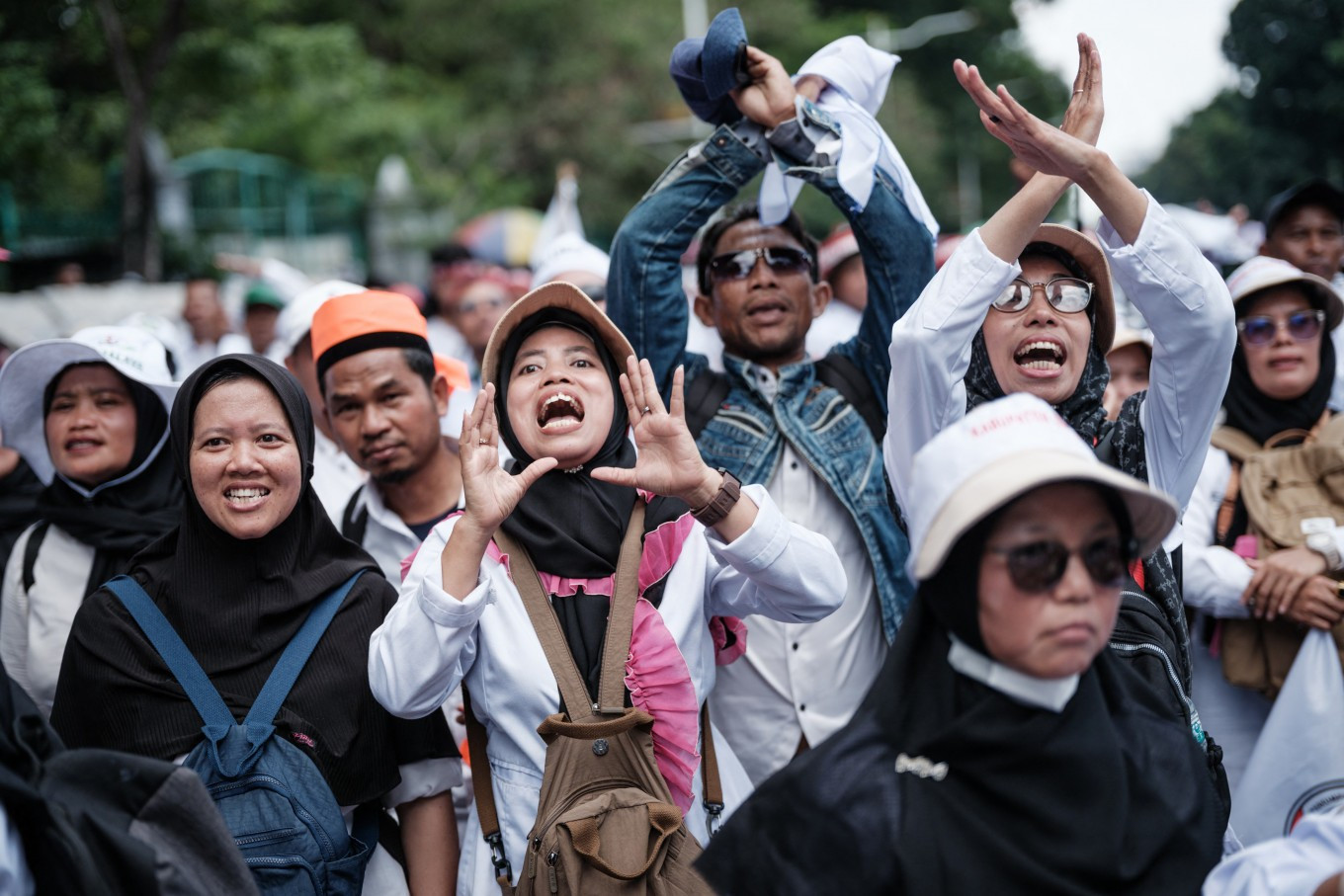 A group of demonstrators gesture on Oct. 30, 2025, as they call for better working conditions during a labor rally near National Monument Square in Central Jakarta. (AFP/Yasuyoshi Chiba)
T
he global call to realize the theme of this year’s World Social Justice Day 2026, “Renewed Commitment to Social Development and Social Justice”, resonates deeply in Indonesia. Toward this end, a recently renewed pledge between the government and employers presents a vision that aligns with global norms, including the Multinational Enterprise (MNE) Declaration of the International Labour Organization (ILO).
This pledge, which promotes responsible business conduct (RBC) and places human rights due diligence (HRDD) at its core, signals that respecting human rights at work is no longer an option in Indonesia. It is a fundamental standard.
This is in keeping with the government's plan to issue a new presidential regulation (Perpres) that will mandate HRDD for companies with more than 2,000 employees, all exporting companies and their supply chains as well as specific high-risk industrial sectors by 2028. This move aims to replace the voluntary actions previously defined under Perpres No. 60/2023 and the subsequent PRISMA platform of the Human Rights Ministry, which merely encouraged self-assessments.
However, a commitment, no matter how noble, is merely ink on paper. The true test is its real-world application. While the proposed Perpres is a promising step, significant gaps remain.
To achieve the social justice aspirations we commemorated on Feb. 20, we must address implementation challenges swiftly to ensure that the new rule becomes a true catalyst for change rather than another paper tiger.
The push for a new Perpres is not merely symbolic; it is also a response to shifting global trade dynamics. With the European Union’s Corporate Sustainability Due Diligence Directive (CSDDD) and Germany’s Supply Chain Act coming into force, mandatory human rights reporting is now a prerequisite for access to premium markets.

Furthermore, Indonesia’s aspiration to join the OECD depends on demonstrating enforceable standards for ethical business conduct. The draft regulation aims to level the playing field, balancing productivity with essential labor protections.