TheJakartaPost
Please Update your browser
Your browser is out of date, and may not be compatible with our website. A list of the most popular web browsers can be found below.
Just click on the icons to get to the download page.


Popular Reads
Top Results
No results found. Please check your search term and try again
Can't find what you're looking for?
View all search results
Popular Reads
Top Results
No results found. Please check your search term and try again
Can't find what you're looking for?
View all search resultsReform the mining licensing system to buoy 8% growth target
To unlock the President's 8 percent growth target, the government must overhaul its centralized mining bureaucracy and replace administrative bottlenecks with a streamlined, high-compliance licensing system.
Change text size
Gift Premium Articles
to Anyone
Share the best of The Jakarta Post with friends, family, or colleagues. As a subscriber, you can gift 3 to 5 articles each month that anyone can read—no subscription needed!
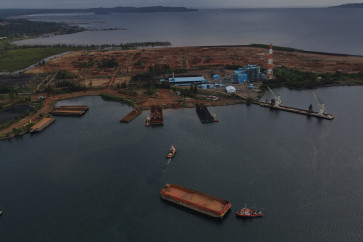
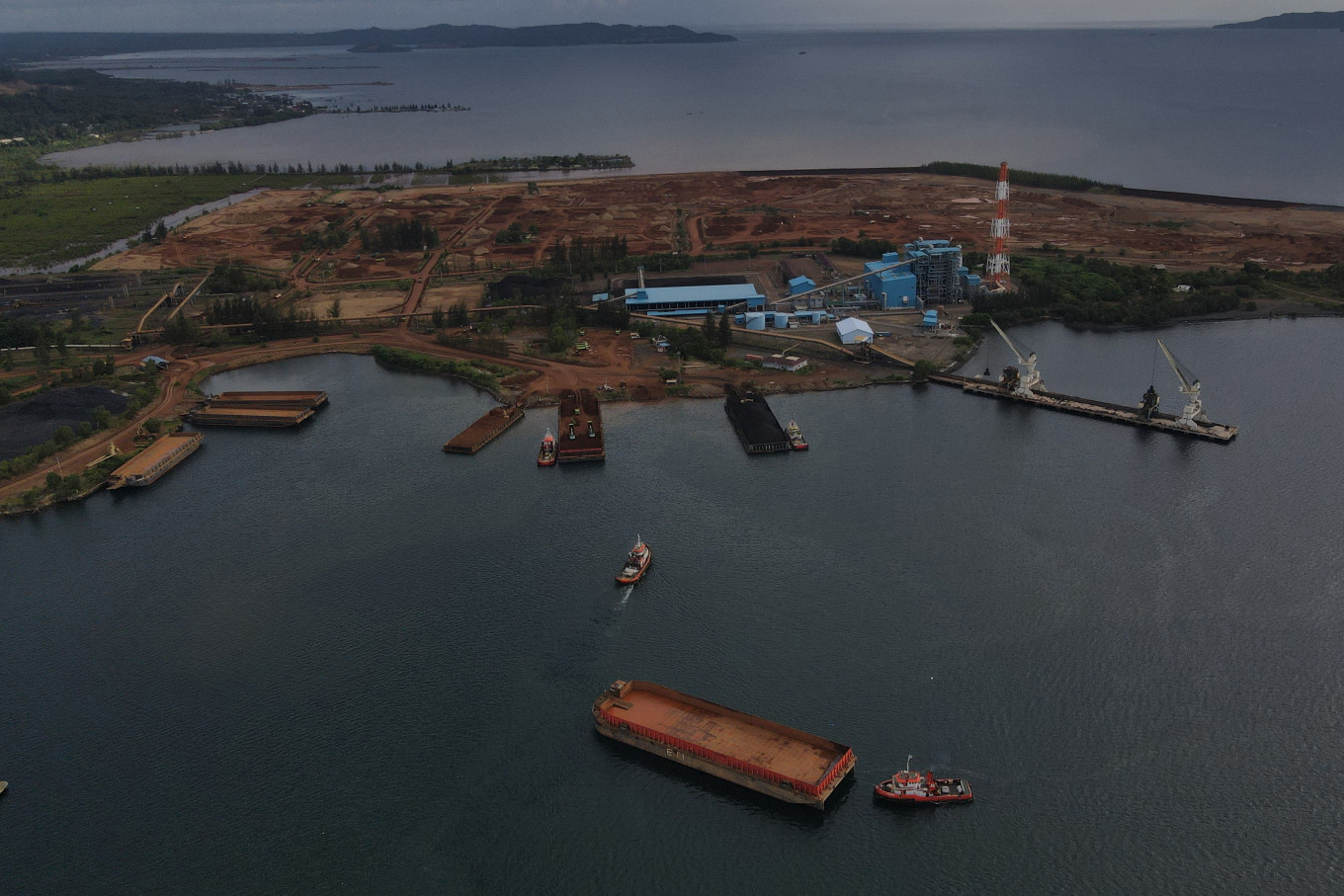 A tugboat pushes a sand barge on May 10, 2024, in the waters off the port development project of state-owned mining company PT Aneka Tambang (Antam) in Pomalaa, Southeast Sulawesi. (Antara/Andry Denisah)
M
ining remains a cornerstone of Indonesia’s economy. Since the early stages of development in 1967, the government has refined regulatory and contractual frameworks to manage coal and mineral resources, ensuring their optimal utilization for the nation’s benefit. However, as global conditions shift, the government is recognizing that it must continue reforming the sector to attract investors while ensuring that the state and the people receive maximum returns.
The mining licensing system has undergone a significant transformation, transitioning from the contract of work (CoW) and coal contract of work (PKP2B) regimes to a licensing-based system comprising Mining Business Licenses (IUP) and Special Mining Business Licenses (IUPK). This transition is part of a broader governance reform aimed at enhancing transparency, equity and sovereignty over natural resources.
Historically, mining investments under the CoW regime followed the enactment of Law No. 11/1967 on basic mining provisions. This framework established a contractual relationship between the government and mining companies, primarily foreign investors, for exploration and exploitation.
While this structure succeeded in attracting substantial foreign direct investment in the early 1970s, with PT Freeport Indonesia and PT Vale Indonesia (formerly PT Inco) serving as primary examples, it also limited the state’s regulatory flexibility. Rigid contractual stabilization clauses often constrained the government’s ability to amend national regulations in response to changing needs.
The enactment of Law No. 4/2009, later amended by Law No. 3/2020, marked a fundamental regulatory shift: Replacing the contractual regime with an administrative system based on licensing, the mining business license (IUP) and the special mining business license (IUPK), redefined the legal relationship between the government and mining companies.
Under this framework, the state exercises greater regulatory authority and policy adaptability. The licensing regime standardizes corporate obligations, improves oversight and promotes downstream processing through mandatory in-country refining for domestic value addition.

In practice, however, the IUP/IUPK system still presents significant hurdles for investors. Beyond obtaining an IUP, companies must secure multiple ancillary permits, including the Environmental Impact Analysis (Amdal), forest area use approval (PPKH) and the work plan and budget (RKAB). These layered requirements significantly prolong the licensing timeline.