The Jakarta Post
Please Update your browser
Your browser is out of date, and may not be compatible with our website. A list of the most popular web browsers can be found below.
Just click on the icons to get to the download page.


Popular Reads
Top Results
No results found. Please check your search term and try again
Can't find what you're looking for?
View all search results
Popular Reads
Top Results
No results found. Please check your search term and try again
Can't find what you're looking for?
View all search resultsASEAN integration only shield against multipolar storms
As the European Union and ASEAN both face a crisis of relevance, only a bold transition from loose cooperation to deep integration can prevent middle powers from being crushed between the competing dictates of Washington and Beijing.
Change text size
Gift Premium Articles
to Anyone
Share the best of The Jakarta Post with friends, family, or colleagues. As a subscriber, you can gift 3 to 5 articles each month that anyone can read—no subscription needed!
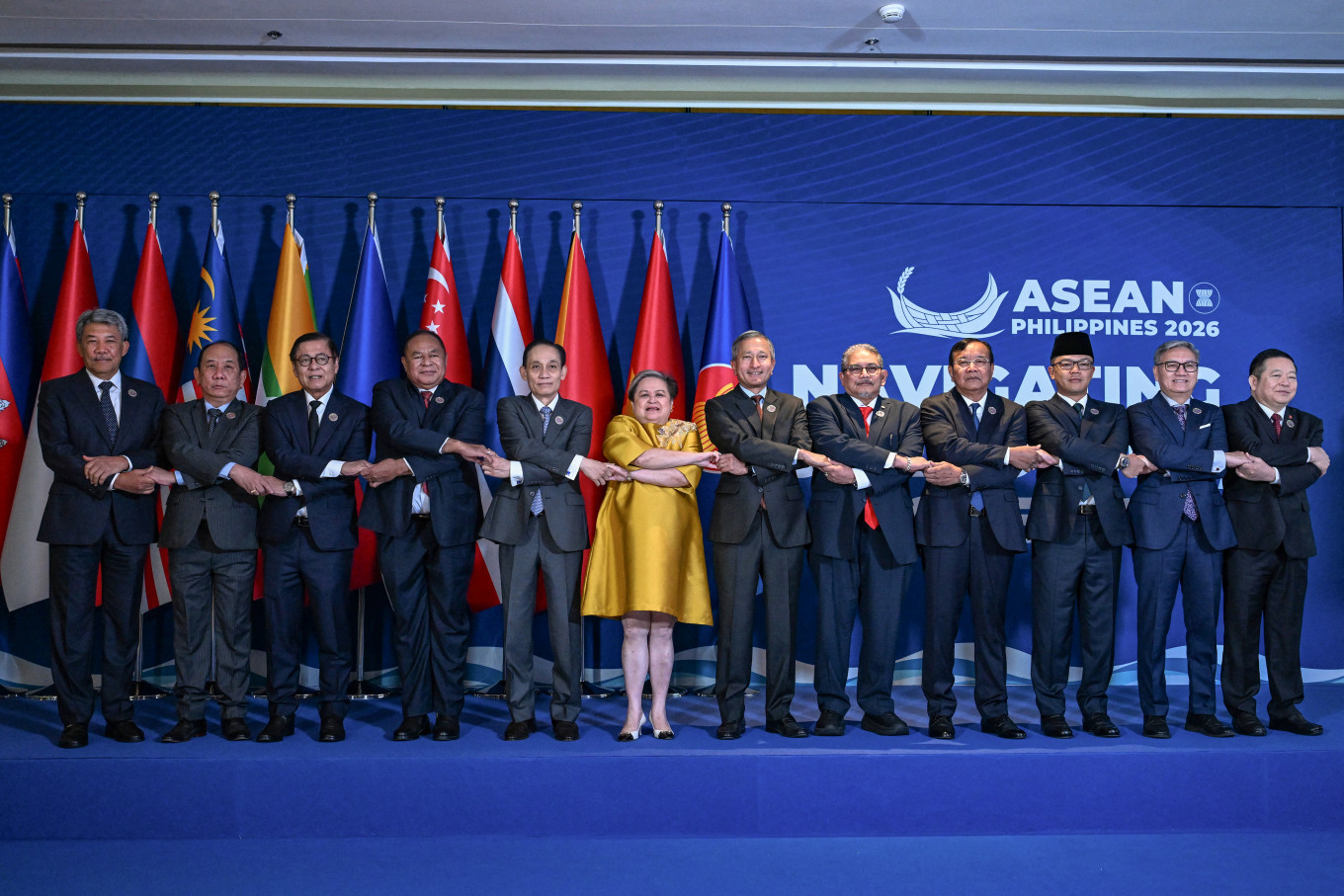 Foreign ministers and other diplomats of ASEAN nations pose for a group photo on Jan. 29 during the ASEAN Foreign Ministers’ Retreat in Cebu City, the Philippines. (AFP/Pool/Jam Sta Rosa)
I
n recent years, much has been said regarding multipolarity and the rise of middle powers that can, presumably, navigate the geopolitical storms of a new international era. However, a critical question remains: what if these attempts to thrive as middle powers are insufficient, and these nations eventually succumb to the dictates of the United States and China?
If there is a silver lining to the recent tensions between the second Trump administration and the European Union, it is the realization among Europeans that they are more isolated than they previously believed. American resentment toward the European Union extends far beyond concerns over inadequate military spending by NATO members; it is, fundamentally, a matter of ideological divergence. It is now evident that Washington holds a diminished view of the EU - not of Europe itself, but of its most consequential political project.
Prompted by American pressure, Europeans are now attempting to forge true strategic autonomy, yet a surprising number of key players within the union continue to reject the concept of a common army.
Mario Draghi, the former president of the European Central Bank and former prime minister of Italy, did not mince words in a recent speech at KU Leuven University. He argued that the EU must move past the "stop and go" confederate model it has historically embraced and transition toward a full federal system.
Perhaps only President Emmanuel Macron of France and Ursula von der Leyen, the current president of the European Commission, had the courage to start a conversation on this existential matter. While most EU leaders may currently lack the courage for such a "quantum jump", they will take the unprecedented steps and follow Draghi’s advice when another ad worse crisis hits the EU.
Middle powers such as Germany, France and Poland cannot avoid decline unless they invest in a much stronger union. This reality makes the EU a vital case study for middle powers across the world, including those in Southeast Asia.

If the EU is struggling to maintain its relevance, the outlook for ASEAN is even more concerning. As global insecurity increases, ASEAN, in its current structure, is ill-equipped for the task.