The Jakarta Post
Please Update your browser
Your browser is out of date, and may not be compatible with our website. A list of the most popular web browsers can be found below.
Just click on the icons to get to the download page.


Popular Reads
Top Results
No results found. Please check your search term and try again
Can't find what you're looking for?
View all search results
Popular Reads
Top Results
No results found. Please check your search term and try again
Can't find what you're looking for?
View all search resultsThe perils of a power vacuum in Iran
Because power vacuums cannot be targeted by precision munitions or mapped by satellite imagery, the United States' strategic thinking systematically underestimates the danger they pose.
Change text size
Gift Premium Articles
to Anyone
Share the best of The Jakarta Post with friends, family, or colleagues. As a subscriber, you can gift 3 to 5 articles each month that anyone can read—no subscription needed!
 Set as preferred source
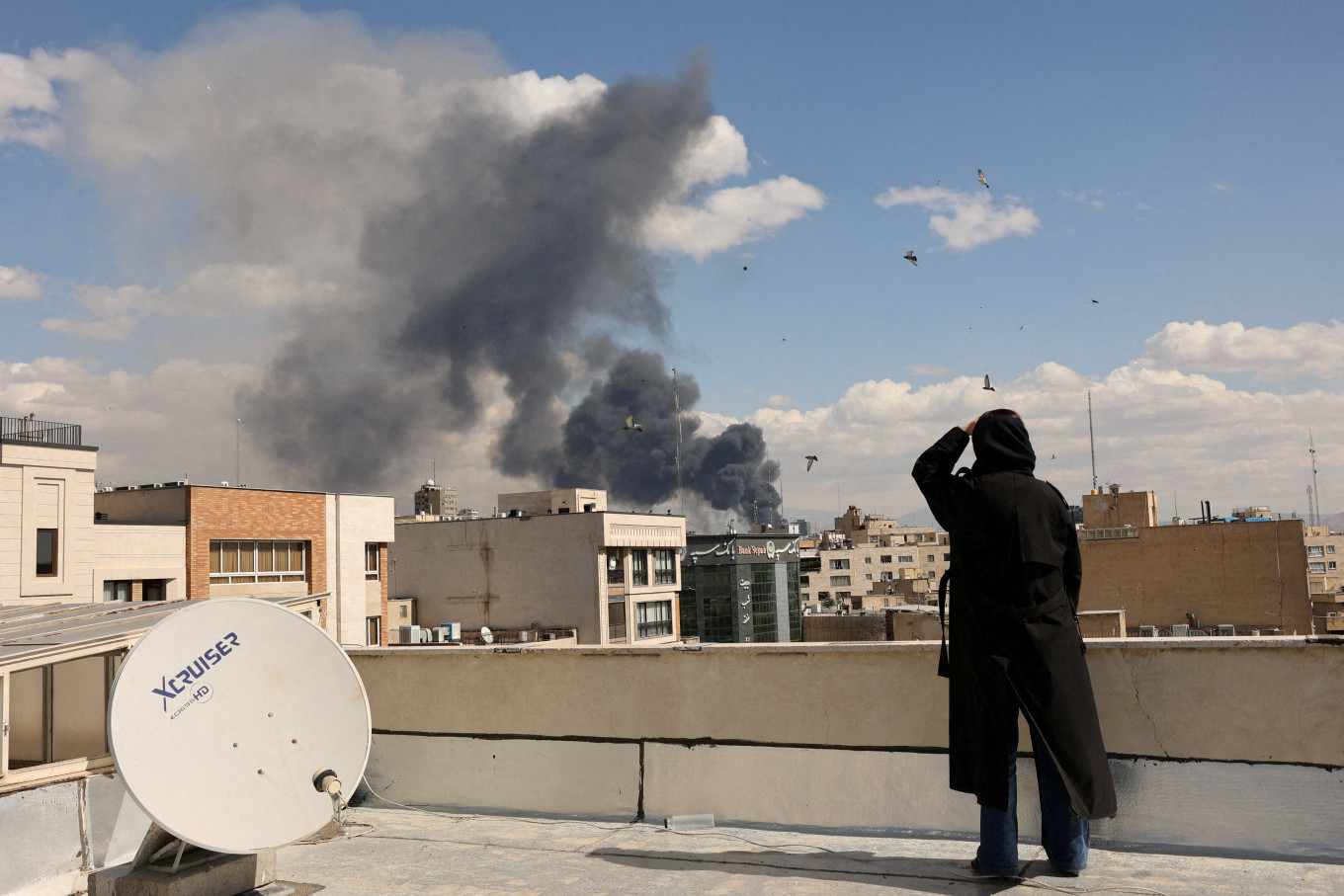 Smoke rises following an explosion on March 1, 2026, in Tehran, after Israel and the United States launched strikes on Iran. (Reuters/Majid Asgaripour/WANA (West Asia News Agency) )
C
ritics of the attack on Iran by the United States and Israel point out that US President Donald Trump has no plan for what comes next. And they are not wrong: when Trump boasts that he can resolve wars in a single day, he merely exposes the limits of his attention span. But the real problem is not the shortness of Trump’s time horizon; it’s the narrowness of his threat perception.
While Trump’s bombing campaign reflects no strategy in any traditional sense, it is based on a clear operating assumption: the Iranian regime poses a threat to US security, and destroying the regime eliminates the threat. It is the same basic belief that animated previous US wars of choice, from Iraq to Libya. The assumption was wrong then, and it is likely to prove catastrophically wrong now.
The US possesses an extraordinary capacity to destroy centralized state power from the air, but no comparable capacity to manage what follows. Because power vacuums cannot be targeted by precision munitions or mapped by satellite imagery, US strategic thinking systematically underestimates the danger they pose.
This reflects a recurring cognitive bias in the US: threats we cannot address militarily receive less weight than those we can. But the gravest and most durable risks often emerge after centralized control collapses, when arsenals are dispersed, custodial chains fracture and accountability disappears.
The Iraq war should have made this clear. In 2003, the US destroyed the Iraqi state on the premise that Saddam Hussein’s regime posed a direct and acute danger to US security. What followed the regime’s fall has not been safety but chaos. Hundreds of arms depots were looted within days. Black markets were flooded with small arms, rocket-propelled grenades (RPGs), and mortar rounds, which landed in the hands of actors who were far less predictable, visible and deterrable than Saddam’s regime.
This included the Islamic State, which eventually rose from the rubble of Iraq’s dissolved institutions. When it overran Mosul in 2014, it captured large stocks of US-supplied weaponry from Iraqi army bases, a second generation of proliferation cascading from the original act of state destruction. The pattern has been structural, not accidental.

Libya should have reinforced that lesson. After North Atlantic Treaty Organization (NATO) forces helped topple Muammar al-Gaddafi in 2011, state institutions swiftly collapsed, and some 3,000–12,000 shoulder launchable man-portable air-defense systems (MANPADS) capable of downing civilian airliners vanished, only to reappear in the arms markets of the Sahel, Sinai, Gaza and beyond.