TheJakartaPost
Please Update your browser
Your browser is out of date, and may not be compatible with our website. A list of the most popular web browsers can be found below.
Just click on the icons to get to the download page.


Popular Reads
Top Results
No results found. Please check your search term and try again
Can't find what you're looking for?
View all search results
Popular Reads
Top Results
No results found. Please check your search term and try again
Can't find what you're looking for?
View all search resultsThe 6G race will define the next digital order
With 6G, the struggle is not over suppliers, but over the technical blueprint itself.
Change text size
Gift Premium Articles
to Anyone
Share the best of The Jakarta Post with friends, family, or colleagues. As a subscriber, you can gift 3 to 5 articles each month that anyone can read—no subscription needed!
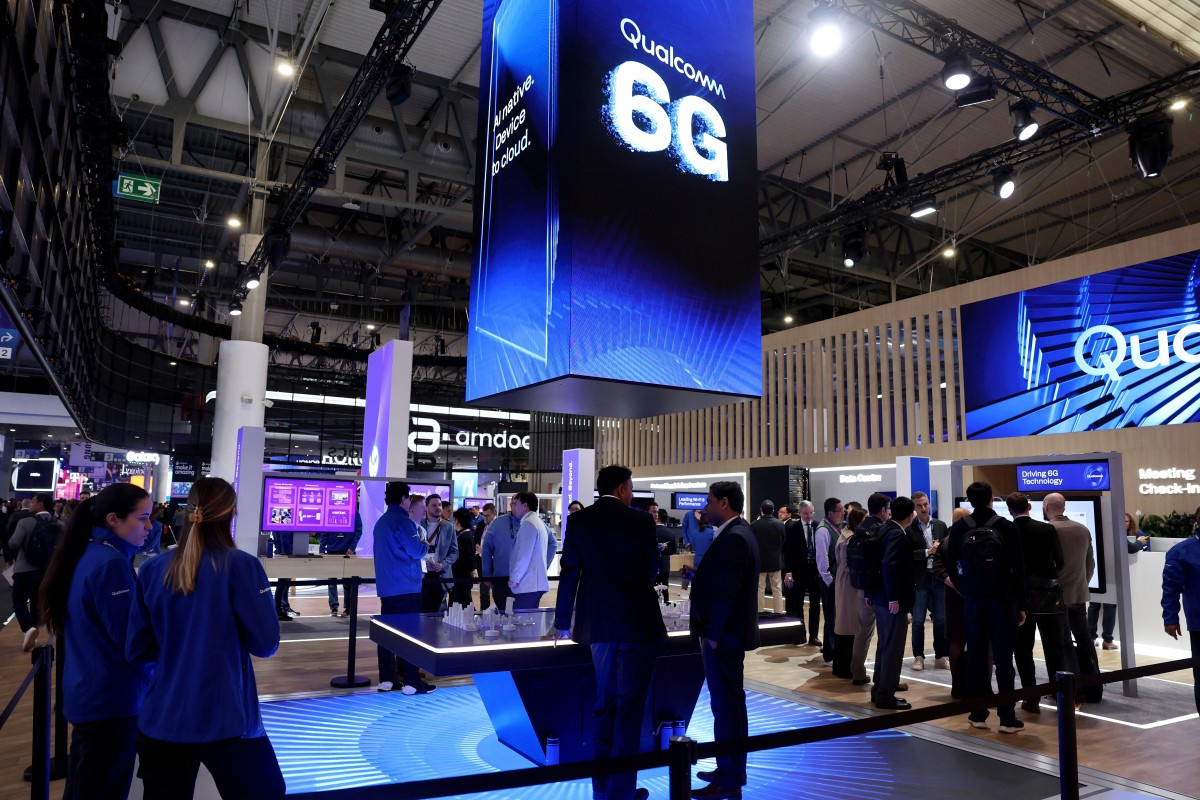 Qualcomm's stand advertising 6G technology draws audiences on March 2 during the inauguration of the Mobile World Congress (MWC), the world's biggest mobile technology showcase and fair in Barcelona. (AFP/Joseph Lago)
A
mid the flurry of product launches and keynote speeches at this year’s Mobile World Congress in Barcelona, the big question on everyone’s mind will be: Who will lead the race for 6G?
The next generation of mobile technology will determine who controls the critical infrastructure on which modern economies, security systems and democratic governance increasingly depend. The technical standards for 6G deployment are being negotiated now, with the first specifications expected by 2028, followed by implementation around 2030. Whoever shapes them will enjoy economic and strategic advantages for decades to come.
The 6G race is beginning earlier than the 5G race did, and is cutting deeper. With 5G, the politics centered on whether Chinese vendors such as Huawei could be trusted to build national networks. But rather than eliminating Huawei, pressure from Western security officials and others forced the company to adapt. Cut off from key Western components and markets, Huawei reorganized its supply chains, accelerated domestic innovation, drew on more state support and emerged more vertically integrated and closely aligned with the Chinese government’s own strategic objectives.
With 6G, the struggle is not over suppliers, but over the technical blueprint itself. 6G cellular technologies are expected to embed AI and advanced computing directly into network architecture, enabling automation on a massive scale. With hundreds of billions of connected devices and the network itself functioning as a ubiquitous sensor and AI layer, vulnerabilities in design could have systemic consequences.
Standards therefore matter enormously. They will determine which technologies are embedded and which patents become standard-essential (mandatory for technical compliance), shaping long-term royalty flows and influence across the telecom ecosystem. Much of this work is taking place far from exhibition halls, but the momentum on display in Barcelona will feed directly into the negotiations.
Three power centers currently dominate the race. One is China, which brings formidable strengths, including more than 40 percent of global 6G-related patent applications and an unmatched pool of state-backed research capacity. Huawei, strengthened rather than weakened by the 5G confrontation, sits at the center of this ecosystem. With extensive state backing, it is uniquely positioned to operate across fragmented or parallel systems should global standards splinter. China also has invested heavily in international standardization bodies and continues to court countries in the Global South through infrastructure diplomacy.

The United States approaches 6G from a different position. Its technology firms capture much of the value generated by connectivity, even if they do not build radio networks. Yet the US remains dependent on non-American vendors, notably Ericsson and Nokia, for core hardware. Efforts to reshape the market through the Open Radio Access Network (which allows for multi-vendor interoperability) have had only a limited impact so far, though such initiatives are likely to resurface as 6G approaches.