The Jakarta Post
Please Update your browser
Your browser is out of date, and may not be compatible with our website. A list of the most popular web browsers can be found below.
Just click on the icons to get to the download page.


Popular Reads
Top Results
No results found. Please check your search term and try again
Can't find what you're looking for?
View all search results
Popular Reads
Top Results
No results found. Please check your search term and try again
Can't find what you're looking for?
View all search resultsFrom trade deal to Middle East war — An economic turning point?
As global trade deals collide with Middle East volatility, Indonesia faces a "policy dilemma" where sacrificing short-term growth may be the only way to save long-term stability.
Change text size
Gift Premium Articles
to Anyone
Share the best of The Jakarta Post with friends, family, or colleagues. As a subscriber, you can gift 3 to 5 articles each month that anyone can read—no subscription needed!
 Set as preferred source
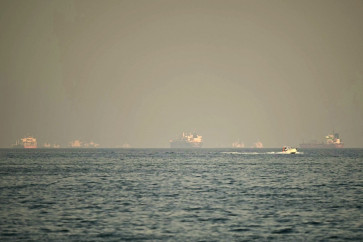
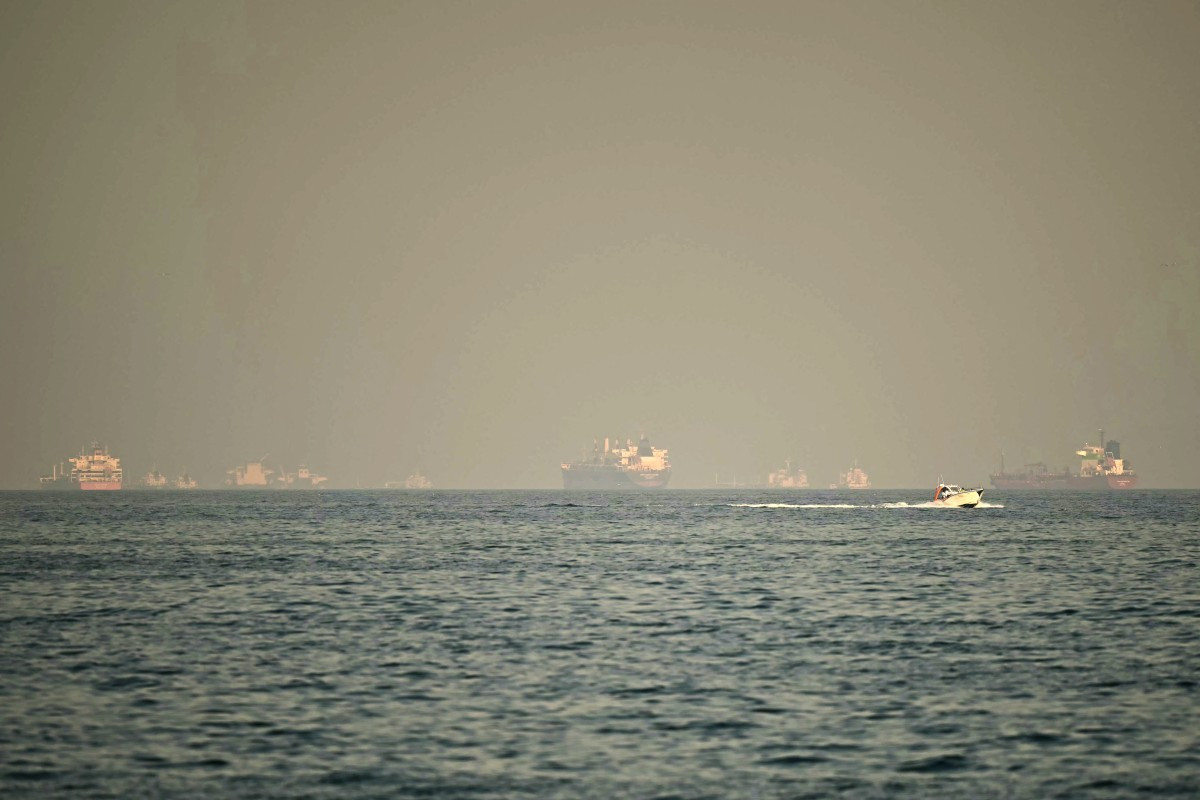 Cargo ships and tankers are seen off coast city of Fujairah on Feb. 25 in the Strait of Hormuz in the northern United Arab Emirates. (AFP/Giuseppe Cacace)
T
he phrase “a series of unfortunate events” could not be more fitting to describe the current state of the global economy. The prevailing environment has forced many countries, including Indonesia, to coexist with heightened uncertainty, posing a significant challenge to the government’s pro-growth agenda.
The world appears to face the “Four Horsemen” of economic turmoil: persistent uncertainty surrounding the trade war, escalating geopolitical tensions, volatility in global policy rates and a weakening global growth outlook. Together, these factors have fueled risk-off sentiment, triggering capital outflows and eroding business confidence. For Indonesia, the phenomenon has shrouded its economic outlook and tilted Southeast Asia’s biggest economy toward a more pressured environment.
On Feb. 19, Indonesia and the United States signed the Agreement on Reciprocal Trade (ART). The deal stipulates a reduction in US tariffs on Indonesian goods from 32 percent to 19 percent, alongside zero-tariff access for 1,819 product lines, including palm oil, cacao, rubber, as well as textile and garment products. In return, Indonesia would grant zero-tariff treatment on the majority of US commodities.
However, a day later, the US Supreme Court ruled the previously increased tariff rates illegitimate and had to be scaled back to 10 percent, effectively reinstating the baseline tariff level. Responding to the decision, US President Donald Trump stated that he would impose new global tariffs of 15 percent and subsequently indicated that the rate could be raised to the maximum level permitted under an alternative and previously unused trade statute.
This sequence of events has generated renewed uncertainty surrounding the tariffs, exacerbating the so-called “noodle bowl” or “spaghetti bowl” effect in bilateral trade arrangements between Indonesia and the US.
In principle, the ART could provide meaningful support to Indonesia’s external trade performance, but only if the country secures exclusive zero-tariff access to the US market. Several export-oriented sectors with high exposure to the US stand to benefit materially under such an arrangement. However, if similar zero-tariff access is extended to other countries with export structures comparable to Indonesia’s, the positive impact would likely be limited.

On the import side, access to US capital goods, such as machinery, may support domestic investment. However, as some imports overlap with Indonesia’s industrial agenda, including refinery development and downstream expansion, their implications for domestic capacity warrant careful assessment.