The Jakarta Post
Please Update your browser
Your browser is out of date, and may not be compatible with our website. A list of the most popular web browsers can be found below.
Just click on the icons to get to the download page.


Popular Reads
Top Results
No results found. Please check your search term and try again
Can't find what you're looking for?
View all search results
Popular Reads
Top Results
No results found. Please check your search term and try again
Can't find what you're looking for?
View all search resultsIndonesia and de-escalation diplomacy
The more realistic question is whether Indonesia can help slow the climb, widening the space for restraint before escalation crosses a dangerous threshold.
Change text size
Gift Premium Articles
to Anyone
Share the best of The Jakarta Post with friends, family, or colleagues. As a subscriber, you can gift 3 to 5 articles each month that anyone can read—no subscription needed!
 Set as preferred source
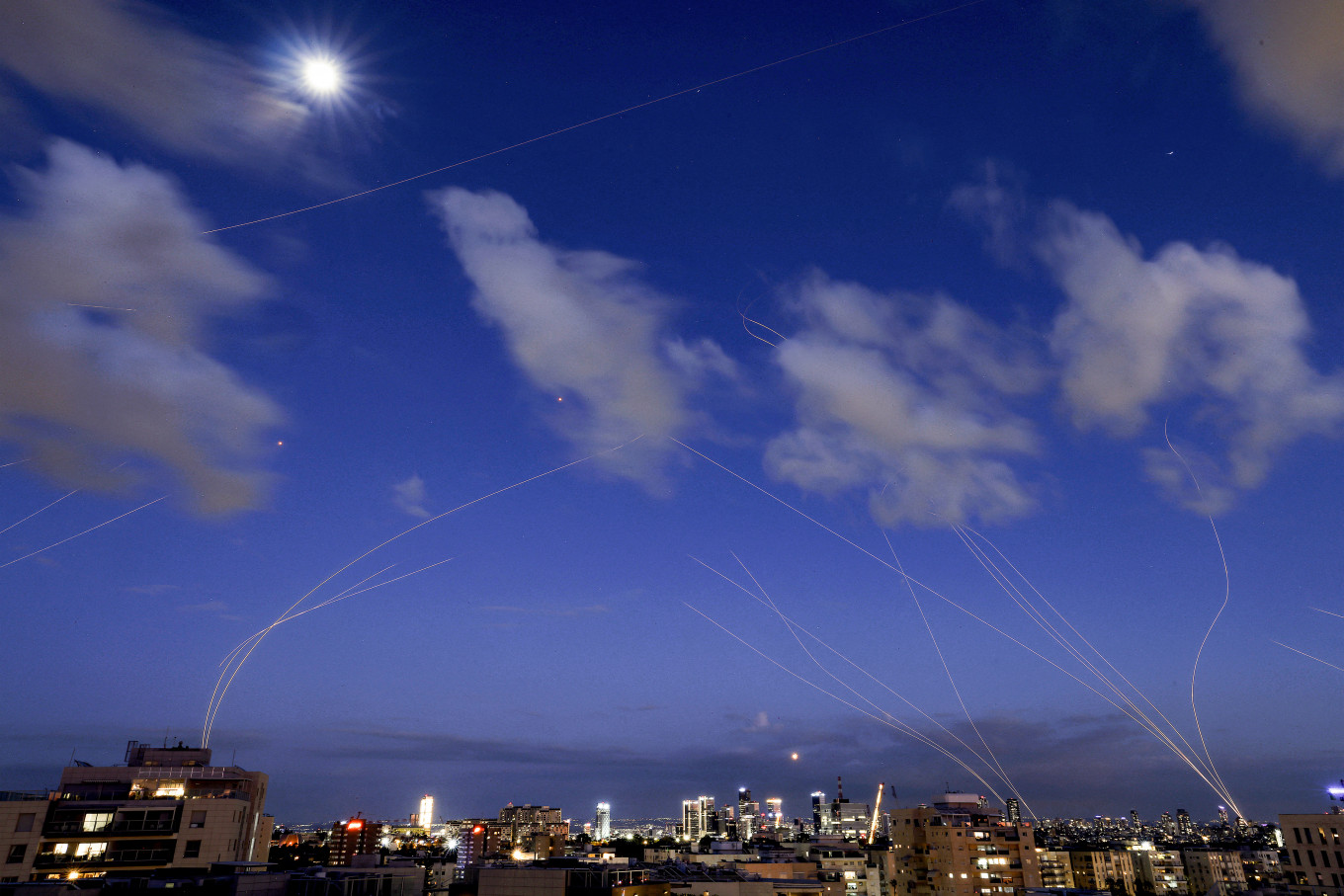 A time exposure photograph shows trails and explosions on Feb. 28, 2026, from projectile interceptions by Israel's Iron Dome missile defense system over Tel Aviv. (AFP/Jack Guez)
After the United States and Israel launched strikes against Iran last week, the Middle East moved another step up the escalation ladder. What began as calibrated retaliation now risks hardening into a broader confrontation.
The question facing the world is no longer who struck first, but whether this crisis can still be contained, or whether we are witnessing the early stages of a conflict that could redraw the geopolitical map.
For Indonesia, this is not a distant geopolitical drama. Instability in the Middle East would send shockwaves through global energy markets, disrupt supply chains and strain already fragile economic recovery across developing countries. In an interconnected world, regional wars do not remain regional for long.
Strategic theory reminds us that large wars rarely erupt in a single dramatic leap. In On Escalation, Herman Kahn described conflict as a climb up an “escalation ladder”, with each rung representing a deliberate choice. Even at moments of acute tension, leaders retain agency: they can intensify, pause or step back. The danger lies not only in hostility itself, but in the steady normalization of moving upward.
Deterrence may delay catastrophe, but it does not create dialogue. When fear dominates decision-making, miscalculation becomes more likely. Preventing escalation therefore requires more than military signaling; it requires diplomatic oxygen. This is where middle powers matter.
Indonesia’s long-standing “independent and active” (bebas aktif) foreign policy gives it a distinctive diplomatic position. As the country with the world's largest Muslim population, a democracy, and a member of the G20, Jakarta maintains credibility in parts of the Islamic world while sustaining functional engagement with Western powers. Few countries navigate these political spaces with similar flexibility.

Yet moral standing alone is insufficient. Indonesia lacks coercive leverage over Washington, Tel Aviv or Tehran. It cannot impose restraint. Its comparative advantage lies in facilitation: sustaining communication, shaping norms and mobilizing coalitions that favor de-escalation. That role, however, must be proactive rather than rhetorical.