TheJakartaPost
Please Update your browser
Your browser is out of date, and may not be compatible with our website. A list of the most popular web browsers can be found below.
Just click on the icons to get to the download page.


Popular Reads
Top Results
No results found. Please check your search term and try again
Can't find what you're looking for?
View all search results
Popular Reads
Top Results
No results found. Please check your search term and try again
Can't find what you're looking for?
View all search resultsIndonesia’s trade deal is dead. Now what?
The relevant question is no longer whether Indonesia should have signed the ART. It is what Indonesia does with the leverage it still holds.
Change text size
Gift Premium Articles
to Anyone
Share the best of The Jakarta Post with friends, family, or colleagues. As a subscriber, you can gift 3 to 5 articles each month that anyone can read—no subscription needed!
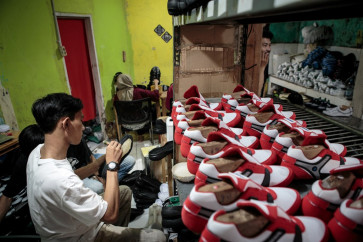
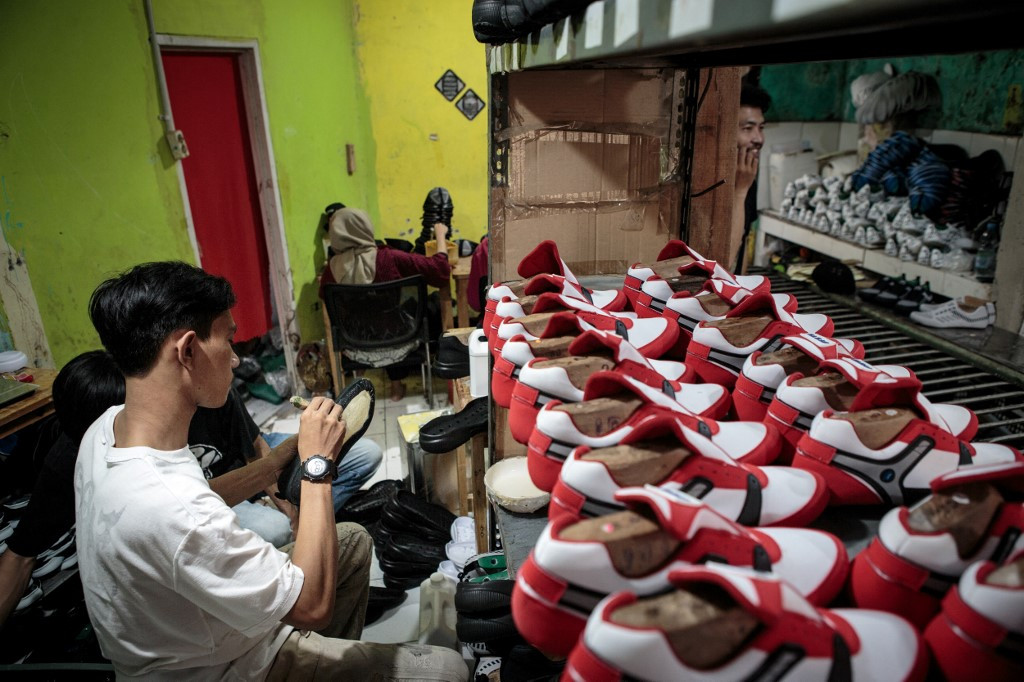 A staff of a small shoe manufacturer fabricates their new products on September 27, 2023, in Bogor, West Java. (AFP/Aditya Aji)
O
n a Sunday evening in August 1971, United States president Richard Nixon went on national television to announce that the United States would suspend the convertibility of the dollar into gold and impose a 10 percent surcharge on all imports. The decision, made without consulting allies or trading partners, upended the Bretton Woods monetary system that had governed international finance since 1944. Countries that had built their economic strategies around the assumption of a stable, gold-backed dollar woke up on Monday morning to discover the rules had changed overnight.
What we witnessed in February 2026 precisely repeats the same thing. Indonesia signed the Bilateral Agreement of Reciprocal Trade (ART) with the US on a Wednesday. On Thursday, the US Supreme Court ruled that the International Emergency Economic Powers Act does not authorize President Donald Trump to impose tariffs, invalidating the entire legal basis of the deal Indonesia had signed hours earlier. By Friday, the Trump administration had invoked Section 122 of the Trade Act of 1974, imposing a flat 15 percent tariff on all countries. Here, the lesson is the same: trade strategies built on a single partner’s executive discretion are inherently fragile.
Riandy Laksono, writing in this newspaper on Tuesday, is right that the ART was always more a geopolitical instrument than economic achievement. His argument that engaging with the Trump administration, however distasteful, is preferable to the alternative, is well-taken.
But then, the question of whether the deal was good or bad is now arguable. It is legally dead. The US Supreme Court did not merely invalidate one deal; it invalidated the entire mechanism of bilateral tariff negotiations under executive authority. For the first time since the Smoot-Hawley era of the 1930s, a US president cannot unilaterally set country-specific tariff rates.
I think the relevant question is no longer whether Indonesia should have signed the ART. It is what Indonesia does with the leverage it still holds and the 150-day window before Section 122 expires.
Our revised calculations, corrected for Section 232 steel and aluminum exclusions under Annex II, show that the aggregate effective tariff rate under Section 122 at 15 percent is approximately 18.7 percent, marginally below the deal’s 19.7 percent. The exact number matters less than the structural reality: the tariff is at its statutory ceiling, applies to every country equally and expires in July.

But the aggregate masks a sharp redistribution across sectors. Palm oil and rubber exporters, who were granted zero-tariff exemptions under the ART, now face the full 15 percent rate on top of existing duties, an increase of 11 to 14.5 percentage points. Meanwhile, manufacturers of apparel, footwear and furniture, whose deal rates were set well above 15 percent, actually see modest relief of 2 to 4 percentage points.