TheJakartaPost
Please Update your browser
Your browser is out of date, and may not be compatible with our website. A list of the most popular web browsers can be found below.
Just click on the icons to get to the download page.


Popular Reads
Top Results
No results found. Please check your search term and try again
Can't find what you're looking for?
View all search results
Popular Reads
Top Results
No results found. Please check your search term and try again
Can't find what you're looking for?
View all search resultsAn unjust war against a repressive regime is an unjust war
Iran may be indefensible, but that does not make an illegal war against it justifiable. By remaining silent, Indonesia is not choosing neutrality; it is choosing to abandon its founding principles in the face of raw coercion.
Change text size
Gift Premium Articles
to Anyone
Share the best of The Jakarta Post with friends, family, or colleagues. As a subscriber, you can gift 3 to 5 articles each month that anyone can read—no subscription needed!
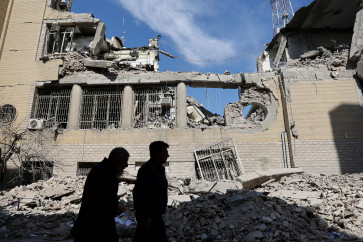
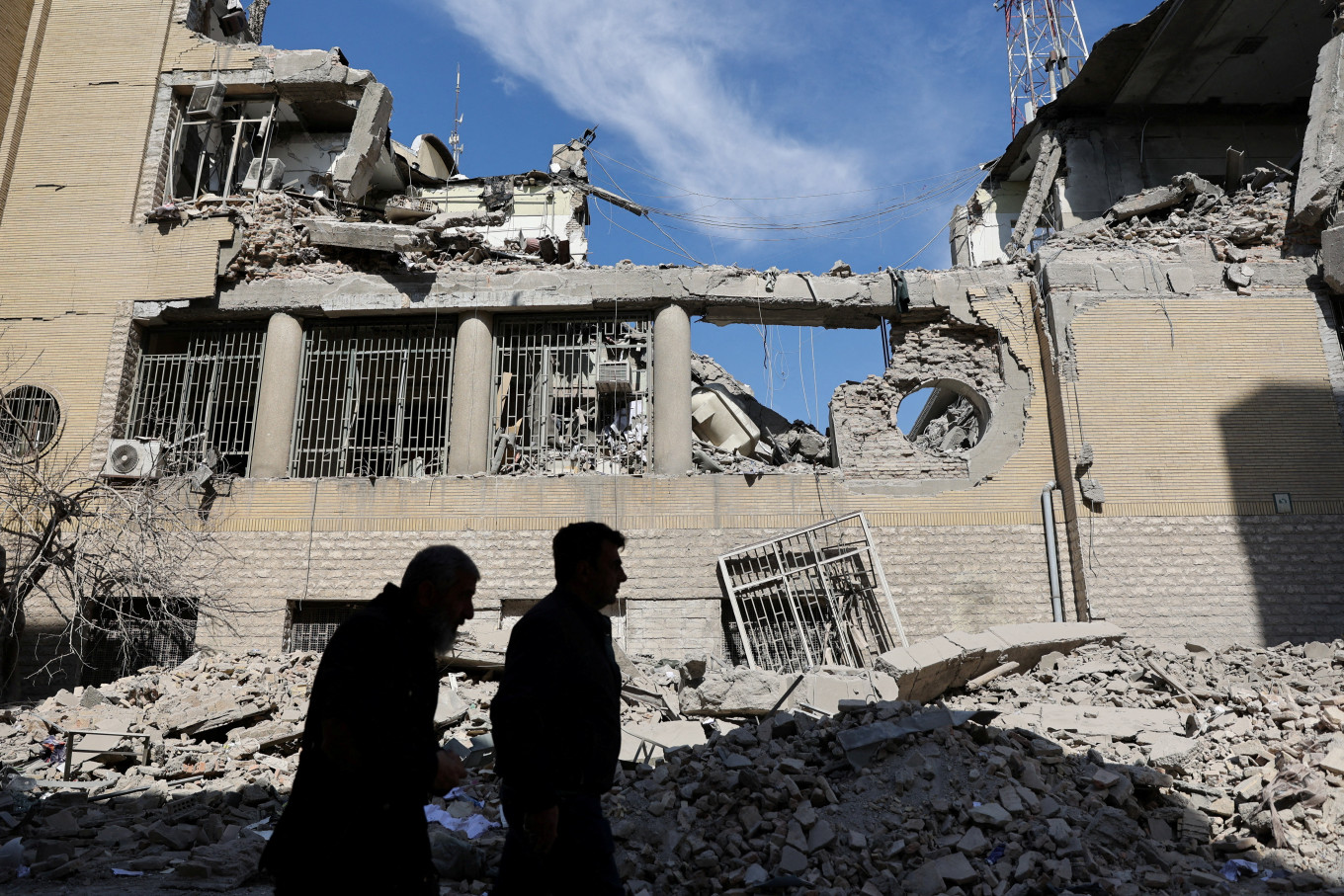 Two people walk past damaged buildings on March 4, 2026, following a strike on a police station in Tehran, amid the United States-Israeli war with Iran. (Reuters/WANA/Majid Asgaripour)
G
overnments exist on a spectrum: those easily defendable, and those that are not. Iran's Islamic Republic occupies the extreme end of the second category. Its systematic repression of its own citizens is irrefutable. Its financing of armed proxies has fueled instability across the Middle East for decades. Furthermore, its nuclear brinkmanship has exhausted the patience of the international community for years. In most diplomatic circles, standing up for Iran invites uncomfortable questions about one’s judgment.
This, precisely, is why so many governments, including Indonesia's, have defaulted to silence.
However, we must be clear that an illegal, unjustified war waged against a repressive regime remains an illegal, unjustified war. The character of the victim does not determine the legality of the act.
Indonesia's silence, even if diplomatically convenient, is not neutrality. It is a choice, and it carries profound consequences.
When the United States and Israel launched strikes on Iran on Feb. 28, a two-pronged rationale was offered: that Iran posed an imminent threat to US interests, and that its nuclear program had to be stopped before it reached the point of no return. At first glance, this used the recognized vocabulary of national security. On closer inspection, neither claim holds water.
US Secretary of State Marco Rubio later admitted that the US did not strike because Iran had been preparing a preemptive attack. It struck because the US feared Iran would retaliate after Israel launched its own imminent operation, an operation specifically aimed at assassinating Supreme Leader Ayatollah Ali Khamenei.

The "imminent threat" briefed to reporters, the imagery of Iranian ballistic missiles poised to strike, turned out to be a threat manufactured in anticipation of someone else's provocation. Washington did not prevent a crisis; it tethered itself to one Israel had already decided to ignite.