The Jakarta Post
Please Update your browser
Your browser is out of date, and may not be compatible with our website. A list of the most popular web browsers can be found below.
Just click on the icons to get to the download page.


Popular Reads
Top Results
No results found. Please check your search term and try again
Can't find what you're looking for?
View all search results
Popular Reads
Top Results
No results found. Please check your search term and try again
Can't find what you're looking for?
View all search resultsThe long road to the US-Israeli war against Iran
By the time the bombs started falling, the decisive choices had already been made during years of strategic deliberation.
Change text size
Gift Premium Articles
to Anyone
Share the best of The Jakarta Post with friends, family, or colleagues. As a subscriber, you can gift 3 to 5 articles each month that anyone can read—no subscription needed!
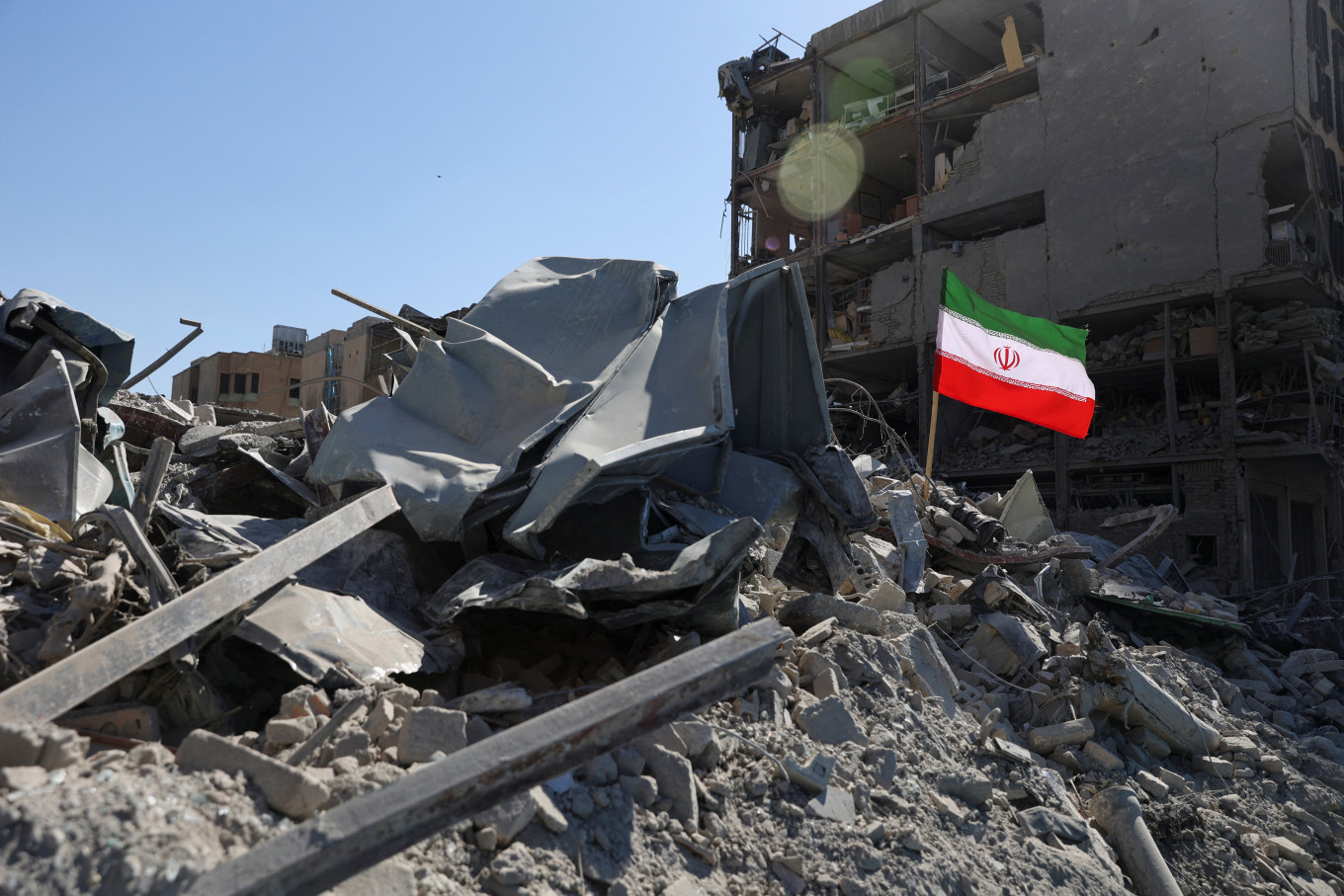 The national flag of Iran flies in the wind as debris lies scattered in the aftermath of an Israeli and United States strike on a police station, amid the US-Israeli conflict with Iran, in Tehran on March 4, 2026. (WANA via Reuters/Majid Asgaripour)
A
s the conflict with Iran reshapes global security assumptions and energy markets, the debate in the United States has focused largely on why President Donald Trump chose war in the first place. Was it domestic politics, a desire to project strength, a miscalculation or something else?
Such explanations may have merit, but they risk obscuring root causes. The war was less a sudden decision than the culmination of geopolitical processes that steadily removed alternatives to confrontation. By the time the bombs started falling, the decisive choices had already been made during years of strategic deliberation.
One of those choices was the first Trump administration’s 2018 withdrawal from the Joint Comprehensive Plan of Action (JCPOA), the agreement reached with Iran in 2015 to constrain its nuclear program. At the time, Trump argued that scrapping the JCPOA was necessary to achieve a stronger agreement through economic leverage. The US then sought to force Iran back to negotiations by crippling its economy.
Sanctions, of course, were not new. Even under the JCPOA, Iran faced significant restrictions for terrorist ties, ballistic missiles and human-rights abuses. Continued pressure kept the door open for further negotiated relief. But once the JCPOA was dead, sanctions operated without diplomacy, narrowing rather than expanding the potential for compromise. Sanctions not only weakened Iran’s economy but also reshaped US perceptions of what could be achieved.
As economic pressure intensified without producing capitulation or regime change, policymakers faced a narrowing set of credible options. Each failed attempt at coercion strengthened the perception that pressure alone could not resolve the problem, while simultaneously aligning US threat perceptions more closely with those of Israel, which views mere nuclear latency (possessing the means to create a weapon) as an unacceptable risk. The result was not an immediate march toward war but a gradual redefinition of what Trump came to see as strategically inevitable.
Iranian policy also made restraint less likely. Even as negotiations showed signs of life and mediators reported progress, the strategic logic driving confrontation continued to harden. Following the collapse of the JCPOA, Iran continued to develop its nuclear program and reduced access to inspectors.

This increased Iran’s negotiating leverage without openly crossing the threshold to building a nuclear weapon, but the strategic effect was the opposite of what Iran intended. Regardless of Iran’s intentions, each advance reinforced Israeli perceptions of an approaching deadline and strengthened the argument in US circles that diplomacy was losing credibility. Measures to preserve negotiating leverage instead accelerated the strategic convergence already underway.