The Jakarta Post
Please Update your browser
Your browser is out of date, and may not be compatible with our website. A list of the most popular web browsers can be found below.
Just click on the icons to get to the download page.


Popular Reads
Top Results
No results found. Please check your search term and try again
Can't find what you're looking for?
View all search results
Popular Reads
Top Results
No results found. Please check your search term and try again
Can't find what you're looking for?
View all search resultsBeyond the Gini ratio: A deeper inequality Indonesia must confront
While Indonesia’s Gini coefficient suggests stability, a deeper look reveals a 'missing middle' and institutional designs that may be inadvertently be narrowing the gates of economic opportunity.
Change text size
Gift Premium Articles
to Anyone
Share the best of The Jakarta Post with friends, family, or colleagues. As a subscriber, you can gift 3 to 5 articles each month that anyone can read—no subscription needed!
 Set as preferred source
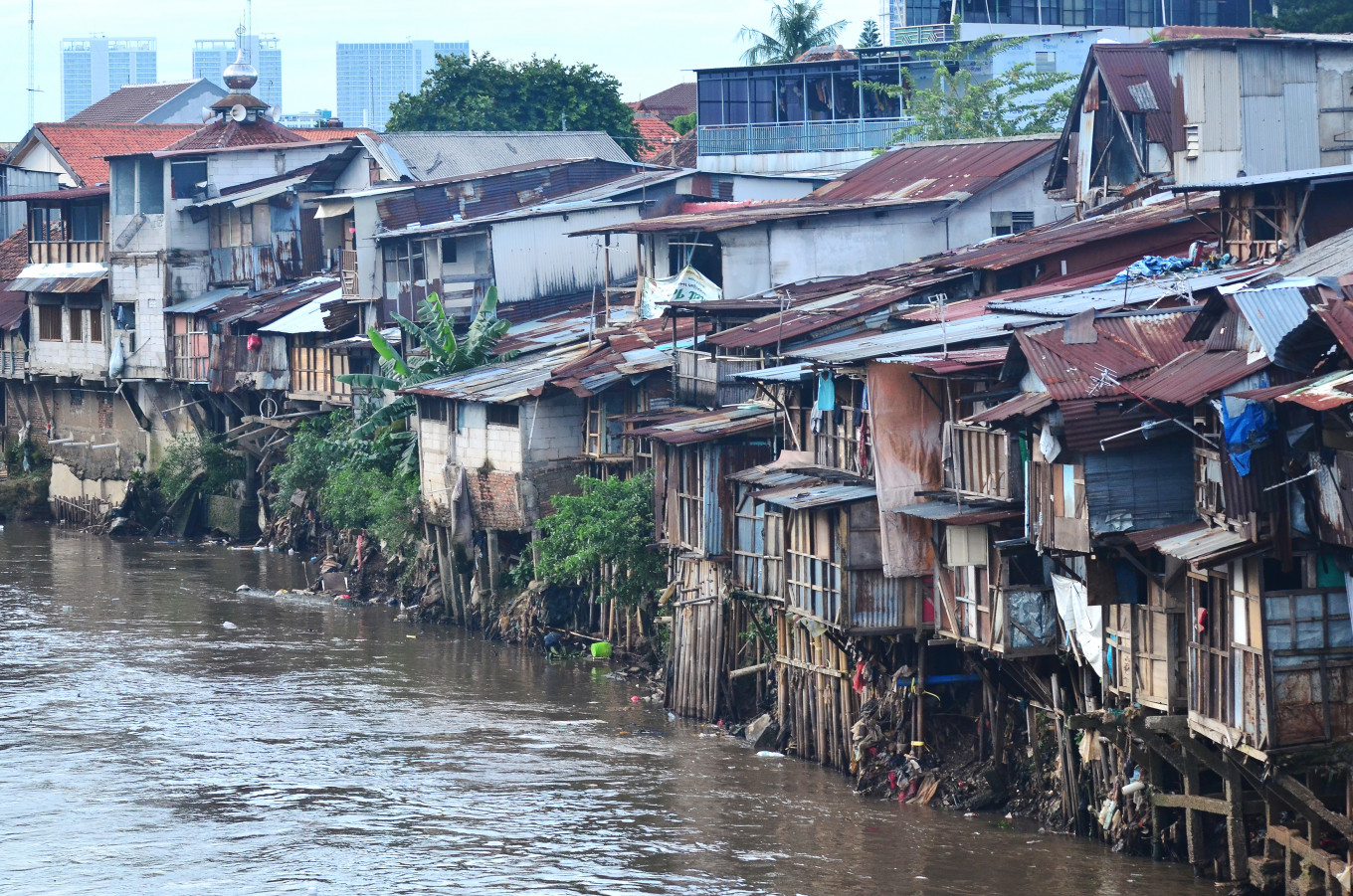 Streams of reality : low-income housing is seen in this photo taken on Nov. 13, 2025, on the banks of the Ciliwung River in Matraman, East Jakarta. The Jakarta provincial administration has identified 445 community units with poor housing and limited sanitation. (The Jakarta Post/Iqro Rinaldi)
W
hen discussions of inequality arise in Indonesia, the conversation usually turns to a single statistic: the Gini coefficient. This number has become shorthand for whether a society is becoming more or less equal. At present, Indonesia’s Gini coefficient stands at 0.363—a level often described as moderate compared to many other emerging economies.
But a society’s fairness cannot be reduced to a single metric. Even when income distribution appears stable, deeper inequalities may persist within the structure of institutions, the distribution of opportunities and the real freedoms individuals possess to shape their lives. Indonesia’s inequality challenge today is not just about who earns how much, but about who gets access to opportunity, who bears economic risk and who possesses the genuine freedom to move upward.
Scanlon argues that inequality becomes objectionable not merely when incomes differ, but when it creates unacceptable forms of control, weakens fair institutions, or distributes what is owed to all on inequitable terms. Sen asks a complementary question—"equality of what?"—and answers by focusing on capabilities: the real freedoms people have to pursue the lives they value.
Read together, these ideas point to a simple test for policy: Does it widen capabilities and spread opportunity, or does it concentrate access, influence and economic participation, even unintentionally? This test is vital because much of today’s inequality is produced not by a single market outcome, but by how public programs and economic institutions are designed.
Consider how public programs can reshape local economic ecosystems. The government’s free nutritious meal initiative aims to address child nutrition—an objective that is widely supported. The program is expected to cover all students nationwide and is projected to require approximately Rp 335 trillion (US$20 billion) annually, making it one of the largest social programs ever financed through the state budget.
Yet, design details matter. In many schools today, meals are provided through canteens operated by small vendors from surrounding neighborhoods. These vendors often represent a vital source of livelihood for local households. Should meal provision become centralized through large "mega-kitchens" supplying multiple schools, publicly financed demand could shift away from these small community enterprises toward larger operators capable of handling centralized production and logistics.

In that scenario, a program intended to improve welfare could inadvertently narrow local economic participation. This is inequality beyond the Gini: the unequal distribution of access to economic activity itself. It also reflects Scanlon’s concern that when benefits owed to all are delivered in ways that systematically privilege specific groups, inequality becomes an institutional feature rather than an accident.