TheJakartaPost
Please Update your browser
Your browser is out of date, and may not be compatible with our website. A list of the most popular web browsers can be found below.
Just click on the icons to get to the download page.


Popular Reads
Top Results
No results found. Please check your search term and try again
Can't find what you're looking for?
View all search results
Popular Reads
Top Results
No results found. Please check your search term and try again
Can't find what you're looking for?
View all search resultsWhy budget cuts betray the spirit of Ramadan and women’s rights
The government's commitment to women is being hollowed out by a "fiscal anemia" that favors bureaucrats over survivors through ruthless budget cuts that have institutionalized the abandonment of its most vulnerable citizens, even as the country touts its "free and active" policy stance on the global stage.
Change text size
Gift Premium Articles
to Anyone
Share the best of The Jakarta Post with friends, family, or colleagues. As a subscriber, you can gift 3 to 5 articles each month that anyone can read—no subscription needed!
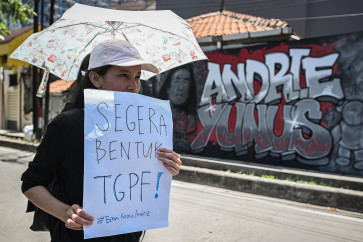
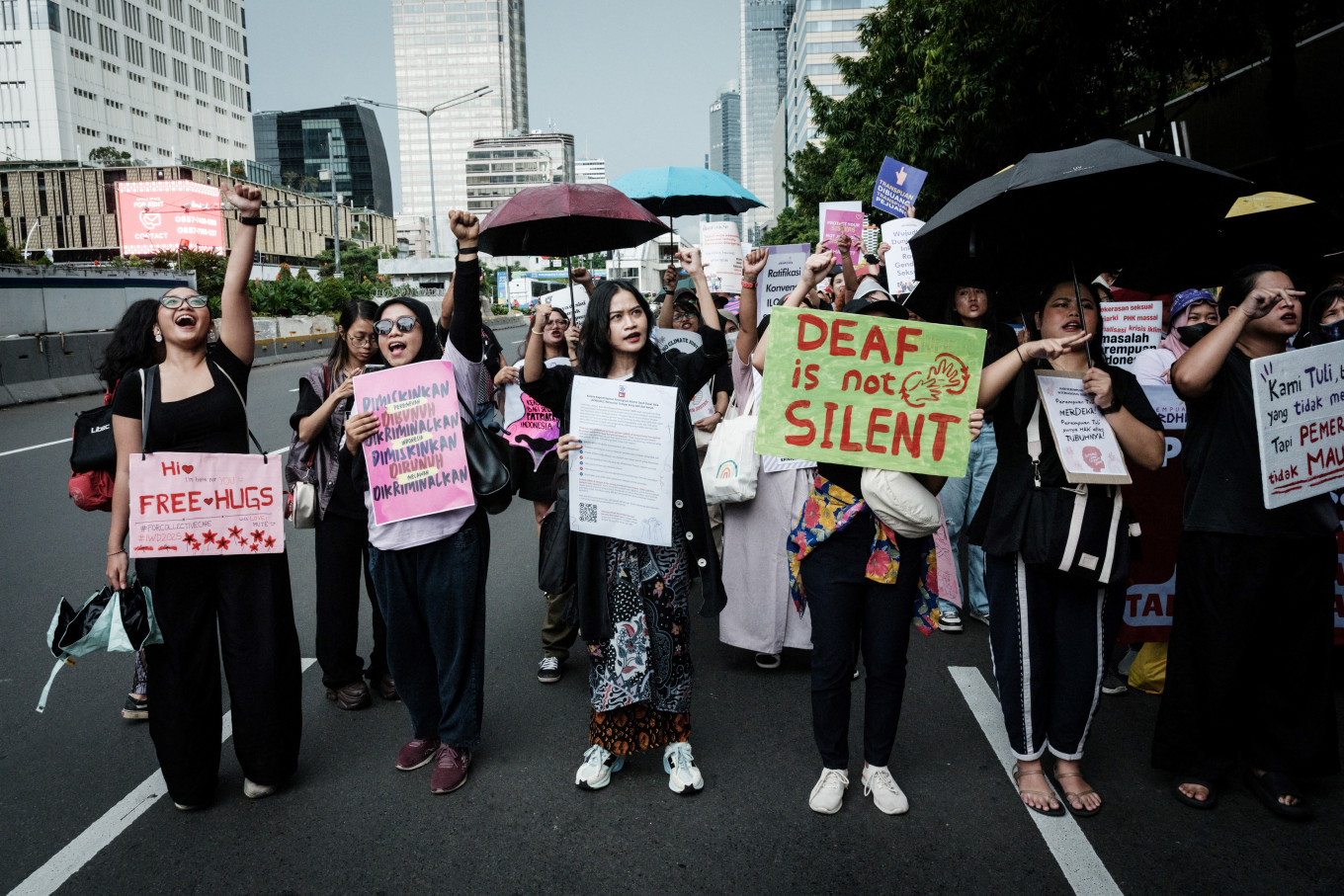 A group of women hold placards on March 8, 2025, as they take part in a protest march organized by the Indonesian Women’s Alliance (API) to mark the 50th International Women’s Day.
(AFP/Yasuyoshi Chiba)
A group of women hold placards on March 8, 2025, as they take part in a protest march organized by the Indonesian Women’s Alliance (API) to mark the 50th International Women’s Day.
(AFP/Yasuyoshi Chiba)
T
his year, International Women’s Day is observed during the holy month of Ramadan. For many, the joining of these two moments provided a rare and vital space for reflection.
Fasting during Ramadan teaches total submission to the Creator, fostering a sense of empathy and humanitarian solidarity intended to free humankind from hunger, fear and the delusions of arrogance. Meanwhile, International Women’s Day on March 8, with its century-old roots in the labor movement, serves as a global reminder of the persistent demand that women be treated with the dignity and equality inherent to all humans.
In Indonesia, however, these two events revealed a stark and paradoxical reality.
According to the 2024 National Survey on Women’s Life Experience (SPHPN), the country’s “architecture” for women’s protection appears, on paper, to be a modern success story. Bolstered by international funding and legislative milestones, the legal framework seems robust. Yet at the grassroots level, the social norms that oppress women are not just persisting; they are solidifying.
The primary obstacle to progress is no longer a lack of laws but a lack of political and financial will.
On examining the 2025 state budget, the government’s commitment to women’s safety appears “anemic”. We are witnessing a crisis where large-scale interventions are left almost entirely to international donors. While technical assistance and research from global agencies are welcome, they are often treated by the state as a convenient excuse to strike women’s protection from the list of national priorities.

Strategic partnerships, such as the BERANI II reproductive health and rights program supported by Canada and the United Nations agencies for population (UNFPA) and children (UNICEF), along with UN Women, were instrumental in the passage of Law No. 12/2022 on sexual violence. But a law is only as strong as the budget for its implementation.