TheJakartaPost
Please Update your browser
Your browser is out of date, and may not be compatible with our website. A list of the most popular web browsers can be found below.
Just click on the icons to get to the download page.


Popular Reads
Top Results
No results found. Please check your search term and try again
Can't find what you're looking for?
View all search results
Popular Reads
Top Results
No results found. Please check your search term and try again
Can't find what you're looking for?
View all search resultsThe law of the jungle in the US-Israel war on Iran
The war is a stark reflection of the law of the jungle still operates within the international community.
Change text size
Gift Premium Articles
to Anyone
Share the best of The Jakarta Post with friends, family, or colleagues. As a subscriber, you can gift 3 to 5 articles each month that anyone can read—no subscription needed!
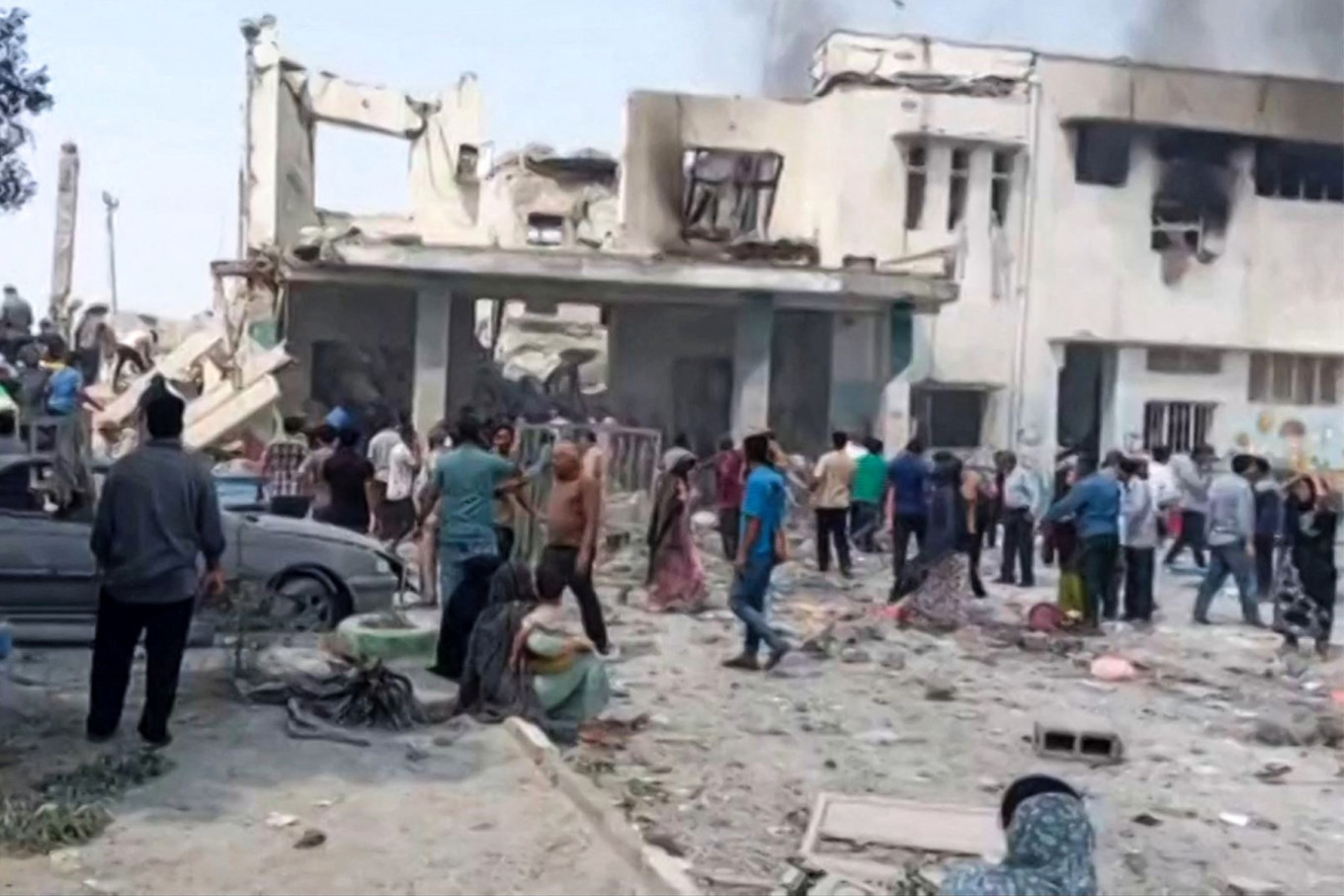 This image grab taken from Iranian state television broadcasted on February 28, show the site of deadly United States and Israeli strikes on a girls' elementary school in Minab, in the southern Iranian province of Hormozgan. (AFP/AFP)
T
he war between the United States–Israel alliance and Iran has ultimately proved unavoidable. Israel launched opening air strikes on Feb. 28, even as Iran–US negotiations mediated by Oman were still under way in Geneva. It did not take long: the US struck swiftly, killing Iran's Supreme Leader, Ayatollah Ali Khamenei, along with other senior officials. US President Donald Trump had declared his intention to eliminate Khamenei as far back as the June 2025 war.
In addition to Khamenei, those killed included Iran's Defense Minister Aziz Nasirzadeh, the Commander of the Islamic Revolutionary Guard Corps (IRGC) Mohammad Pakpour and Armed Forces Chief of Staff Abdolrahim Mousavi. According to US sources, at least 48 senior Iranian officials were killed in the first days of the war.
Iran retaliated against the US–Israel assault by deploying missiles and drones against US military bases across the Middle East in Qatar, Kuwait, the United Arab Emirates, Saudi Arabia and Bahrain. Counter-strikes were also launched against Israel, targeting cities across the Zionist state. Hezbollah in Lebanon joined the effort, firing its rockets into Israeli territory.
The war will grow significantly more dangerous if the US and Israel, together with their allies, commit ground troops to seize control of Iran, as the US once did in Iraq, Vietnam and Afghanistan. The conflict would become far more catastrophic should Russia, China and North Korea intervene on Iran's behalf. That would mark the beginning of World War III. One can only hope it does not come to that, and that a world war will be averted.
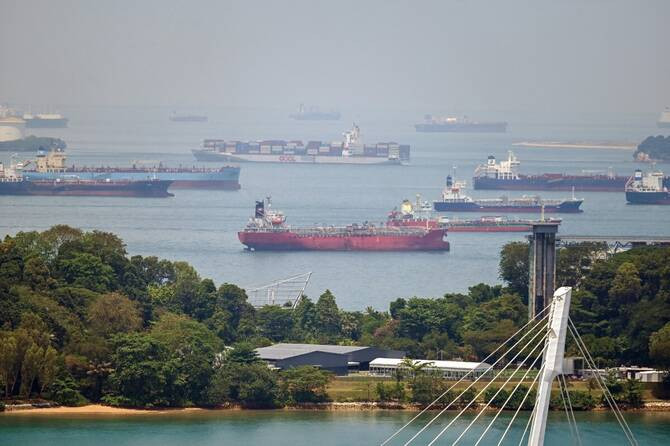
The impact of the war has already begun to be felt by many nations, following Iran's decision to close the Strait of Hormuz. The closure is expected to trigger a sharp rise in global oil prices, potentially reaching as high as US$150 per barrel. Although the US has declared that its warships will escort tankers sailing through the strait, there is no guarantee those vessels will not become targets of Iran's considerable arsenal of missiles and drones.
The range of threats facing ships in the Strait of Hormuz extend beyond missiles. These include asymmetric electronic warfare in the form of jamming — interference with Global Positioning System (GPS) signals — and spoofing, the manipulation of navigation signals to make vessels "believe" they are in a different location from where they actually are.

Such asymmetric disruptions are particularly dangerous for Very Large Crude Carriers (VLCCs), which are heavily dependent on automated navigation systems to avoid collisions and territorial violations. This form of electronic warfare was already in evidence during the collision between VLCC MV Adalynn and IMV Front Eagle on June 17, 2025, caused by jamming and spoofing. According to the NATO Shipping Centre and Lloyd's List Intelligence, jamming and spoofing activity in the Strait of Hormuz region increased by 40 percent compared to the months preceding the 12-day Iran–Israel war in June 2025.