TheJakartaPost
Please Update your browser
Your browser is out of date, and may not be compatible with our website. A list of the most popular web browsers can be found below.
Just click on the icons to get to the download page.


Popular Reads
Top Results
No results found. Please check your search term and try again
Can't find what you're looking for?
View all search results
Popular Reads
Top Results
No results found. Please check your search term and try again
Can't find what you're looking for?
View all search resultsWhy the world needs the Ocean Impact Summit
As the 2026 Ocean Impact Summit in Bali approaches, the global community faces a critical choice: bridge the massive financing gap for our oceans now or pay the staggering price of economic and environmental collapse later.
Change text size
Gift Premium Articles
to Anyone
Share the best of The Jakarta Post with friends, family, or colleagues. As a subscriber, you can gift 3 to 5 articles each month that anyone can read—no subscription needed!
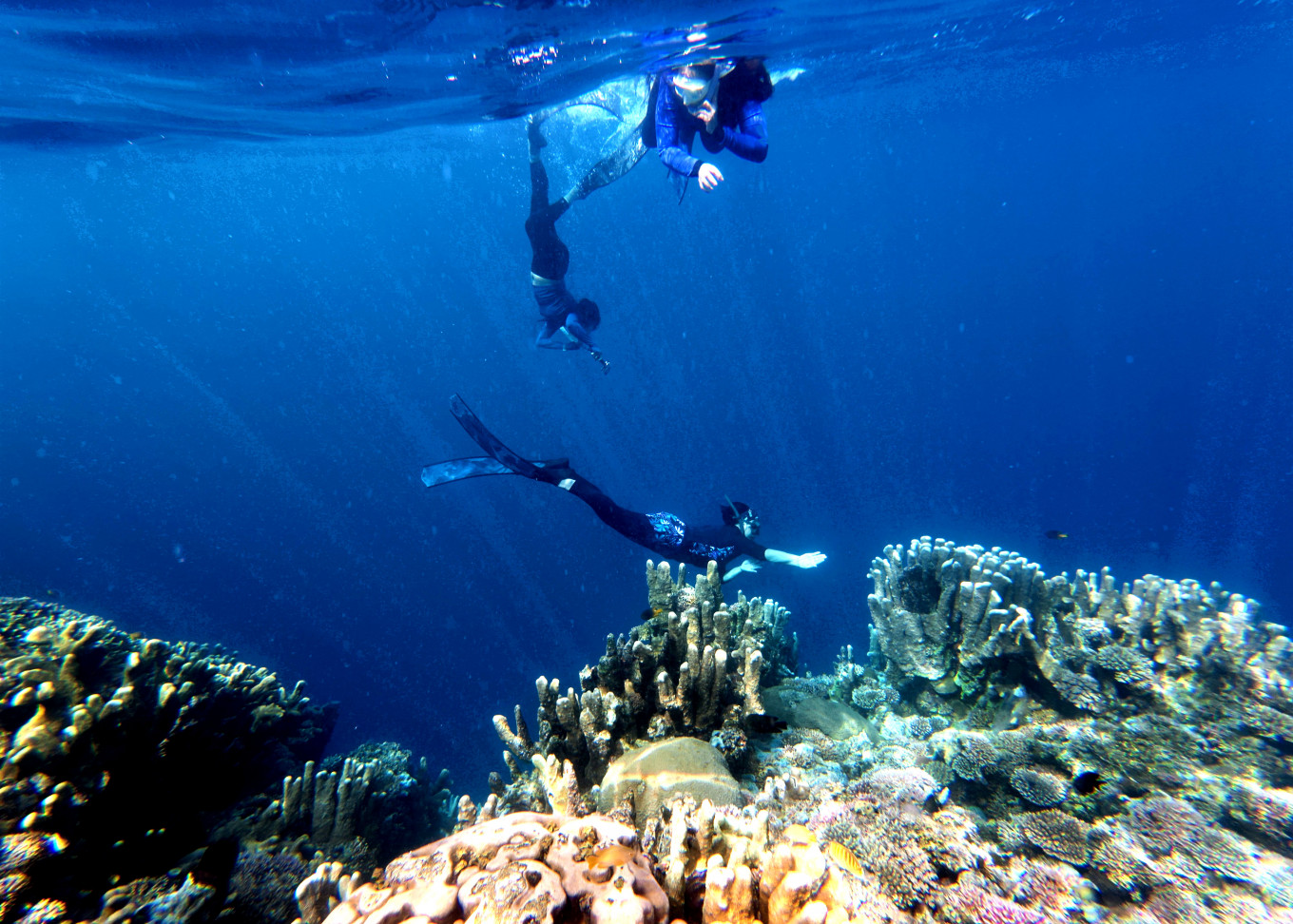 Tourists free dive in a coral reef site on Dec. 28, 2025, at the Oluhuta Paradise tourist attraction in Bone Bolango regency, Gorontalo. Visits to the special-designation tourism site increased from an average of 19 people per day to about 130 people per day during the 2025 Christmas and 2026 New Year holiday period. (Antara/Adiwinata Solihin)
I
n the coming three months, Indonesia will host a landmark international event: the Ocean Impact Summit, held June 8-9 in Bali. This event was formally announced by President Prabowo Subianto at the prestigious World Economic Forum (WEF) annual meeting in January of this year.
Alongside the President, Fisheries and Maritime Affairs Minister Wahyu Sakti Trenggono was part of the delegation, delivering remarks to promote the summit at a high-level side event.
There are compelling rationales for hosting the summit in Indonesia. The ocean does more than contribute to the prosperity of the Indonesian people; it constitutes the very foundation of our region’s stability. It feeds our population, powers our trade, supports millions of jobs and regulates the climate that sustains our economy.
Yet today, it is under growing pressure. Fish stocks are declining, marine ecosystems are degrading and climate change is accelerating ocean warming, acidification and sea-level rise.
At the same time, global financing for ocean sustainability remains far below what is required. The gap between ambition and investment continues to widen. The sixth Assessment Report by the Intergovernmental Panel on Climate Change (IPCC) indicated that by utilizing the ocean’s potential through the development of a "blue economy”, we can generate widespread prosperity and enhance lives.
Nevertheless, a paradox persists: United Nations Sustainable Development Goal (SDG) 14 (life below water) receives the least funding of any of the SDGs. According to a 2022 WEF report, an estimated US$175 billion per year is needed to achieve SDG 14 by 2030, yet actual investment totaled below $10 billion between 2015 and 2019.

If this trajectory persists, the consequences will be severe: weakened fisheries undermining national food security, increased vulnerability for coastal communities, irreversible biodiversity loss and billions of dollars in unrealized economic potential. These are not distant or abstract risks. For archipelagic states and maritime regions, they are immediate development challenges. They affect small-scale fishers, coastal farmers, port operators and tourism businesses alike. Ultimately, they shape fiscal stability, social cohesion and long-term competitiveness.