The Jakarta Post
Please Update your browser
Your browser is out of date, and may not be compatible with our website. A list of the most popular web browsers can be found below.
Just click on the icons to get to the download page.


Popular Reads
Top Results
No results found. Please check your search term and try again
Can't find what you're looking for?
View all search results
Popular Reads
Top Results
No results found. Please check your search term and try again
Can't find what you're looking for?
View all search resultsBefore Iran and Venezuela, there was Indonesia
History records US’ many previous attempts to subvert, shape and subordinate Indonesia in the decades after its independence.
Change text size
Gift Premium Articles
to Anyone
Share the best of The Jakarta Post with friends, family, or colleagues. As a subscriber, you can gift 3 to 5 articles each month that anyone can read—no subscription needed!
 Set as preferred source
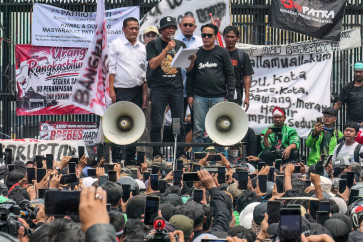
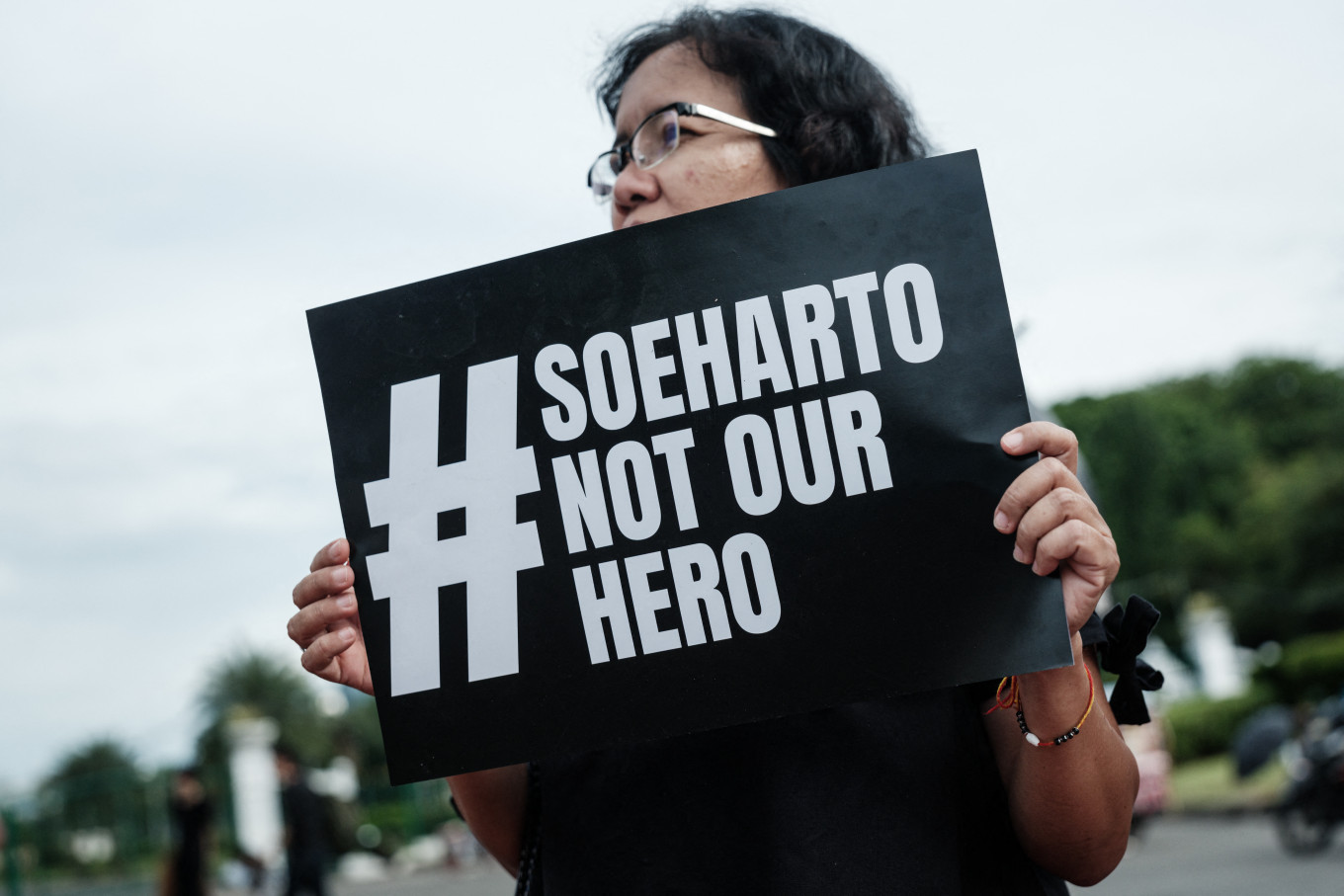 A civil society member holds a poster on Nov. 6, 2025, during a rally opposing the government's plan to grant former president Soeharto a national hero title near the Merdeka Palace in Central Jakarta. President Prabowo Subianto granted Soeharto the title of national hero on Nov. 10, in a ceremony at the State Palace in Central Jakarta. (AFP/Yasuyoshi Chiba)
I
ndonesians were right to be alarmed by the recent dramatic acts of the United States political intervention: the kidnapping of a foreign head of state, the targeted decapitation of a country’s leadership, the covert and overt operations designed to destabilize governments. They have provoked urgent debate about sovereignty, international law and of great-power interference.
But what has been missing from these Indonesian conversations, however, is the historical record of the US’ many previous attempts to subvert, shape and subordinate Indonesia in the decades after its independence, where Washington first supported an armed rebellion against the central government, contemplated assassinating then president Sukarno, and ultimately welcomed a military takeover that transformed Indonesian politics for decades.
In the late 1950s, Indonesia was led by its revolutionary founding president, Sukarno. A charismatic anti-colonial leader, Sukarno had helped secure independence from the Netherlands and positioned Indonesia as a central voice in the emerging non-aligned movement.
But to US policymakers steeped in Cold War anxieties, Sukarno’s political balancing act, especially his willingness to cooperate with the powerful Indonesian Communist Party (PKI), raised alarms. The result was a covert effort to weaken Jakarta.
In 1957–1958, the US secretly backed regional military commanders rebelling against the Indonesian government in Sumatra and Sulawesi. The insurgency, known as the Permesta Rebellion, received funding, arms and aircraft through the Central Intelligence Agency. CIA-supported planes even carried out bombing missions against Indonesian government targets.
The operation collapsed in May 1958 when a US pilot, Allen Pope, was shot down and captured alive, exposing Washington’s involvement. The rebellion quickly disintegrated, and Sukarno emerged politically strengthened. Historians such as Audrey Kahin and George McT. Kahin documented in Subversion as Foreign Policy, how far Washington was willing to go to reshape Indonesian politics, even at the risk of open confrontation with a newly independent nation.

The failure of the Permesta rebellion did not immediately end US efforts to remove Sukarno. In the early 1960s, US intelligence officials quietly explored more drastic options, including the possibility of assassinating the president. Evidence of these discussions surfaced publicly during the investigations into CIA misconduct in the 1970s. The Rockefeller Commission, created by US president Gerald Ford in 1975 to investigate CIA activities, reviewed internal agency files concerning assassination plots.