TheJakartaPost
Please Update your browser
Your browser is out of date, and may not be compatible with our website. A list of the most popular web browsers can be found below.
Just click on the icons to get to the download page.


Popular Reads
Top Results
No results found. Please check your search term and try again
Can't find what you're looking for?
View all search results
Popular Reads
Top Results
No results found. Please check your search term and try again
Can't find what you're looking for?
View all search resultsWater cooperation and the test of multilateralism
Country-led action on water, guided by a common vision and supported by a more aligned UN system, can demonstrate that multilateralism is capable of reform and results.
Change text size
Gift Premium Articles
to Anyone
Share the best of The Jakarta Post with friends, family, or colleagues. As a subscriber, you can gift 3 to 5 articles each month that anyone can read—no subscription needed!
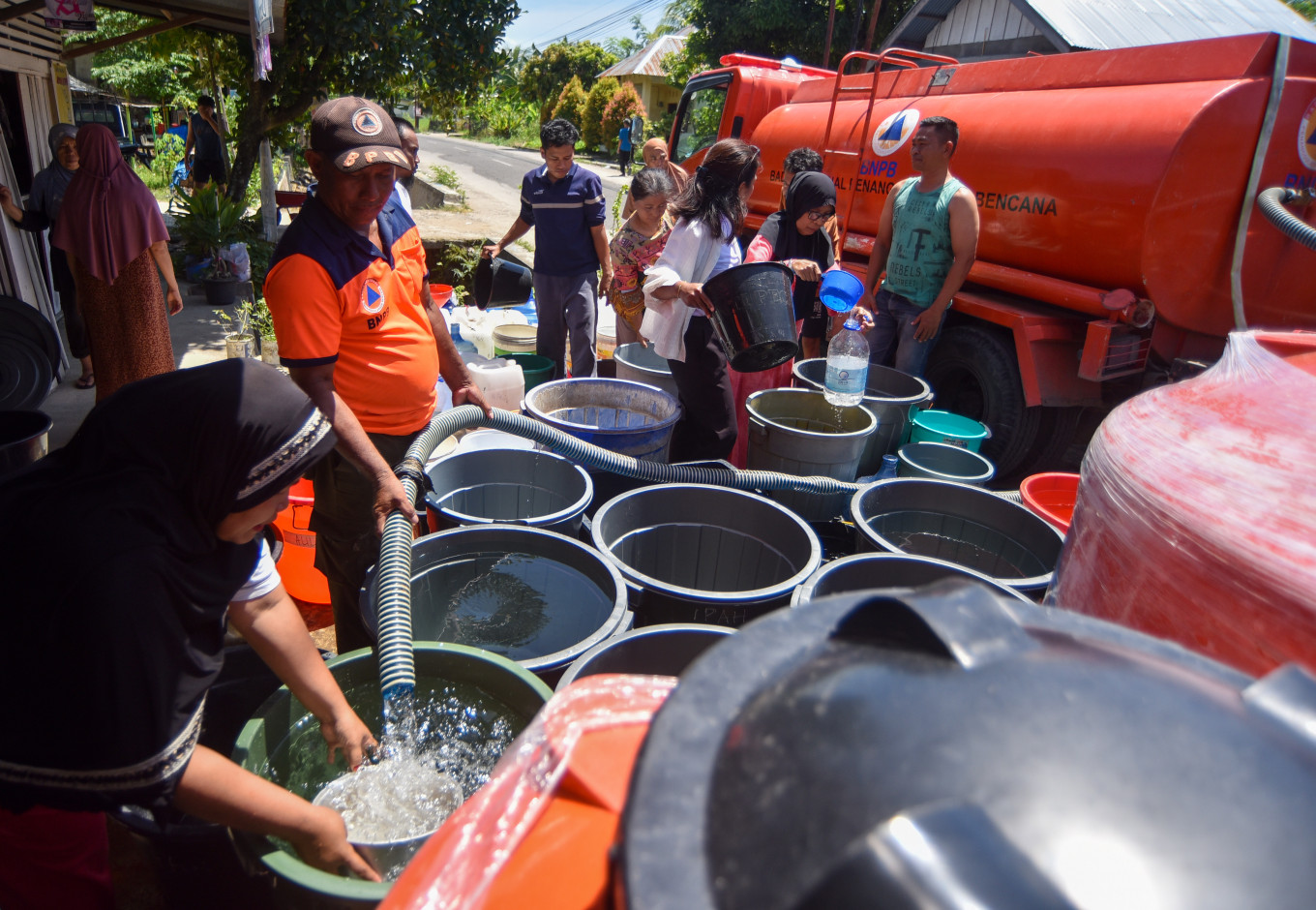 A Padang Disaster Mitigation Agency worker fills buckets with clean water on Jan. 18 for residents in Vila Tarok, Pasa Ambacang, Kuranji district, Padang, West Sumatra. The Pauh and Kuranji districts are facing a clean water crisis after wells dried up and dams and irrigation systems were damaged by flooding in Nov. 2025. (Antara/Iggoy El Fitra)
T
he global hydrological cycle does not respect national borders. Rivers cross frontiers, aquifers connect communities and climate change is reshaping rainfall patterns across entire regions. When managed in a collective and constructive manner, water can foster stability and shared prosperity.
In a world facing the impacts of, climate change, economic volatility and declining trust in multilateral institutions, water is not a marginal issue. It is central to building resilience for people and the planet. Food insecurity, ecosystem degradation and energy instability are increasingly water-driven risks.
Data shows that renewable water availability per person has declined in recent years, while pressure on scarce freshwater resources is increasing in many regions, particularly where agriculture dominates water use. The Fragile States Index 2024 report warns of increasingly extreme droughts, floods and water scarcity, intensifying instability in economic and social development.
Against this backdrop, water is rising on the political agenda as a stabilizing force across all development sectors. If multilateralism is to deliver more visible and meaningful results, water must be part of that effort.
Momentum is growing worldwide. At Blue Davos and a week later at the High-Level Preparatory Meeting for the 2026 United Nations Water Conference in January, water emerged as a priority and opportunity for the global economy, reflecting a broader recognition that water resilience underpins economic stability.
The evidence is clear: when water systems function well, food systems thrive, economies grow and ecosystems recover. Countries that invest in resilient and well-governed water systems see faster and more durable development gains.

Because water underpins food security, energy production, public health, climate resilience and progress in social and economic developments, action in the water sector delivers benefits far beyond it. Water is therefore not only a development issue; it is a strategic investment in prevention, prosperity and peace.