The Jakarta Post
Please Update your browser
Your browser is out of date, and may not be compatible with our website. A list of the most popular web browsers can be found below.
Just click on the icons to get to the download page.


Popular Reads
Top Results
No results found. Please check your search term and try again
Can't find what you're looking for?
View all search results
Popular Reads
Top Results
No results found. Please check your search term and try again
Can't find what you're looking for?
View all search resultsAutocratic and self-interest driven leadership started the Iran war
From a liberalist perspective, the war highlights a failure of the norms-based system and a lack of commitment to peaceful dispute resolution.
Change text size
Gift Premium Articles
to Anyone
Share the best of The Jakarta Post with friends, family, or colleagues. As a subscriber, you can gift 3 to 5 articles each month that anyone can read—no subscription needed!
 Set as preferred source
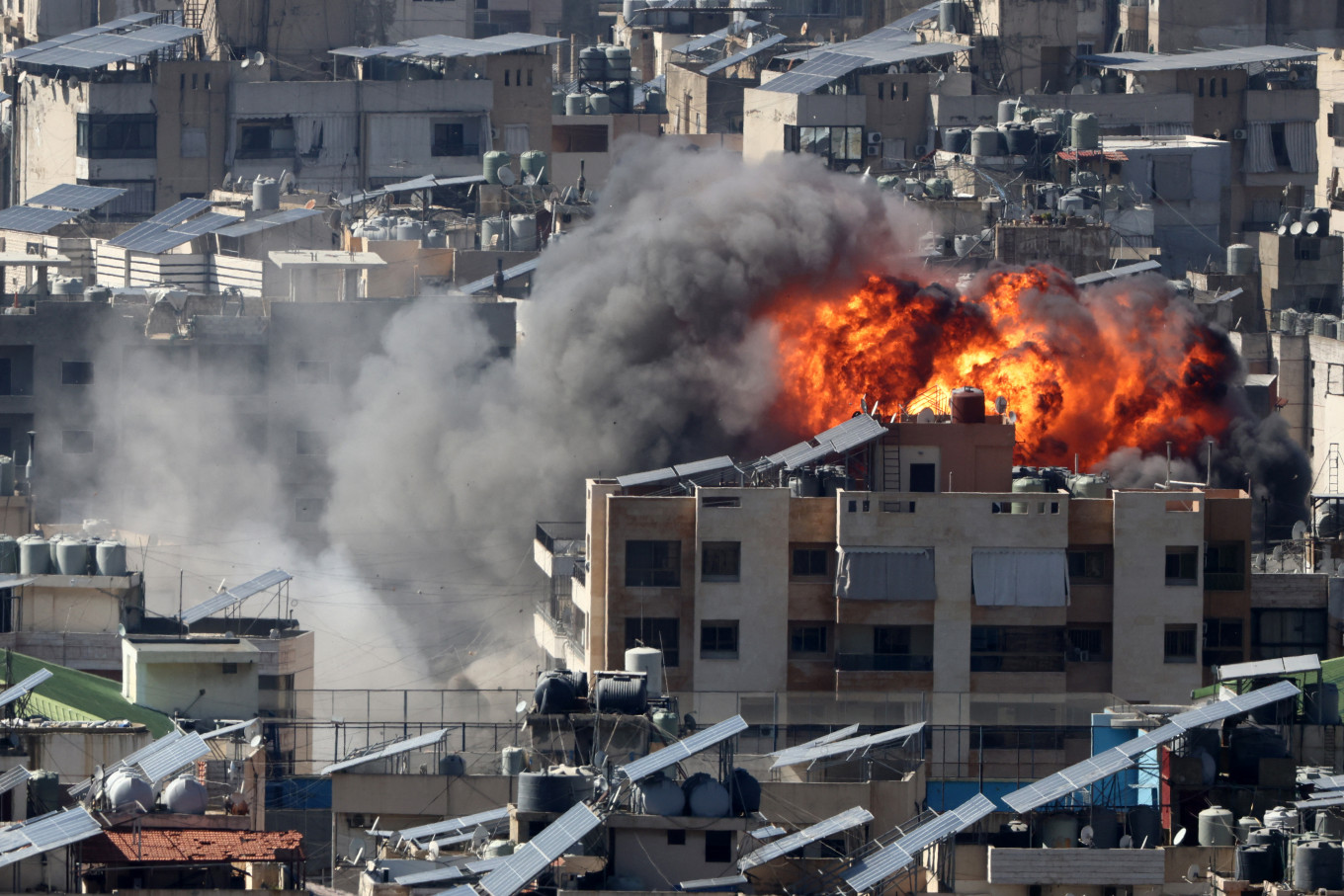 Tensions soar: A fireball rises from the site of an Israeli air strike on Monday in the southern suburbs of the Lebanese capital Beirut. Lebanon was drawn into the Middle East war last week when Iran- backed militant group Hezbollah attacked Israel in response to the killing of Iranian Supreme Leader Ayatollah Ali Khamenei during United States-Israeli strikes. (AFP/Ibrahim Amro )
T
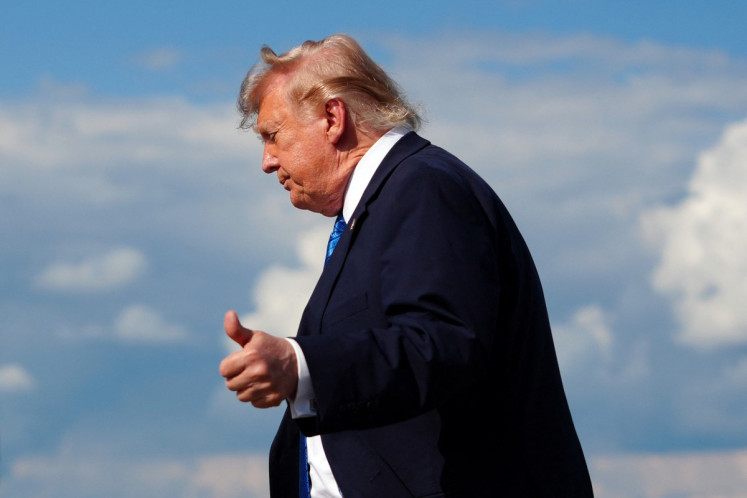
he Israel–United States war against Iran now underway can be fundamentally attributed to the leadership of three figures: Benjamin Netanyahu, Donald Trump and the late Ali Khamenei. It is undoubtedly true that this conflict materialized specifically when these three leaders held power. While tensions among these nations had been simmering for years, the transition to open armed conflict only occurred after Trump regained the US presidency in January 2025. Following his initial term (2017–2021), Trump’s victory and subsequent return to power surprised many American voters and the global community alike.
Though his comeback may have been polarizing and unexpected, it is a political reality to which the world had to adapt.
A query of the Google search engine regarding Trump’s leadership style yields results that many find unsurprising. Based on contemporary data, Trump’s style is frequently characterized as transactional, charismatic, autocratic, and egocentric. The latter is often described as "me-centric", prioritizing personal interests and self-image, and reacting impulsively via social media and public statements - actions that tend to produce controversial and polarizing outcomes.
These traits are not merely professional styles but are deeply rooted in Trump’s personality. His background as a businessman and Republican politician fostered a transactional approach to governance. This framework demands clear structures, strong bargaining positions, cost-benefit trade-offs and immediate results, often enforced through reward-and-punishment mechanisms.
In this environment, prolonged discussions and repetitive negotiations are viewed as costly and inefficient. This leadership style helps explain why the Joint Comprehensive Plan of Action (JCPOA) between the US and Iran failed; a transactional approach is often ill-suited for a multidimensional nuclear issue where national survival and security are at stake.
Consequently, the "charismatic weight" of leadership emerges as the primary driver of decision-making. This style overlaps with autocratic and egocentric tendencies. Bolstered by supreme confidence in his own bargaining power and a dedicated circle of political supporters, Trump enabled a "no-delay" decision-making process that appeared reasonable to his base despite its controversy. Such leadership is inherently risk-taking, designed to mobilize wider support and heighten the leader's charismatic reach.

To some, risk-taking leaders are applauded for their ability to break diplomatic deadlocks. For Trump and his "Make America Great Again" (MAGA) and "America First" constituencies, these slogans served as rhetorical pillars intended to restore the US to its former hegemonic status.