The Jakarta Post
Please Update your browser
Your browser is out of date, and may not be compatible with our website. A list of the most popular web browsers can be found below.
Just click on the icons to get to the download page.


Popular Reads
Top Results
No results found. Please check your search term and try again
Can't find what you're looking for?
View all search results
Popular Reads
Top Results
No results found. Please check your search term and try again
Can't find what you're looking for?
View all search resultsCelebrate victory, honor the Earth: The guide to a sustainable Idul Fitri
Recognizing how deeply our daily lives connected to forest and plantation products with deforestation risks, we hold the power to drive sustainable consumption and production.
Change text size
Gift Premium Articles
to Anyone
Share the best of The Jakarta Post with friends, family, or colleagues. As a subscriber, you can gift 3 to 5 articles each month that anyone can read—no subscription needed!
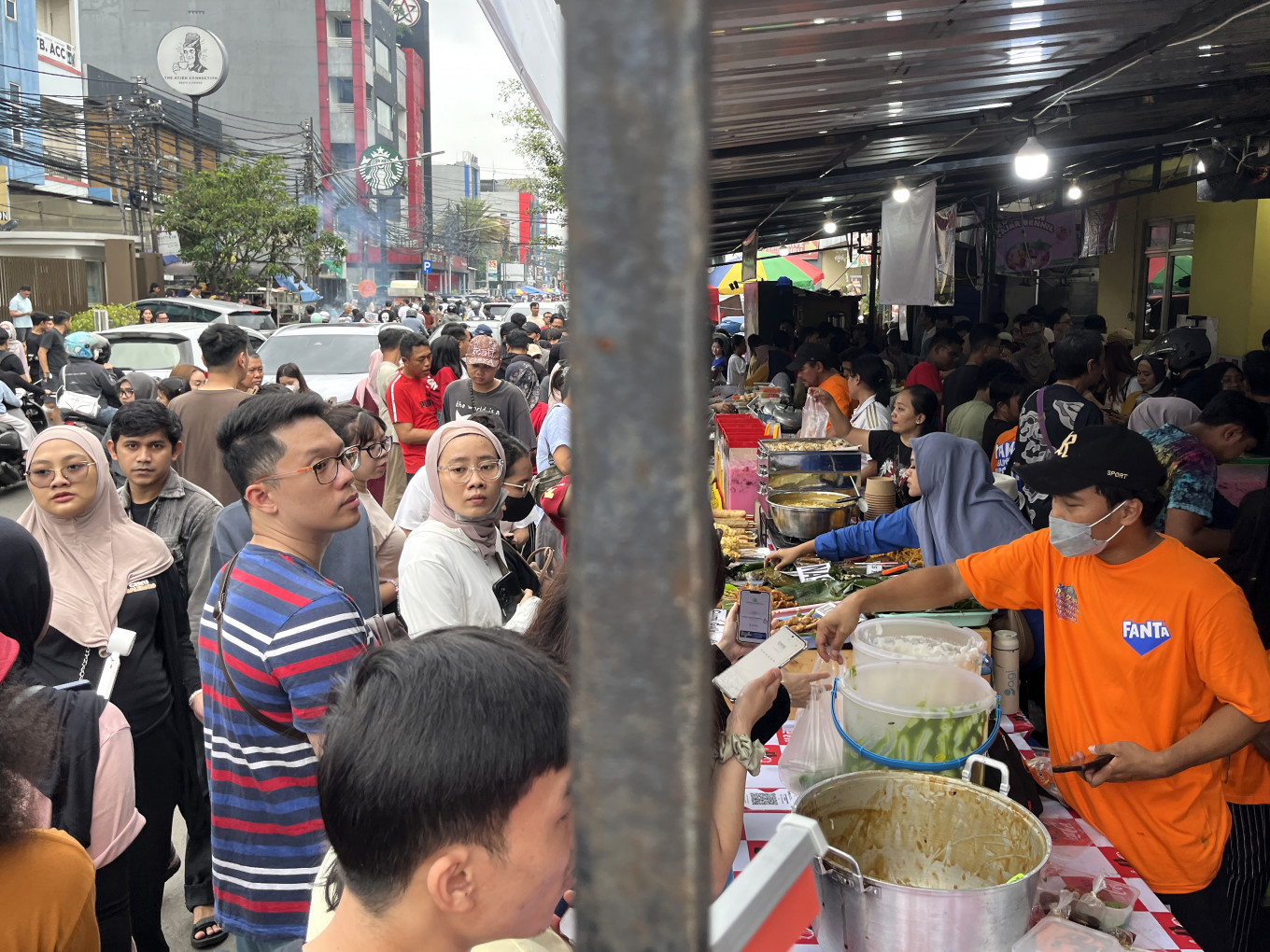 Residents crowd to choose snacks on Feb. 22, 2026, at the Pasar Takjil Ramadan Bendungan Hilir in Central Jakarta. The Benhil Ramadan market draws large numbers of visitors during the holy month of Ramadan, seeking a variety of iftar dishes, including fried snacks sold for Rp 4,000 (24 US cents) each, 'bubur sumsum' (rice porridge) priced at Rp 15,000 to Rp 20,000 per serving, fried chicken at Rp 15,000 to Rp 20,000 per piece and other foods for breaking the fast. The market opens at 2 p.m. (JP/Iqro Rinaldi)
R
amadan arrives each year as a sacred month for Muslims around the world, a time of reflection, discipline and devotion. Its presence is felt far beyond ritual, shaping a shared rhythm of restraint and generosity that invites everyone to slow down, reconnect, and most importantly, act with greater awareness.
In Indonesia, many in big cities are flocking to restaurants for iftar gathering with friends, preparing for mudik (homecoming travel) and planning on what cooking to serve on the family table for the upcoming Idul Fitri, which officially marks the end of Ramadan.
In the rural countryside and villages where social bond for collective activities is much stronger, families from different households usually prepare meals with their neighbors for suhoor and iftar together at the village mosque or common hall. This tradition usually continues until Idul Fitri celebration, a day when families, often dressed in new clothes, visit one another after the Idul Fitri prayer to enjoy traditional home-cooked meals and cookies
This beautiful sense of community and tradition during Ramadan and Idul Fitri also contributes to higher consumption rate for food, clothes and personal care products. A study by Nielsen NIQ (2025) shows that Indonesian household expenditure during Ramadan 2024 was 20 percent higher compared to the pre-Ramadan period. From staple foods such as rice, vegetables, meat, cooking oil and margarine to clothing and cosmetics, people buy more and shop more during this period.
As consumers, our choices can change the market for the better. This Ramadan provides a pivotal moment to rethink our decisions in buying commodity-based products. Recognizing how deeply our daily lives connected to forest and plantation products with deforestation risks, we hold the power to drive sustainable consumption and production in Indonesia, especially for products such as palm oil, natural rubber, coffee, cocoa, timber and non-timber forest products such as rattan and bamboo.
Moreover, the Quran also teaches humans to safeguard nature, not committing abuse and spreading corruption on the face of Earth (Surah Al-A’raf 7:56, 7:74) while entrusting us as the khalifah (stewards or successors) of the Earth (Surah Al-Baqarah 2:30). It is up to us to live with this teaching. How can we start?

We might start by choosing products with a better impact on the environment, and sustainable certifications, widely known as eco labels, are one tool that helps us sort. Eco labels act as voluntary environmental governance mechanisms to curb deforestation and land use change.