The Jakarta Post
Please Update your browser
Your browser is out of date, and may not be compatible with our website. A list of the most popular web browsers can be found below.
Just click on the icons to get to the download page.


Popular Reads
Top Results
No results found. Please check your search term and try again
Can't find what you're looking for?
View all search results
Popular Reads
Top Results
No results found. Please check your search term and try again
Can't find what you're looking for?
View all search resultsEconomy, not infantry: Indonesia’s real shield against the Mideast crisis
As global oil prices soar and the rupiah weakens, the government is responding with a display of military hardware that masks, but cannot fix, a deepening economic crisis.
Change text size
Gift Premium Articles
to Anyone
Share the best of The Jakarta Post with friends, family, or colleagues. As a subscriber, you can gift 3 to 5 articles each month that anyone can read—no subscription needed!
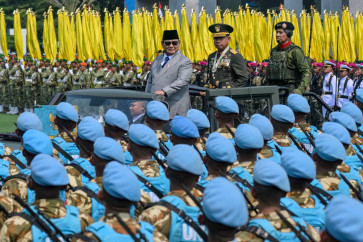
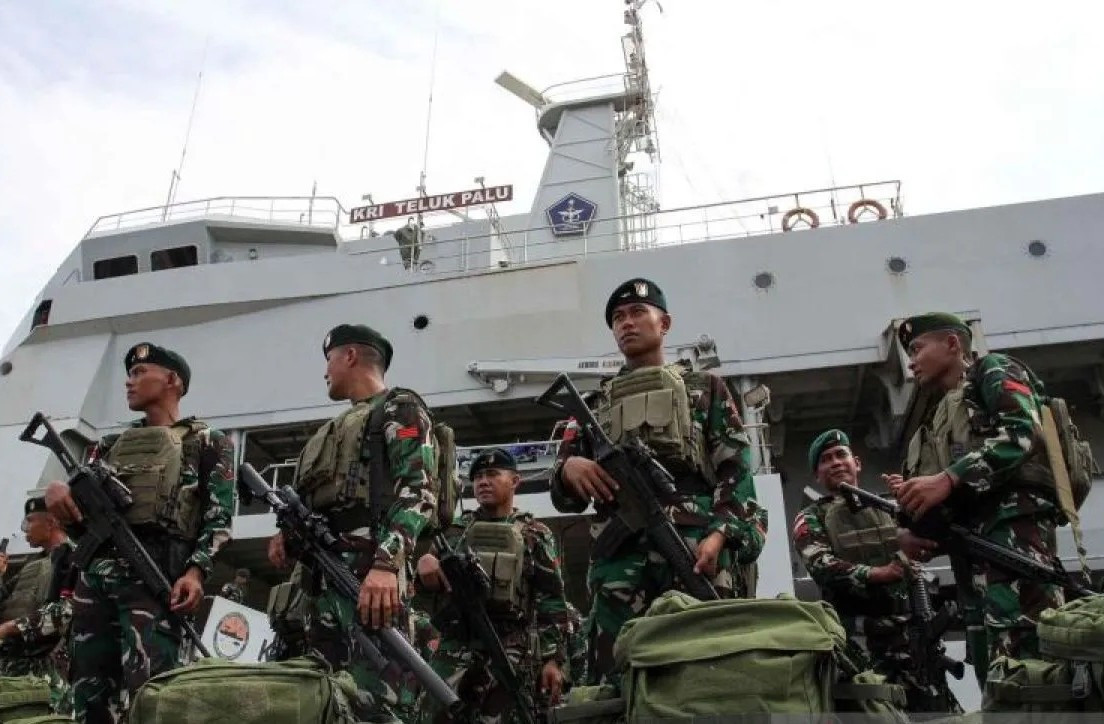 Army Infantry Battalion Raider 112 troops arrive at Krueng Geukuh Port in North Aceh, Aceh on March 10, 2026 after 15 months of a border security mission in Papua. (Antara/Rahmad)
T
he outbreak of the United States-Israeli war on Iran will directly impact Indonesia's economic resilience. This is particularly true as rising global oil prices approach US$100 per barrel, far exceeding the 2026 budget assumption, which sets Indonesian crude oil at $70 per barrel for fuel subsidies.
However, the government's sensitivity appears misaligned; it focuses more on military displays than on developing an economic policy package to reassure the public. Instead of a financial buffer, the government has adopted a security-oriented response, notably declaring the highest alert status across Indonesia.
This decision risks inciting negative sentiment in markets and among businesses. The public may rightly question the rationale behind deploying military forces in economic hubs and public transportation areas essential for daily life.
The "top alert" military status was communicated via a telegram from the Indonesian Military (TNI) commander and signed by Assistant for Operations Lt. Gen. Bobby Rinal Makmun on March 1. The first directive of this document instructs all operational commanders to prepare personnel and primary weapons systems for patrols at vital strategic points, including airports, seaports, train stations and facilities of state utility PLN.
The second point of this confidential document mandates the National Air Defense Command (Kohanudnas) to conduct continuous early detection and aerial surveillance for 24 hours. The third directive instructs the Strategic Intelligence Agency (Bais) to map the 541,511 Indonesian citizens residing in affected areas, including Iran, Saudi Arabia and the United Arab Emirates.
Fourth, the Jakarta Military Command is ordered to patrol embassies to maintain stability. Fifth, intelligence units are tasked with preemptive measures at these sites. Sixth, the Central Implementation Agency (Balakpus) must maintain unit readiness. Finally, all developments must be reported immediately to the TNI chief.

This alert status signifies the highest level of readiness, where personnel must be fully equipped with weapons and ammunition. However, an analysis of the first directive reveals that this force is expected to conduct active patrols, indicating a mobilization of military strength in the field.