The Jakarta Post
Please Update your browser
Your browser is out of date, and may not be compatible with our website. A list of the most popular web browsers can be found below.
Just click on the icons to get to the download page.


Popular Reads
Top Results
No results found. Please check your search term and try again
Can't find what you're looking for?
View all search results
Popular Reads
Top Results
No results found. Please check your search term and try again
Can't find what you're looking for?
View all search resultsAnalysis: Indonesia pushes 100 GW solar plan beyond RUPTL
Change text size
Gift Premium Articles
to Anyone
Share the best of The Jakarta Post with friends, family, or colleagues. As a subscriber, you can gift 3 to 5 articles each month that anyone can read—no subscription needed!
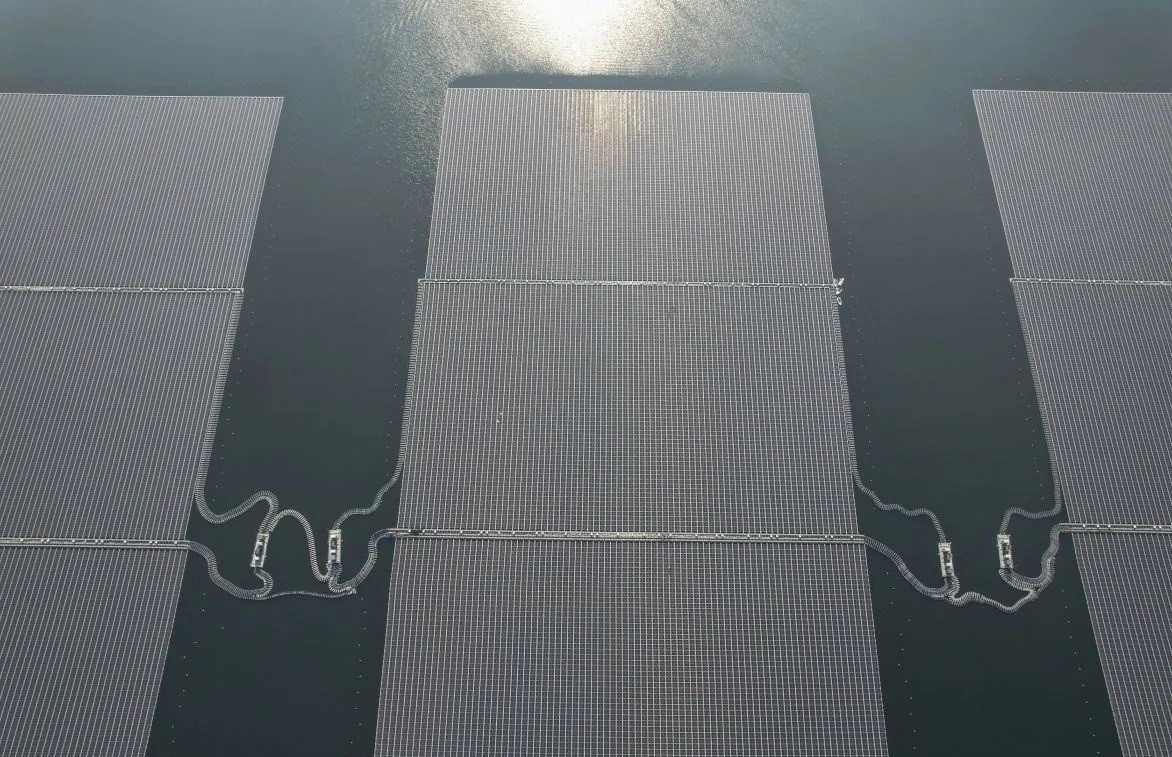 The floating panels of a solar power plant at Cirata Dam in Purwakarta regency, West Java, are seen from above on Sept. 26, 2023. (Antara/Raisan Al Farisi)
A
n ambitious national plan to develop 100 gigawatts (GW) of solar power capacity has gradually evolved from an idea floated by President Prabowo Subianto into a program now moving toward implementation. In recent months, the initiative has gained clearer institutional backing, with state asset fund Danantara emerging as the main investment and financing vehicle tasked with mobilizing capital for rollout. The initiative is framed as part of efforts to strengthen energy self-sufficiency, one of Prabowo's key national priorities, particularly amid ongoing geopolitical tensions in the Middle East that could disrupt global energy supplies.
The President has set an ambitious target for Indonesia to achieve energy self-sufficiency within the next four years. To support this goal, the government is aiming to reduce fossil fuel dependence in the near term, including by pursuing complementary measures such as an electric motorcycle conversion program. According to Energy and Mineral Resources Minister Bahlil Lahadalia, the plan to develop 100 GW solar power capacity is intended to reduce reliance on diesel-powered electricity generation, which still accounts for a significant portion of the national power mix alongside coal and gas.
The scale of the 100 GW solar power initiative far exceeds what is currently outlined in the national blueprint, the Long-Term Electricity Supply Business Plan (RUPTL) 2025-2034. This blueprint aims for a much more gradual expansion of solar capacity to around 17.1 GW in additional solar power by 2034. This large gap in targets has generated confusion and skepticism among analysts and industry observers alike. Government officials have nevertheless defended the initiative as a necessary complement to the RUPTL, highlighting that a substantial portion of added capacity will come from village-scale solar installations rather than large, on-grid plants.
Investment and Downstream Minister and Danantara CEO Rosan Roeslani explained that the program would begin with an initial phase targeting 13 GW expansion, prioritizing villages with electricity distribution infrastructure. To support the equipment needs of the program, the government is also seeking to strengthen the domestic solar manufacturing ecosystem. Rosan added that US$1.4 billion in foreign direct investment had been committed to developing a local solar panel factory by the end of 2026, with a production capacity of up to 50 GW. The factory is intended to manufacture and supply panels for the solar expansion program while reducing reliance on imported components.
According to earlier estimates, the initiative envisions installing 1-megawatt (MW) solar plants in each village. Danantara revealed that a prototype had been recently implemented in a village in Sumenep Regency, East Java. According to Rosan, this prototype will serve as a pilot project and reference model for the deployment of similar solar power systems in villages nationwide.
Nevertheless, a key concern is that the initiative appears to have been announced before conducting comprehensive grid integration assessments, raising questions about its long-term viability. If village-level electricity demand is misestimated, either over or under the actual demand, the resulting supply-demand mismatch could create significant operational and financial challenges.

Beyond technical considerations, the initiative has also revived concerns about policy consistency under President Prabowo's administration. Critics argue that launching such a large-scale project outside the RUPTL risks undermining the national electricity plan, which was designed to streamline electricity generation, transmission and demand projections across the country as well as across successive administrations. If major energy programs are pursued through ad hoc initiatives rather than integrated into existing plans, it could complicate investment decisions for developers and increase uncertainty about the prioritization of future infrastructure projects.