The Jakarta Post
Please Update your browser
Your browser is out of date, and may not be compatible with our website. A list of the most popular web browsers can be found below.
Just click on the icons to get to the download page.


Popular Reads
Top Results
No results found. Please check your search term and try again
Can't find what you're looking for?
View all search results
Popular Reads
Top Results
No results found. Please check your search term and try again
Can't find what you're looking for?
View all search resultsDrowning in trash
As the country's trash mountains reach a tragic breaking point, local grassroots successes offer a sustainable roadmap out of a looming national waste emergency.
Change text size
Gift Premium Articles
to Anyone
Share the best of The Jakarta Post with friends, family, or colleagues. As a subscriber, you can gift 3 to 5 articles each month that anyone can read—no subscription needed!
 Set as preferred source
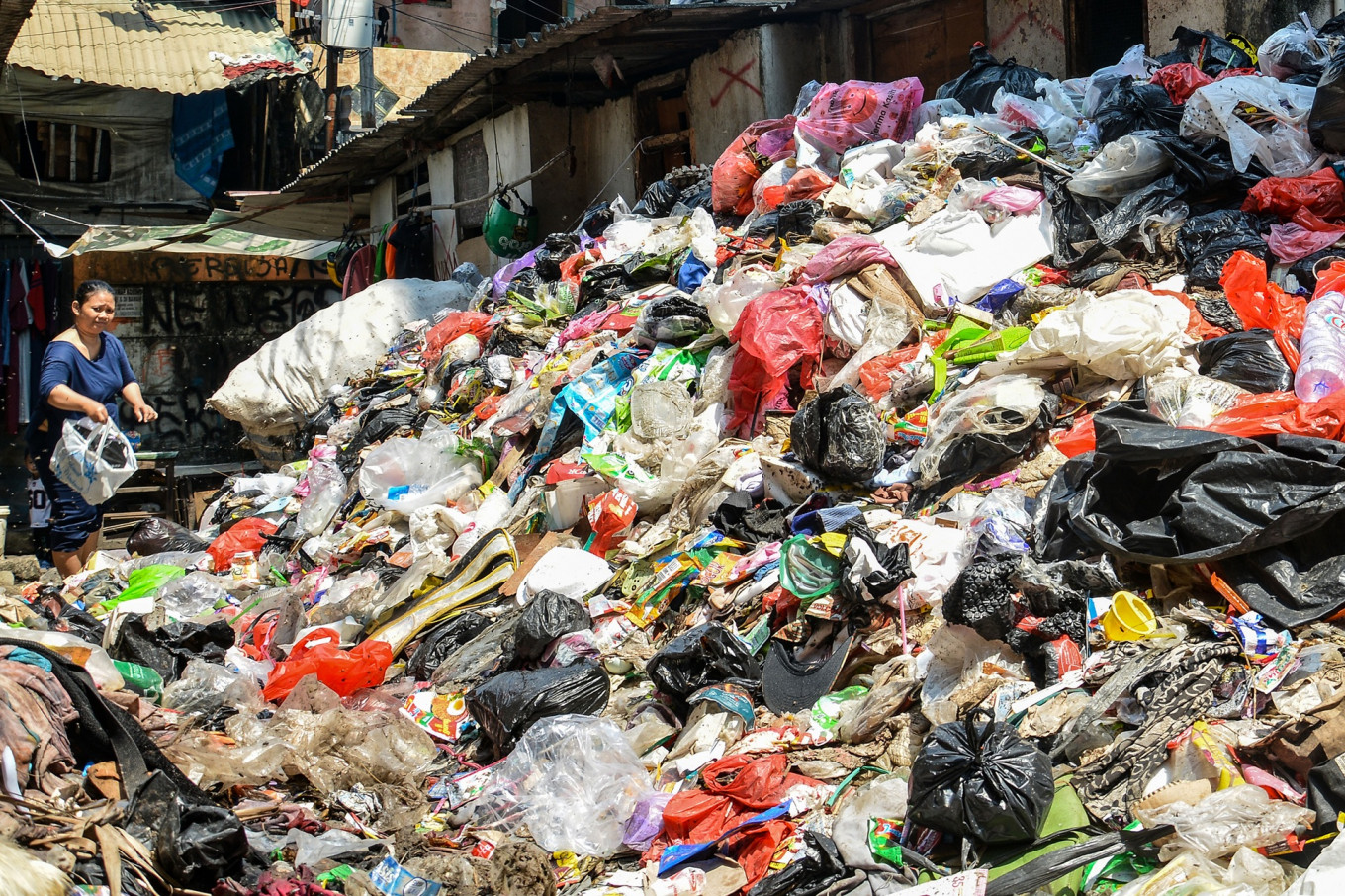 A woman throw away a bag of trash on April 2 at a temporary waste disposal site (TPS) at the Angke Tambora low-cost rental apartment complex in West Jakarta. (Antara/Ahmad Naufal Oktavian)
T
he landslide at the Bantar Gebang landfill in Bekasi, West Java, last month did more than claim seven lives; it triggered a cascading waste crisis across Jakarta.
Within weeks, garbage piled up across the city following the facility’s partial closure after the disaster. At Kramat Jati Market in East Jakarta, for example, nearly 5,000 tonnes of waste accumulated along sidewalks just days after the accident, forming a four-meter-high heap that disrupted traffic and filled the area with a stench that drives visitors away.
This foul-smelling display exposes the fragility of Jakarta’s waste management system and the inevitable consequences of years of overreliance on a single landfill to absorb the waste of a megacity.
After nearly 40 years in operation, Bantar Gebang now holds more than 80 million tonnes of Jakarta’s waste—double its intended 20-year lifespan and exceeding its maximum capacity by 30 million tonnes. Here, waste is no longer managed but simply piled ever higher, forming “trash mountains” that rise up to 16 stories tall.
In fact, across the country, from Banten to Central Java to the resort island of Bali, local authorities are scrambling for solutions as landfills overflow and strain far beyond their limits.
President Prabowo Subianto warned in February that nearly all landfills nationwide could reach overcapacity by 2028, if not sooner.

To confront this mounting crisis, the government has begun constructing 33 waste-to-energy projects across 33 cities at a staggering cost of Rp 91 trillion (US$5.3 billion). Touted as a silver bullet that can convert waste into electricity, these facilities have nonetheless drawn public criticism, particularly over their environmental footprint, especially given that much of the waste being burned remains unsorted.
Early outcomes offer little reassurance. Jakarta’s newly established refuse-derived fuel (RDF) plant has already triggered fierce opposition from nearby residents, who report persistent bad odors and deteriorating air quality. At the Putri Cempo landfill in Surakarta, Central Java, the RDF facility has sparked similar complaints, with residents describing fine, ash-like dust settling over their homes.
From the very beginning, environmentalists have consistently argued that what Indonesia truly needs are sustainable solutions. The priority must be reducing the volume of waste generated at the source through reducing, reusing and recycling, so that only residual waste ends up in landfills.
This is by no means a quick or easy process, but it is far from impossible. Success stories have emerged from small communities across the country, demonstrating how grassroots initiatives, even in remote areas and with limited funding, can effectively turn a local waste crisis into a model of sustainable practice.
On Kelapa Island, part of the Thousand Islands regency near Jakarta, residents have cut the trash amounting to 200–300 kilograms per day by 80 percent since they started sorting and recycling their waste in 2018. Much of this success comes from separating plastics, cardboard and paper, which are sold to collectors or transformed into crafts with economic value that appeals to tourists, while organic waste is composted locally.
In 2024, Randupitu village in Pasuruan regency, East Java, achieved zero-waste status by taking full control of its refuse. Villagers were trained to sort their waste, compost organic matter, recycle materials and convert residual waste into RDF using small-scale machines.
These examples show that even small or remote communities can drastically reduce waste when residents are empowered and provided with practical tools. Replicating such grassroots initiatives across the country is entirely possible, but it requires serious political will, sufficient funding and active engagement from producers.
These initiatives do more than cut waste; they build a circular economy that creates jobs, generates income and benefits millions. The era of “out of sight, out of mind” must end if Indonesia is to find real, lasting solutions to its waste crisis.
Every citizen must play a role in managing the waste they produce, because protecting the environment and securing a healthier future for generations to come is a responsibility we all share.