TheJakartaPost
Please Update your browser
Your browser is out of date, and may not be compatible with our website. A list of the most popular web browsers can be found below.
Just click on the icons to get to the download page.


Popular Reads
Top Results
No results found. Please check your search term and try again
Can't find what you're looking for?
View all search results
Popular Reads
Top Results
No results found. Please check your search term and try again
Can't find what you're looking for?
View all search resultsAnalysis: Protection or control? Govt blocks children’s access to social media
Change text size
Gift Premium Articles
to Anyone
Share the best of The Jakarta Post with friends, family, or colleagues. As a subscriber, you can gift 3 to 5 articles each month that anyone can read—no subscription needed!
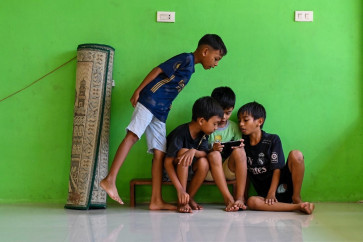
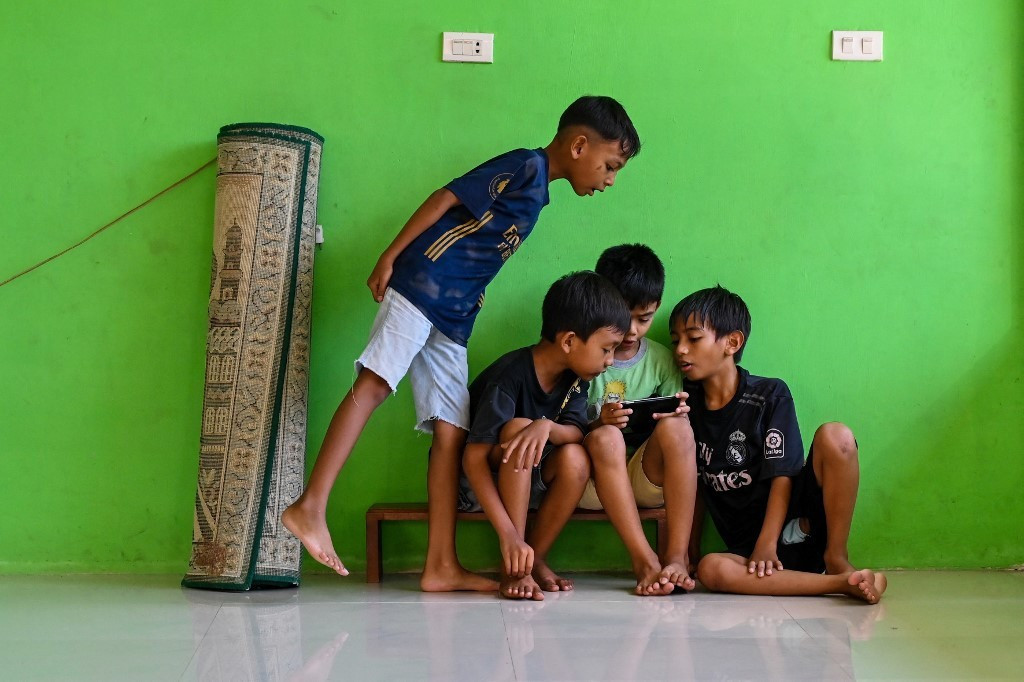 Children huddle together on April 2, 2024, as they play with a mobile device ahead of the breaking of the fast during Ramadan in Banda Aceh, Aceh. (AFP/Chaideer Mahyuddin)
O
ver the past two weeks, the government has begun overseeing the implementation of Communications and Digital Ministerial Regulation No. 9/2026. The policy reflects a national push to strengthen protections for children, though concerns have emerged regarding its effectiveness and its potential impact on children’s access to information and freedom of expression.
This regulation serves as a technical guideline for Government Regulation No. 17/2025 on child protection in electronic systems, commonly known as PP Tunas. A central provision is the ban on social media use for children under the age of 16, a measure designed to shield minors from online risks such as grooming, abuse, and harmful content.
Communications and Digital Minister Meutya Hafid described these risks as a “digital emergency”, noting that an estimated 70 million Indonesian children under 16 are currently active on social media.
This move aligns with a growing global trend toward social media regulation. Australia was among the first to impose a sweeping ban, passing a law in 2024 that took effect in December 2025. Similar restrictions have emerged in the Indian state of Karnataka and in Brazil, where policies took effect in March 2026. Brazil’s model requires users under 16 to link accounts to a legal guardian and prohibits addictive features like infinite scrolling, while Malaysia and Spain are currently considering similar measures.
In Indonesia, the policy officially took effect on March 28, and platforms were given a three-month window to complete self-assessments and seek classification as low-risk providers. The first phase of the regulation targets eight major platforms: YouTube, Facebook, Instagram, Threads, TikTok, X, Roblox and Bigo Live.
Compliance across these Big Tech corporations has been varied. Bigo Live and X moved quickly to implement age-verification mechanisms and deactivate accounts belonging to users under 16. Meanwhile, Roblox and TikTok have shown partial compliance; Roblox introduced restrictions for users under 13 that limit them to offline play, and TikTok has begun gradually deactivating accounts for those under 16.

However, major technology companies have shown significant reluctance. Representatives from Meta and Google were summoned twice by the ministry, eventually complying with an examination on April 6–7.